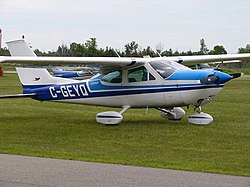
Piper · 1974–2017
Piper Warrior
 i
iSpecifications
MOSAIC eligiblePerformance
Cruise
115KTAS
Range
522nm
Climb
710fpm
Ceiling
13,000ft
Fuel Burn
8.0gph
Fuel Cap.
48gal
MPG
16.5mpg
Stall (Vs0)
44KIAS
T/O roll
975ft
Ldg roll
595ft
Size & weight
Seats
4
Useful Load
1,087lbs
Full-fuel payload
799lbs
Max gross
2,440lbs
Wingspan
35ft
Length
23.8ft
Engine
Engine
Lycoming O-320-D3G
Power
160hp
TBO
2,000hrs
Overhaul
$42k
Owning it
Hull insurance
$1k/yr
Parts
excellent
Mechanics
universal
Gear
Fixed
IFR
Yes
Category
certified
Full specification
V-speeds
Airframe
- Empty weight
- 1,353 lbs
- Max fuel weight
- 288 lbs
- Height
- 7.3 ft
- Wing position
- low
Obstacle performance
- Takeoff over 50 ft
- 1,650 ft
- Landing over 50 ft
- 1,160 ft
Paperwork
- Type certificate
- 2A13
- Certification basis
- CAR 3
These figures are typical for the model, not a specification for any individual aircraft. Real-world numbers vary with year, installed equipment, weight, modifications and engine condition — often by more than you would expect. Use them to compare types, and confirm anything you would act on against the Pilot's Operating Handbook for that specific airframe and a prebuy inspection.
Pricing
Typical
$95k
Range
$55k – $200k
Annual all-in
~$20k/yr
All-in at ~100 flying hours a year, using the midpoint of each range — the same figures broken out under “Cost to own” below. Your number will differ, and mostly for two reasons. Experience sets your insurance: a 2,000-hour pilot with recent training pays 30–40% less than a 200-hour owner, and student owners pay 20–40% more — on the same aircraft that is often a doubling. Location sets your hangar: a T-hangar runs $200–400 a month in the Midwest against $400–1,500 in a coastal metro, and an outside tie-down is less again. Engine reserves move too — a local shop reusing your serviceable cylinders can come in 30–50% under the national specialty-shop pricing we quote, though you trade the warranty and turnaround that comes with it. Reserves are money set aside toward a future overhaul, not a bill this year, and the annual inspection figure is the shop’s labor to look — whatever they find is separate.
Cost to own — estimate
Set your yearly hours and local fuel price. Fixed costs (insurance, hangar, annual inspection) don't change with hours; fuel, maintenance and the engine reserve do.
- Fuel (8 gph)
- $5,200
- Engine reserve
- $2,100
- Maintenance, parts & wear items ($12/hr)
- $1,200
- Insurance
- $900–$2,400
- Hangar
- $4,998–$12,495
- Annual inspection (labor only)
- $1,200
- Databases & subscriptions
- $400
- Total per year
- $20,497
- Per flight hour
- $205
- Miles flown / year (at cruise)
- 13,234 mi
- Cost per mile
- $1.55/mi
- Time in the air
- 2 hr 37 min
- Fuel burned
- 21 gal
- Out of pocket
- $222
Fuel, engine reserve and wear only. Insurance, hangar and the annual are already paid whether you make the trip or not, so they are not charged here.
Estimate, not a quote. Where a line shows a range, the total, per-hour and per-mile figures use its midpoint— insurance moves most with your experience and time in type, hangar with where you base the aircraft, so your own number could sit at either end. Annual inspection is the shop's labor to open and inspect — what they find is the maintenance line, which covers oil changes, plugs, tires, brakes, hoses, lights, a battery and vacuum pump amortised over their life, and the unscheduled squawks that are the largest and least predictable part of it. Reserves are sinking funds toward an overhaul, not a bill you pay this year — and note that a propeller is due on hours or calendar time, typically six years, so flying less does not put it off forever.
Strengths
- Docile stall characteristics and forgiving oleo landing gear ideal for training
- Excellent parts availability and universal mechanic familiarity
- Low acquisition cost (~$95k) and economical operating costs
- Liquid resale market with strong flight school demand
Weaknesses
- Carbureted engine lacks fuel injection; density altitude performance marginal above 7,500 ft DA
- Low-wing design limits downward visibility compared to high-wing trainers
- 115 KTAS cruise speed makes trips beyond 400 nm tedious
- Critical wing spar AD (2024-20-XX) requires inspection tracking; spar replacement exceeds $12k per wing
Overview
The Piper PA-28 Warrior is one of the most widely used training aircraft in general aviation history, rivaled only by the Cessna 172 for dominance on flight school ramps worldwide. Introduced in 1974 as the PA-28-151 Warrior, it marked a pivotal moment for Piper's Cherokee line: the transition from the original constant-chord "Hershey bar" wing to a new semi-tapered wing design that improved stall characteristics, increased wingspan and aspect ratio, and reduced induced drag. The Warrior became the foundation for Piper's entire low-wing trainer and touring lineup for the next five decades.
The Warrior II (PA-28-161) arrived in 1977 with 10 more horsepower from the Lycoming O-320-D3G, a higher gross weight, and minor refinements. It remained in continuous production through 1995 and became the volume seller, with over 3,374 units delivered. The Warrior III appeared in 1995 with an updated panel layout and interior but retained the same airframe and powerplant. Production continued intermittently through 2017, with the aircraft periodically returning to Piper's lineup.
The Warrior occupies a distinctive niche: it is the low-wing answer to the Cessna 172. Where the 172 offers high-wing visibility and a forgiving pitch response, the Warrior counters with gentler stall behavior (courtesy of the tapered wing), oleo-strut landing gear that absorbs student landings gracefully, and a lower acquisition cost. For many pilots, the Warrior was their first airplane, and it remains one of the most affordable pathways into aircraft ownership. With MOSAIC eligibility confirmed (Vs1 of 50 KIAS places it under the 54-knot calibrated stall limit), the Warrior may see renewed interest from Sport Pilots seeking a certified four-seat platform.
See also: Piper Archer, Cessna 172S Skyhawk SP, Cessna 152
Variants & History
| Variant | Years | Engine | HP | Max Gross (lbs) | Useful Load (lbs) | Key Differences |
|---|---|---|---|---|---|---|
| PA-28-151 Warrior | 1974-1977 | Lycoming O-320-E3D | 150 | 2,325 | 989 | First semi-tapered wing PA-28; replaced Cherokee 140; 1,898 built; lower gross weight |
| PA-28-161 Warrior II | 1977-1995 | Lycoming O-320-D3G | 160 | 2,440 | 1,087 | 10 HP increase; higher gross weight (originally 2,325, raised to 2,440 in 1982); 3,374 built; most common variant |
| PA-28-161 Warrior III | 1995-2017 | Lycoming O-320-D3G | 160 | 2,440 | 1,087 | Updated instrument panel layout; improved interior; same airframe and engine; produced intermittently |
The Hershey Bar to Tapered Wing Transition
Early PA-28 Cherokees (1960-1973) used a constant-chord wing with a rectangular planform — nicknamed the "Hershey bar" wing for its uniform shape. While simple to manufacture and structurally efficient, the Hershey bar wing had an abrupt stall break and relatively high induced drag for its span.
In 1974, Piper introduced the semi-tapered wing on the Warrior. The inboard portion retains the original Hershey bar chord, but the outer panels feature a tapered leading edge sweeping backward to the tip. This design, using the NACA 652-415 airfoil profile, added two feet of wingspan and significantly increased the aspect ratio. The aerodynamic benefits were substantial: induced drag dropped by roughly 32%, stall behavior became more progressive and predictable (the root stalls before the tips, preserving aileron authority), and climb and cruise performance improved. The tapered wing quickly became standard across the entire PA-28 line, with the Archer, Arrow, and Dakota all adopting it by the late 1970s.
PA-28-151 vs PA-28-161: The Core Difference
The original PA-28-151 used the 150-HP Lycoming O-320-E3D. The PA-28-161 upgraded to the 160-HP O-320-D3G, which also supported a higher gross weight. The 10-HP difference is modest but meaningful in a light trainer: it translates to better climb performance at gross weight, improved density altitude tolerance, and approximately 5 knots more cruise speed. The 115-lb gross weight increase (from 2,325 to 2,440 lbs, effective 1982) also expanded the useful load envelope for four-seat operations.
Certificated limits: which Warrior the frontmatter numbers describe
The V-speeds, gross weight, seat count and baggage limit in this page's data come from FAA TCDS 2A13 Rev 66, Section XVI-B — the Warrior II approved 1 July 1982, S/N 28-8316001 through 28-8616057 and 2816001 through 2816109, roughly the 1983 through 1994 airplanes. That is narrower than this page's 1974-2017 range, so it is worth saying what does and does not carry across it:
- The airspeed limits do carry across. Vne 160, Vno 126, Va 111 and Vfe 103 KIAS are identical in Section XVI-A (the 1977-82 Warrior II) and Section XVI-C (the Warrior III, 1995 on). The certificate prints them in KIAS rather than CAS because the PA-28-161 is one of the models 2A13 grants an equivalent-safety finding to under CAR 3.757.
- The gross weight does not. 2,440 lb is the 1983-on airplane. The 1977-1982 Warrior II is 2,325 lb, and a 115 lb difference in useful load is worth checking on any airframe of that vintage. A 2,325 lb limit can also be imposed on a later airplane by Piper Kit 88050, so verify against the airplane's own weight and balance rather than its year.
- The 1974-1977 PA-28-151 is a different model number — 150 hp, 2,325 lb, its own certificate section (XIV) and its own speeds, including a Vne of 153 knots CAS. It is described in the Variants table above but the frontmatter does not describe it.
Performance
The Warrior delivers honest, predictable performance that closely matches POH numbers when the engine is leaned properly and the airframe is maintained.
Real-world cruise: Book numbers claim 127 KTAS at 75% power for the Warrior II. Most owners report 110-118 KTAS in real-world conditions. At 65% power (the endurance sweet spot), expect 105-110 KTAS burning 7.0-7.5 GPH. The PA-28-151 is approximately 5-8 knots slower across the board.
Density altitude sensitivity: The 160-HP carbureted O-320 handles moderate density altitudes adequately but runs out of steam faster than the 180-HP Archer. At 5,000-ft density altitude with two adults, the Warrior climbs at roughly 350-450 fpm. At 7,500-ft DA at gross weight, the aircraft becomes marginal and demands careful weight management. The carbureted engine does require carburetor heat awareness — carb ice is a real consideration in humid conditions.
Stall characteristics: The semi-tapered wing is the Warrior's defining aerodynamic feature. Power-off stalls are gentle with ample warning: the aircraft mushes, the stall horn sounds well before the break, and the nose drops predictably with minimal wing drop. This docile stall behavior is the primary reason flight schools love the Warrior for ab-initio training. Power-on stalls require more rudder coordination but remain manageable.
Climb performance: At maximum gross weight (2,440 lbs), the Warrior II climbs at approximately 710 fpm at sea level. Light training weights (2,000 lbs) improve this to 850-900 fpm. Reduce climb rate by approximately 150 fpm per 2,000 ft of density altitude.
Endurance: With 48 gallons total fuel (usable varies by variant, typically 36-48 gal), the Warrior II offers roughly 4.5-5.0 hours of endurance at 65% power with VFR reserves. At 75% power, plan for 4.0 hours with reserves. Practical range is 400-530 nm depending on power setting and winds.
Payload & Range
The Warrior's 1,087-lb useful load (PA-28-161 at 2,440 gross) provides reasonable flexibility for a trainer that occasionally carries four.
Scenario 1: Training Mission (Two Occupants, Full Fuel)
| Item | Weight (lbs) |
|---|---|
| Full fuel (48 gal) | 288 |
| Instructor (200 lbs) | 200 |
| Student (180 lbs) | 180 |
| Flight bags | 20 |
| Total payload | 688 |
| Remaining capacity | 399 lbs unused |
The Warrior excels here. Full fuel with two occupants leaves almost 400 lbs of margin, meaning weight and balance is almost never a concern during flight training. Endurance with full fuel is 5+ hours, far more than any training mission requires.
Scenario 2: Four Occupants + Reduced Fuel
| Item | Weight (lbs) |
|---|---|
| Fuel (30 gal / 63% tanks) | 180 |
| Pilot (200 lbs) | 200 |
| Front passenger (180 lbs) | 180 |
| Rear passenger 1 (170 lbs) | 170 |
| Rear passenger 2 (150 lbs) | 150 |
| Baggage | 20 |
| Total payload | 900 |
| Remaining capacity | 187 lbs |
Four adults with 30 gallons of fuel (approximately 3.0-3.5 hours endurance at cruise) leaves 187 lbs of margin. This works for short trips under 250 nm, but four full-sized adults (4 x 200 lbs) with any meaningful fuel load will exceed gross weight. Like the Cessna 172, the Warrior is realistically a three-adult airplane for cross-country range.
Scenario 3: Weekend Cross-Country (Two Occupants)
| Item | Weight (lbs) |
|---|---|
| Full fuel (48 gal) | 288 |
| Pilot (200 lbs) | 200 |
| Passenger (170 lbs) | 170 |
| Luggage | 80 |
| Total payload | 738 |
| Remaining capacity | 349 lbs unused |
Two adults with full fuel and generous luggage leaves plenty of margin. Range is 450-530 nm at 65% power with IFR reserves, making weekend getaways of 300-400 nm entirely practical.
CG Considerations
The PA-28's CG envelope is relatively forgiving, but rear-seat loading with light fuel can push the CG aft. Always run weight-and-balance calculations with four occupants, especially with heavy rear-seat passengers and minimal fuel. The forward CG limit is rarely a concern; the aft limit is the one to watch.
1998 Piper Archer
Archer III · GNS 430W · Honest Trainer · Fresh Annual
Mission Suitability
| Mission | Score | Rationale |
|---|---|---|
| Flight Training | 9/10 | The Warrior is a superb primary trainer. Docile stall characteristics, forgiving oleo-strut landing gear, excellent visibility from the low wing in the pattern, and low operating costs make it ideal for ab-initio through instrument training. The only deduction is that the carbureted engine lacks the fuel injection exposure that modern flight schools increasingly prefer. |
| Backcountry/Bush | 2/10 | Not suitable. Nosewheel vulnerability on rough surfaces, limited ground clearance, and inadequate takeoff performance at high density altitudes. The Warrior is an airport airplane. |
| Business Travel | 4/10 | Functional for 150-250 nm hops with one passenger. The 115-knot cruise speed and modest cabin make it impractical for regular business use. Better suited as a personal transportation airplane than a business tool. |
| Aerobatics | 1/10 | Normal category only. Not approved for aerobatic flight. |
| Cross-Country | 5/10 | Adequate for weekend cross-country flying within a 300-nm radius. Range and endurance are acceptable, but the 115-knot cruise speed means trips beyond 400 nm become tedious. The Archer or Cessna 172S are better choices for regular cross-country use. |
| Cargo Hauling | 3/10 | Useful load of ~1,087 lbs sounds generous, but full fuel (288 lbs) and two adults leave roughly 300 lbs for cargo. The small baggage area (24 lbs max in the hat shelf, 200 lbs in the main compartment) limits bulk items. |
| Local Fun Flying | 7/10 | Pleasant for weekend flying, $100 hamburger runs, and sightseeing. The low wing provides a different perspective than high-wing aircraft. Comfortable for 1-2 hour flights. |
| Surveying | 4/10 | The low wing obstructs downward visibility, making it less suitable than high-wing alternatives for aerial survey work. |
Avionics Ecosystem
The Warrior spans multiple avionics generations, and panel configuration is the primary driver of IFR capability and market value.
Tier 1: Classic Six-Pack (1974-1990s) -- $55K-$90K aircraft value
Most Warriors from this era have original or minimally upgraded panels:
- Narco or Bendix/King NAV/COM radios
- Single VOR/ILS indicator
- ADF and transponder
- No autopilot or basic wing-leveler
Many owners have upgraded these aircraft with modern avionics. Common retrofits include a Garmin GNX 375 (WAAS GPS navigator with ADS-B In/Out), dual Garmin G5 electronic flight instruments replacing vacuum gyros, and a Garmin GFC 500 digital autopilot. A full panel modernization runs $25,000-$45,000 but transforms the aircraft into a capable IFR platform.
Tier 2: Upgraded Panels (1990s-2000s) -- $85K-$140K aircraft value
Later Warrior II and Warrior III aircraft may have:
- Garmin GNS 430/530 GPS/NAV/COM
- KAP 140 or S-TEC 30 autopilot
- Garmin GTX 327/330 transponder (some with ADS-B Out)
- Dual NAV/COM capability
Tier 3: Fully Modernized (any year, upgraded) -- $120K-$200K aircraft value
The best-equipped Warriors feature:
- Garmin GNX 375 or GTN 650Xi GPS/NAV/COM with ADS-B In/Out
- Dual Garmin G5 (AI + HSI) or GI 275 displays
- Garmin GFC 500 autopilot with coupled approaches
- PAR200B or GMA 345 audio panel
- LED lighting throughout
A Warrior with a fully modernized panel can match the IFR capability of aircraft costing twice as much, making it one of the best value propositions in GA for instrument-rated pilots on a budget.
STCs & Modifications
| Modification | Provider | Effect | Approx. Cost |
|---|---|---|---|
| 180-HP engine upgrade (Bold Warrior) | Bob Small / STC | Replaces O-320 with O-360-A4M 180 HP; includes Sensenich propeller | $25,000-$42,000 installed |
| Gross weight increase | Knots 2U | Adds 115 lbs to max gross weight on PA-28-161 | $1,200-$1,800 |
| Auto fuel STC | Petersen Aviation | Permits use of 91-octane automotive gasoline; includes redundant fuel pumps | $2,000-$3,000 installed |
| Flap and aileron gap seals | Knots 2U | +3-5 knots cruise; improved roll response and lower stall speed | $800-$1,200 installed |
| Wing root fairings | Knots 2U | +1-2 knots cruise; cleaner wing-fuselage junction | $400-$600 installed |
| Flap hinge and gear fairings | Knots 2U | Drag reduction, +2-3 knots cruise | $600-$1,000 installed |
| Wheel fairings (speed pants) | Various | +3-5 knots cruise | $1,500-$2,500 |
| LED landing/nav lights | AeroLEDs, Whelen | Brighter, lower power draw, longer life | $1,500-$3,000 |
| GFC 500 autopilot | Garmin | Digital autopilot with coupled approaches for IFR capability | $8,000-$12,000 installed |
| Rosen sun visors | Rosen Aviation | Significantly improved sun protection in the low-wing cockpit | $600-$900 |
| Low-noise silencer | Gomolzig | Reduced cabin and external noise | $2,000-$3,500 installed |
The Bold Warrior 180-HP engine STC is particularly notable: it effectively converts a Warrior into an Archer for a fraction of the cost of buying an Archer outright. Combined with the gross weight increase STC, a modified Warrior can match or exceed Archer performance while retaining the Warrior's lower insurance and acquisition costs.

2019 Cirrus SR22
One Owner · Platinum · FIKI · Low 690 Hours · Hangared
Maintenance & Support
Parts availability: Excellent. The PA-28 family is one of the largest fleets in general aviation, with over 30,000 airframes produced across all variants. Piper continues to supply factory parts, and salvage vendors like Wentworth Aircraft maintain extensive inventories. Aftermarket suppliers provide alternatives for most consumable and wear items. The Lycoming O-320 engine has the largest installed base of any aircraft engine, making parts universally available and competitively priced.
Mechanic familiarity: Universal. Every A&P mechanic in North America has worked on PA-28 Cherokees and Warriors. The airframe is straightforward, well-documented, and shares common systems across the entire PA-28 family (Warrior, Archer, Arrow, Dakota). Maintenance manuals are readily available through Piper and third-party providers.
Annual inspection costs: $1,200-$2,500 for a straightforward annual with no discrepancies. Budget $2,500-$4,000 for annuals that include addressing typical discrepancies. The wing spar eddy-current inspection (when required) adds approximately $1,000.
Expensive maintenance items to anticipate:
- Engine overhaul: $35,500–$48,500 for a field overhaul of the O-320-D3G; $42,000-$42,000 for a Penn Yan or Lycoming factory exchange. The carbureted O-320 is one of the least expensive Lycoming engines to overhaul.
- Propeller overhaul: $1,800-$2,800 every 2,000 hours or 6 years for the Sensenich fixed-pitch prop.
- Wing spar reinforcement kit: $8,000-$15,000 installed; extends spar life limit to 25,000 hours and should be considered for any aircraft intended for long-term use.
- Landing gear overhaul: $2,000-$4,000 for complete oleo strut rebuild and gear bushing replacement.
- Brake discs and linings: $250-$500 per side; more frequent on training aircraft.
- Carburetor overhaul: $800-$1,500 at approximately 500-hour intervals or when performance degrades.
- Magneto overhaul/replacement: $600-$1,000 per magneto at 500-hour intervals.
Operating cost summary: At 100 hours per year with tie-down storage, budget $12,000-$16,000 annually including fuel ($48/hr at $6/gal), insurance ($1,200-$1,800), annual inspection ($1,500-$3,000), engine reserve ($7.50/hr), hangar/tie-down ($800-$2,400), and miscellaneous maintenance.
Valuation Factors
The Warrior market is one of the most liquid segments in used GA aircraft, with strong demand from flight schools, flying clubs, and private buyers seeking an affordable IFR-capable four-seater.
Price Tiers (2026 Market)
| Configuration | Year Range | Typical Price | Notes |
|---|---|---|---|
| PA-28-151 Warrior, basic panel | 1974-1977 | $45,000-$75,000 | Oldest variant; 150 HP; lowest prices; value depends on spar AD compliance and avionics |
| PA-28-161 Warrior II, basic panel | 1977-1990 | $55,000-$95,000 | The volume variant; wide price range based on total time and panel condition |
| PA-28-161 Warrior II, upgraded avionics | 1977-1995 | $85,000-$140,000 | With Garmin GPS, G5s, or GNS 430/530; strong demand |
| PA-28-161 Warrior III | 1995-2017 | $120,000-$200,000 | Modern panel layout; some with Garmin GNS 530W or Avidyne; highest used values |
Key Value Drivers
- Spar AD compliance: The 2024 wing spar life-limit AD is now the single biggest pre-buy consideration. Aircraft with the Piper spar reinforcement kit installed command a premium. Aircraft approaching inspection thresholds without reinforcement face value discounts.
- Engine time: Standard depreciation applies. A mid-time engine (1,000 SMOH) reduces value by $10,000-$15,000 vs fresh overhaul. A run-out engine reduces value by $20,000-$25,000.
- Avionics: A Warrior with modern Garmin GPS, dual G5 displays, and GFC 500 autopilot can command $30,000-$50,000 more than an identical airframe with legacy avionics.
- Paint and interior: Cosmetic condition matters in this price segment. Fresh paint adds $8,000-$12,000 to value; a clean interior adds $3,000-$5,000.
- Flight school history: Ex-training aircraft trade at 10-20% discounts relative to private-use aircraft with equivalent hours, due to perceived harder usage.
Warrior vs Cessna 172: The Pricing Gap
A comparable Piper Warrior typically sells for 20-25% less than an equivalent-year Cessna 172 with similar equipment. This pricing gap represents a genuine value opportunity for buyers who are comfortable with the low-wing design. The Warrior offers comparable (and in some respects superior) handling, similar performance, and equivalent mission capability at a significant discount.
ADs & Common Problems
Active/Recurring Airworthiness Directives
-
Wing spar fatigue inspection (AD 2024-20-XX): The most significant AD affecting the PA-28 fleet. Requires eddy-current inspection of the lower main wing spar bolted joint at specified factored service hours. Prompted by a fatal 2018 accident involving wing separation on a high-time PA-28R used in flight training. Inspections are triggered at 5,000 "factored service hours" (a metric accounting for high-load operational history from 100-hour inspections). Inspection cost is approximately $1,000; spar replacement if cracking is found exceeds $12,000 per wing. A spar reinforcement kit from Piper extends the life limit from 12,000/13,499 hours to 25,000 hours for reinforced spars.
-
Stabilator bolt inspection (AD 79-08-05): Recurring inspection of the stabilator hinge bolts for corrosion and wear. Applies to most PA-28 variants. Must be inspected at each 100-hour/annual inspection.
-
Fuel tank vent line (AD 87-08-08): Requires inspection and potential replacement of fuel tank vent lines for cracks or deterioration.
Common Pre-Buy Red Flags
- Wing spar condition: Given the 2024 life-limit AD, the aircraft's factored service hours are now critical. High-time flight school Warriors may be approaching or past the initial inspection threshold. Verify spar inspection compliance and whether the reinforcement kit has been installed.
- Nose gear shimmy: Very common on high-time Warriors. Usually caused by a worn shimmy dampener or loose nose gear bushings. Inexpensive to fix ($200-$500) but indicates overall landing gear wear.
- Oleo strut servicing: The PA-28's oleo struts require periodic recharging with nitrogen and hydraulic fluid. Under-serviced oleos result in harsh landings and accelerated airframe fatigue. Check strut extension during pre-buy.
- Carburetor heat cable: The carb heat cable can wear or stretch, resulting in partial application that reduces power without the pilot's awareness. Verify full travel during pre-buy.
- Control surface hinge bolts: PA-28 hinge bolts are known to develop corrosion, particularly in coastal environments. Inspect all aileron, flap, and stabilator hinge bolts carefully.
- Interior condition: Older Warriors often have deteriorated interior plastics and seat upholstery. Piper interior parts are available but expensive. Budget $3,000-$8,000 for a complete interior refresh.
Flight School Wear Patterns
Many Warriors spent their early lives in flight training, accumulating 600-1,000+ hours per year. Pre-buy considerations for ex-training aircraft:
- Multiple engine overhauls may have been completed
- Landing gear and brake wear accelerated by student operations
- Higher factored service hours for the spar AD calculation
- Interior wear disproportionate to calendar age
Insurance Profile
The Warrior is one of the most favorably rated training aircraft for insurance purposes. Fixed gear, carbureted engine, well-documented safety record, and a massive fleet size make it a standard-risk category.
Typical annual premiums (2026 estimates):
| Pilot Profile | Hull Value | Annual Premium |
|---|---|---|
| Student/low-time (< 200 hrs) | $80,000 | $1,800-$3,500 |
| Private pilot (200-500 hrs) | $80,000 | $1,200-$2,000 |
| Instrument rated (500+ hrs) | $100,000 | $900-$1,500 |
| Experienced (1,000+ hrs) | $100,000 | $700-$1,200 |
Underwriting notes:
- No high-performance endorsement required (below 200 HP threshold)
- No complex endorsement required (fixed gear, fixed prop)
- Flight school and rental use increases premiums 2-3x over personal-use rates
- The low-wing configuration does not carry an insurance penalty relative to the Cessna 172
- Piper PA-28 series has a solid safety record; fatal accident rates are comparable to the Cessna 172 fleet
- Hull values have increased steadily since 2020; review hull coverage annually to avoid underinsurance
See GA Insurance Underwriting for general GA insurance guidance.
For sale (0)
No listings for this model right now.
For sale elsewhere (5)
Current ads on Barnstormers, checked daily. Photos, full details and the seller are on the listing site.
1977 Piper Warrior
Listed on BarnstormersGarmin GNS 430 · Garmin GTX 327/320
View photos and full ad on Barnstormers ↗1978 Piper Warrior
Listed on Barnstormers1975 Piper Warrior
Listed on BarnstormersADS-B Out · Audio panel · Garmin GNS 430 · Garmin GTX 335
View photos and full ad on Barnstormers ↗1976 Piper Warrior
Listed on BarnstormersAudio panel · Garmin G5 · Intercom · JPI EDM engine monitor
View photos and full ad on Barnstormers ↗Piper Warrior
Listed on BarnstormersADS-B In · ADS-B Out · Autopilot (unspecified) · Garmin GI 275
View photos and full ad on Barnstormers ↗Also worth looking at
What buyers usually weigh against the Piper Warrior — aircraft flown for the same kind of mission.