Piper · 1964–1977
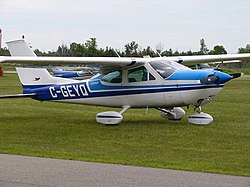
Piper Cherokee 140
 i
iSpecifications
MOSAIC eligiblePerformance
Cruise
118KTAS
Range
515nm
Climb
660fpm
Ceiling
14,300ft
Fuel Burn
7.5gph
Fuel Cap.
36gal
MPG
18.1mpg
Stall (Vs0)
48KIAS
T/O roll
800ft
Ldg roll
535ft
Size & weight
Seats
4
Useful Load
949lbs
Full-fuel payload
733lbs
Max gross
2,150lbs
Wingspan
30ft
Length
23.5ft
Engine
Engine
Lycoming O-320-E2A
Power
150hp
TBO
2,000hrs
Overhaul
$42k
Owning it
Hull insurance
$1k/yr
Parts
excellent
Mechanics
universal
Gear
Fixed
IFR
Yes
Category
certified
Full specification
V-speeds
Airframe
- Empty weight
- 1,201 lbs
- Max fuel weight
- 216 lbs
- Height
- 7.3 ft
- Wing position
- low
Obstacle performance
- Takeoff over 50 ft
- 1,700 ft
- Landing over 50 ft
- 1,090 ft
Paperwork
- Type certificate
- 2A13
- Certification basis
- CAR 3
These figures are typical for the model, not a specification for any individual aircraft. Real-world numbers vary with year, installed equipment, weight, modifications and engine condition — often by more than you would expect. Use them to compare types, and confirm anything you would act on against the Pilot's Operating Handbook for that specific airframe and a prebuy inspection.
Pricing
Typical
$65k
Range
$35k – $105k
Annual all-in
~$19k/yr
All-in at ~100 flying hours a year, using the midpoint of each range — the same figures broken out under “Cost to own” below. Your number will differ, and mostly for two reasons. Experience sets your insurance: a 2,000-hour pilot with recent training pays 30–40% less than a 200-hour owner, and student owners pay 20–40% more — on the same aircraft that is often a doubling. Location sets your hangar: a T-hangar runs $200–400 a month in the Midwest against $400–1,500 in a coastal metro, and an outside tie-down is less again. Engine reserves move too — a local shop reusing your serviceable cylinders can come in 30–50% under the national specialty-shop pricing we quote, though you trade the warranty and turnaround that comes with it. Reserves are money set aside toward a future overhaul, not a bill this year, and the annual inspection figure is the shop’s labor to look — whatever they find is separate.
Cost to own — estimate
Set your yearly hours and local fuel price. Fixed costs (insurance, hangar, annual inspection) don't change with hours; fuel, maintenance and the engine reserve do.
- Fuel (7.5 gph)
- $4,875
- Engine reserve
- $2,100
- Maintenance, parts & wear items ($12/hr)
- $1,200
- Insurance
- $900–$1,800
- Hangar
- $4,230–$10,575
- Annual inspection (labor only)
- $1,200
- Databases & subscriptions
- $400
- Total per year
- $18,528
- Per flight hour
- $185
- Miles flown / year (at cruise)
- 13,579 mi
- Cost per mile
- $1.36/mi
- Time in the air
- 2 hr 33 min
- Fuel burned
- 19 gal
- Out of pocket
- $208
Fuel, engine reserve and wear only. Insurance, hangar and the annual are already paid whether you make the trip or not, so they are not charged here.
Estimate, not a quote. Where a line shows a range, the total, per-hour and per-mile figures use its midpoint— insurance moves most with your experience and time in type, hangar with where you base the aircraft, so your own number could sit at either end. Annual inspection is the shop's labor to open and inspect — what they find is the maintenance line, which covers oil changes, plugs, tires, brakes, hoses, lights, a battery and vacuum pump amortised over their life, and the unscheduled squawks that are the largest and least predictable part of it. Reserves are sinking funds toward an overhaul, not a bill you pay this year — and note that a propeller is due on hours or calendar time, typically six years, so flying less does not put it off forever.
Strengths
- Excellent parts availability and mechanic support across North America
- Docile, forgiving flight characteristics ideal for training
- Four-seat cabin with larger cabin space than Cessna 150
Weaknesses
- Critical wing spar AD compliance required; unmodified spars limited to 12,500 hours
- Slow cruise speed (105-115 KTAS real-world) limits cross-country utility
- Higher fuel burn than comparable trainers increases operating costs
Overview
The Piper PA-28 Cherokee is one of the most successful light aircraft ever produced and the backbone of Piper's single-engine line for over six decades. The PA-28-140, PA-28-150, and PA-28-160 represent the entry-level, low-horsepower end of the Cherokee family -- affordable four-seat trainers and personal aircraft that have introduced hundreds of thousands of pilots to low-wing flying. Over 32,000 PA-28 series aircraft have been built in total, with 10,089 of those being PA-28-140s alone, making the Cherokee second only to the Cessna 172 in total production volume.
The Cherokee story begins in 1960 when Piper sought to replace its aging fabric-covered short-wing series with a modern, all-metal, low-wing design. Karl Jatho and John Thorp (who had designed the Thorp T-211) contributed to the initial concept. The first Cherokee 150 and 160 flew in 1961, receiving type certification under TCDS 2A13. The PA-28-140 followed in 1964, slotting below the 150/160 as a dedicated two-place trainer (though it retained four seats in Normal category). Piper's Lock Haven, Pennsylvania factory was producing 14 Cherokees per day by the summer of 1966.
All three variants -- the 140, 150, and 160 -- share the original "Hershey bar" wing, a constant-chord rectangular planform that gives the Cherokee its distinctive look and predictable stall behavior. This wing was later replaced by the tapered wing on the Warrior (PA-28-151) and Archer (PA-28-181), but the Hershey bar wing remains beloved for training due to its docile handling and honest stall characteristics.
Today, thousands of PA-28-140/150/160s remain on the US registry. With MOSAIC eligibility confirmed (Vs1 well under 59 KCAS), sport pilots can now fly these aircraft, which may renew demand. The Cherokee 140 competes directly with the Cessna 150/152 as a trainer, offering four seats, a larger cabin, and greater useful load in exchange for higher fuel burn and operating costs.
Who flies it: Student pilots, low-time private pilots, flight schools, time-builders, budget cross-country flyers, and flying clubs. The Cherokee 140 is one of the most common first airplanes purchased by newly certificated private pilots.
Variants & History
The PA-28-140, -150, and -160 share the same basic airframe, wing, and fuselage. Differences are primarily in engine output, gross weight, and production period.
| Variant | Years | Engine | HP | Gross Wt (lbs) | Seats (Normal/Utility) | Notes | Approx Built |
|---|---|---|---|---|---|---|---|
| PA-28-150 | 1961-1967 | Lycoming O-320-A2B | 150 | 2,150 | 4/2 | Original Cherokee. First production flew Feb 10, 1961. | ~3,000 |
| PA-28-160 | 1961-1967 | Lycoming O-320-D2A | 160 | 2,200 | 4/2 | Higher-output engine. Slightly faster cruise. | ~4,400 |
| PA-28-140 | 1964-1968 | Lycoming O-320-E2A | 150 (derated from 160) | 2,150 | 4/2 | Cost-reduced trainer variant. Early models had fixed-pitch prop, two-seat utility category. | ~5,100 |
| PA-28-140 (late) | 1968-1973 | Lycoming O-320-E2A | 150 | 2,150 | 4/2 | Improved interior, revised cowling, increased gross weight on some serial numbers. | ~3,800 |
| PA-28-140 Cherokee Cruiser | 1974-1977 | Lycoming O-320-E3D | 150 | 2,150 | 4/2 | Renamed "Cherokee Cruiser" (later "Flite Liner" for flight school version). Updated interior and panel. Final Hershey bar wing 140. | ~1,200 |
Naming confusion: Piper renamed its models frequently. The PA-28-140 was called "Cherokee" (1964-1973), then "Cherokee Cruiser" (1974-1976), then simply "Cruiser" (1977). The flight school version (two-seat interior, basic panel) was called the "Flite Liner." All are the same type certificate and basic airframe.
The "140 HP" misnomer: Despite the designation "PA-28-140," most production aircraft actually have 150 HP engines. The early 1964-model 140s used the O-320-E2A derated to 140 HP with a fixed-pitch Sensenich propeller. By mid-production, the engine was rated at full 150 HP. The "140" designation stuck regardless of actual horsepower.
Subsequent models: The Hershey bar wing Cherokee 140 was succeeded by the PA-28-151 Warrior in 1974 (tapered wing, 150 HP), which eventually became the PA-28-161 Warrior II and III. These are different aircraft despite sharing the PA-28 type certificate. See Piper Warrior for details.
Certificated limits: what the type certificate says, and one open disagreement
The V-speeds, gross weight, seat count and baggage limit in this page's data come from FAA TCDS 2A13 Rev 66, Section VIII — the four-seat Normal category PA-28-140, S/N 28-20001 through 28-26946 and 28-7125001 through 28-7725290, which is the whole 1964-1977 run. (Section VII certificates the same serials as a two-seat airplane and is not what this page describes; its airspeed limits, engine and fuel are identical either way.)
- Baggage is serial-dependent. 200 lb applies from S/N 28-20940 on, which is every airplane after the 1964 model year and is what the frontmatter holds. The 1964 airplanes below that serial are limited to 100 lb unless a Piper kit was fitted. A further 300 lb allowance exists but requires modification to Piper Drawing 66671 and a second compartment, so it is not stored.
- The speeds are stated in CAS, printed as mph with knots in brackets — "Never exceed 171 mph (148 knots) CAS". The knots figures are stored unconverted. The PA-28-140 is not one of the models 2A13 grants an equivalent-safety finding to under CAR 3.757, so the AFM/POH (VB-160, VB-339, VB-557 or VB-770 by serial) is what would confirm the indicated-airspeed equivalents.
- Fuel capacity is unresolved and the figure below is not sourced. This page records 36 gallons (34 usable), with 50-gallon tanks as an option. TCDS 2A13 Rev 66 states 50 gallons for every PA-28-140 serial number, with no smaller and no optional capacity anywhere in the certificate. The certificate cannot settle it on its own because it states a total and gives unusable fuel as a weight (2.2 lb) rather than a volume, while this catalogue records usable gallons. A buyer should confirm capacity against the specific airplane's weight and balance and its AFM, not against this figure.
Performance
The Cherokee 140 sits in a comfortable middle ground -- faster and more capable than a Cessna 150 but slower and simpler than a Cessna 172 or Cherokee 180. It is not a fast airplane, but it is a capable one.
Real-world cruise: Book values show 118 KTAS at 75% power, but expect 105-115 KTAS in practice depending on airframe condition, altitude, and loading. Economy cruise at 55% power yields approximately 100-105 KTAS while reducing fuel burn to 6.5-7.0 GPH -- a worthwhile tradeoff for longer legs.
Climb performance: The book rate of climb of 660 fpm is at sea level, max gross, in a new airplane. At 5,000 ft density altitude with three adults, expect 350-450 fpm. The Cherokee 140 handles density altitude better than the Cessna 150 thanks to its extra 50 HP, but it is still a low-powered airplane that demands respect at high elevations.
Fuel system: Standard fuel capacity is 36 gallons (34 usable) in two wing tanks. Some aircraft were delivered with 50-gallon tanks (48 usable), extending range to approximately 580 nm but adding 84 lbs of fuel weight. The fuel selector is a simple left-right-off valve between the front seats.
Stall behavior: The Hershey bar wing produces benign, predictable stalls. Power-off stalls result in a gentle nose drop with minimal wing drop tendency. Power-on stalls tend to "mush" rather than break sharply -- the aircraft will just sink at a high angle of attack with the stall horn blaring. This is excellent for training but means the Cherokee does not teach aggressive stall recovery the way a Cessna 150 does. Some instructors consider this a drawback.
Compared to the Cessna 150: The Cherokee 140 offers four seats vs two, roughly 900 lbs of useful load vs 470 lbs, and 118 KTAS vs 107 KTAS. The Cherokee burns 7.5 GPH vs 5.5 GPH. The Cherokee is a substantially more capable airplane that costs somewhat more to operate. For a pilot who wants to train in the airplane they will later use for personal travel, the Cherokee 140 makes more sense. For pure training economy, the Cessna 150 wins.
The PA-28-160 advantage: The 160 HP variant offers a noticeable improvement in climb rate (~750 fpm) and slightly higher cruise speed (~123 KTAS) over the 140/150 HP models. Max gross weight is 2,200 lbs. For buyers who can find a well-maintained 160, the extra performance is worth the modest price premium.
Payload & Range
The Cherokee 140 offers substantially more payload flexibility than a Cessna 150 but is still constrained when attempting to fill all four seats with full fuel. Every PA-28 owner must understand the weight-and-balance tradeoffs.
Scenario Analysis
Standard Tanks (36 gal / 216 lbs fuel):
| Scenario | Fuel | Pilot | Pax/Cargo | Remaining | Range (nm) |
|---|---|---|---|---|---|
| Solo, full fuel | 216 | 200 | 0 | 533 | ~515 |
| Solo + 100 lbs baggage, full fuel | 216 | 200 | 100 | 433 | ~515 |
| Two 180-lb adults, full fuel | 216 | 180 | 180 | 373 | ~515 |
| Two adults + 50 lbs bags, full fuel | 216 | 180 | 230 | 323 | ~515 |
| Three 170-lb adults, full fuel | 216 | 170 | 340 | 223 | ~515 |
| Four 170-lb adults, full fuel | 216 | 170 | 510 | 53 | ~515 |
| Four 180-lb adults, full fuel | 216 | 180 | 540 | -7 (OVER GROSS) | -- |
| Four 170-lb adults, reduced fuel | 180 (30 gal) | 170 | 510 | 89 | ~400 |
50-Gallon Tanks (50 gal / 300 lbs fuel):
| Scenario | Fuel | Pax Load | Remaining | Range (nm) |
|---|---|---|---|---|
| Two 180-lb adults, full fuel | 300 | 360 | 289 | ~580 |
| Four 170-lb adults, full fuel | 300 | 680 | -31 (OVER GROSS) | -- |
| Four 170-lb adults, 36 gal | 216 | 680 | 53 | ~515 |
Key takeaway: The Cherokee 140 is a two-person cross-country machine with four-seat capability for short flights. Two adults can fly 500+ nm with full fuel and baggage. Four adults require fuel management and short legs. This is markedly better than a Cessna 150 (which cannot carry more than two people at all) but less capable than a Cherokee 180 or Cessna 172.
CG considerations: The Cherokee has a relatively narrow CG envelope. With rear seat passengers and baggage, the aft CG limit can be reached before the gross weight limit. Always run a weight-and-balance calculation -- do not rely on "it fits, it flies" logic. Rear seat passengers without front seat ballast can push the CG dangerously aft, particularly with partial fuel.
1998 Piper Archer
Archer III · GNS 430W · Honest Trainer · Fresh Annual
Mission Suitability
Flight Training: 9/10
The Cherokee 140 is an outstanding primary trainer. Docile stall behavior, stable flight characteristics, tricycle gear, and excellent forward visibility make it ideal for ab-initio students. The four-seat cabin accommodates larger student-instructor pairs far more comfortably than a Cessna 150. The Cherokee's low wing teaches fuel management (gravity does not feed from wing tanks) and provides a different perspective from high-wing trainers. Falls short of 10/10 because the mushy stall characteristics arguably do not adequately prepare students for more aggressive stalling airplanes, and the higher fuel burn adds cost.
Local Fun Flying: 8/10
Cheap to operate, comfortable cabin, stable platform for sightseeing. The low wing is less ideal for ground observation than a high-wing Cessna, but the larger cabin and four seats make it better for flying with friends. A wonderful Saturday morning airplane.
Cross-Country: 5/10
At 118 KTAS with 515 nm range on standard tanks, the Cherokee 140 is a legitimate short cross-country airplane. A 300 nm trip takes about 2.5 hours -- reasonable. With the 50-gallon tank option, range extends to nearly 580 nm. However, it is slow for anything beyond 400 nm, and the limited useful load means carrying four adults with baggage and full fuel is not possible. Best as a two-person cross-country machine.
Business Travel: 3/10
The Cherokee 140 can move one or two people and briefcases at 118 knots. This is barely adequate for short business hops under 200 nm. No oxygen, no de-ice, limited IFR capability without upgrades. Not a serious business airplane, but better than a Cessna 150.
Cargo Hauling: 3/10
Useful load of 949 lbs sounds generous until you subtract fuel (216 lbs for full tanks) and the pilot (200 lbs), leaving 533 lbs for passengers and cargo. The baggage compartment holds 200 lbs. Adequate for personal flying but not a cargo hauler.
Backcountry: 2/10
The Cherokee's low wing, limited prop clearance, and fixed tricycle gear make it a poor choice for unimproved strips. The nosewheel is vulnerable on rough surfaces. Climb performance at high density altitudes is marginal. Some pilots operate Cherokees on grass strips, but this is not the airplane's strength.
Aerobatics: 2/10
The Cherokee is certified in the Utility category at +3.8G/-1.52G with two seats occupied, which permits spins and steep turns but not aerobatic maneuvers. The airframe is not designed for aerobatics, and there are no aerobatic STCs. Not an aerobatic airplane.
Surveying: 3/10
The low wing blocks downward visibility on the side of the turn, making aerial observation more difficult than in a high-wing aircraft. Limited payload for camera equipment. Adequate endurance but not competitive with purpose-built survey platforms.
Avionics Ecosystem
Most Cherokee 140s on the market today have been through multiple avionics generations. The panel is wider than a Cessna 150's and accommodates modern upgrades reasonably well, though it is not as spacious as later PA-28 models.
Budget tier ($2,000-$5,000 installed): Handheld GPS in a yoke mount, portable ADS-B In receiver (Stratux or Sentry), basic COM radio (King KX-155 or Icom A220), and a tablet running ForeFlight or Garmin Pilot. This is the reality for most sub-$50,000 Cherokees.
Mid-range tier ($10,000-$20,000 installed): Garmin GNC 255 NAV/COM/GPS, Garmin GTX 345 ADS-B In/Out transponder, single Garmin G5 or GI 275 replacing the attitude indicator. This configuration supports basic IFR flight and is the sweet spot for a nicely equipped Cherokee 140.
High-end tier ($25,000-$50,000+ installed): Dual Garmin G5 or GI 275 (AI + HSI), Garmin GNX 375 GPS/NAV with ADS-B In/Out, GTR 225 or GNC 255 COM, Garmin GFC 500 autopilot. This configuration makes the Cherokee a legitimate IFR cross-country platform. At this investment level, the avionics may exceed the airframe value. A GFC 500 autopilot installation runs approximately $19,000 for PA-28 models.
Panel considerations: The Cherokee panel is a standard T-arrangement with room for a six-pack. The GI 275 drops into standard 3.125-inch instrument holes, making it the preferred glass upgrade. Vacuum system removal is common with dual GI 275 or G5 installations. Removing the vacuum system saves weight and eliminates a failure mode.
Autopilot: Many Cherokees were originally equipped with Piper AutoFlite or Century autopilot systems. These are generally unreliable and expensive to maintain. The Garmin GFC 500 is the modern replacement of choice, offering GPSS steering, coupled approaches, and envelope protection.
STCs & Modifications
Engine Upgrades
- 180 HP Lycoming O-360 conversion (~$20,000-$25,000 installed): Available via STC. Transforms the airplane into essentially a Cherokee 180. Significantly improves climb rate and cruise speed. Requires fuel system modifications, new engine mount, and cowling work. A popular mod that adds substantial value to the airframe.
- 160 HP conversion (for PA-28-140 models): Less common than the 180 HP conversion but available. Returns the airplane to the performance of a factory PA-28-160.
Exhaust Systems
- PowerFlow tuned exhaust (~$3,500-$4,500 installed): One of the most popular Cherokee mods, with over 800 installed on PA-28-140s alone. Documented fuel savings of 1.2-2.2 GPH at equivalent cruise settings. Increases RPM by 30-130, shortens takeoff roll, and improves climb rate by 30-50%. Excellent return on investment. STC SA01421AT.
Speed Modifications
- Knots 2U gap seal kits ($200-$800 installed): Flap gap seals, aileron gap seals, stabilator gap seals, and flap-fuselage gap seals. Claimed 3-7 knot improvement when all seals are installed. Real-world gains are typically 2-5 knots. Inexpensive and easy to install.
- Wing root fairings ($150-$400 installed): Smooth the wing-to-fuselage junction. 1-2 knot improvement.
- Wheel fairings ($500-$1,200 installed): If not already equipped, adding streamlined wheel pants adds 3-5 knots.
- Slimline strobe kit and antenna fairings: Minor drag reduction.
Fuel
- Auto fuel STC (Petersen Aviation): Available for the PA-28-140, -150, and others. Permits use of automotive gasoline, saving $2-3/gallon vs 100LL. The O-320-E2A at 150 HP does not require fuel system modifications for the auto fuel STC on the -140. Engines modified to 160 or 180 HP require additional fuel system modifications per STC SA2660CE.
Other Popular STCs
- Shoulder harness kits: For early models that lack factory shoulder harnesses. Strongly recommended for safety.
- LED lighting conversions: Landing, taxi, nav, and strobe lights. Better visibility, lower current draw, longer life.
- Baggage door modification: Some STCs provide a larger baggage opening.
- Horton STOL kit: Leading edge cuffs and stall fences. Reduces stall speed 3-5 knots and improves low-speed handling.

2019 Cirrus SR22
One Owner · Platinum · FIKI · Low 690 Hours · Hangared
Maintenance & Support
Parts Availability: Excellent
The PA-28 series' massive production run (32,000+ aircraft) and the large number still flying ensure exceptional parts availability. New-manufacture parts are available from Piper Aircraft (Vero Beach, FL) and numerous PMA suppliers. The salvage market is robust.
- Engine parts: Lycoming O-320 parts are among the most widely available engine parts in aviation. Cylinders, pistons, cam/followers, bearings, magnetos -- all in stock at major distributors (Aircraft Spruce, Spruce, Chief Aircraft).
- Airframe parts: Skins, ribs, control surfaces, landing gear components, windshields, doors -- virtually everything is available new or used. Piper continues to support legacy models through their parts department.
- Propeller: Sensenich or McCauley fixed-pitch props are simple and affordable. Overhaul runs $1,500-$2,500.
- Wing spar components: Piper offers redesigned spar assemblies and reinforcement kits for AD compliance. These are currently in high demand.
Mechanic Familiarity: Universal
Every A&P mechanic in North America has worked on a PA-28. This is one of the most universally understood airframes in general aviation. No specialist knowledge is required for routine maintenance. Any competent shop can perform annuals, repairs, and modifications. Piper-specific shops like those listed by the Piper Flyer Association or Piper Owner Society offer specialized expertise for complex modifications.
Annual Cost Range
| Item | Low | High |
|---|---|---|
| Annual inspection (labor) | $800 | $1,500 |
| Annual squawks/parts | $400 | $2,500 |
| Oil changes (3-4/yr) | $150 | $350 |
| Unexpected maintenance | $0 | $3,000 |
| Total annual maintenance | $1,350 | $7,350 |
Expensive Items to Watch
- Engine overhaul: $36,000–$48,000 for a field overhaul of the O-320 with new cylinders and accessories. Factory remanufactured from Lycoming is $40,500–$43,500.
- Wing spar AD compliance: $5,000-$15,000+ depending on inspection results, reinforcement kit, or spar replacement.
- Prop overhaul: $1,500-$2,500 every 2,000 hours or at engine overhaul.
- Fuel tank reseal: $2,000-$4,000 per side if leaking.
- Exhaust system replacement: $1,500-$3,000 complete.
- Nose gear overhaul: $500-$1,200 for shimmy dampener, torque link bushings, and steering components.
Type Club Support
- Piper Flyer Association (piperflyer.com): Active type club with forums, technical knowledge base, and events. Maintains detailed AD tracking and STC information for all PA-28 models.
- Piper Owner Society (piperowner.org): Comprehensive resource for Piper owners with technical articles, maintenance guides, weight and balance calculators, and market data. Excellent coverage of the wing spar AD situation.
- CherokeeChat (cherokeechat.org): Community forum dedicated to Hershey bar wing Cherokees.
See Maintenance Ecosystem for broader GA maintenance information.
Valuation Factors
Price Tiers (2025-2026 Market)
| Condition | Price Range | Description |
|---|---|---|
| Project / Needs Work | $25,000-$40,000 | High-time engine (1,500+ SMOH), old panel, needs paint/interior, possible spar AD non-compliance |
| Average Runner | $45,000-$65,000 | Mid-time engine, basic avionics with ADS-B Out, serviceable paint/interior, AD-compliant |
| Nice Cherokee 140 | $65,000-$85,000 | Low/mid-time engine, decent avionics (GPS, ADS-B, possibly G5), good cosmetics, current annual |
| Cream Puff / Upgraded | $85,000-$105,000 | Fresh engine, modern avionics, new paint/interior, 180 HP conversion or PowerFlow exhaust |
Key Valuation Drivers
- Engine time: The single biggest factor. A mid-time O-320 (800-1,000 SMOH) in a nice airframe is the sweet spot. A run-out engine deducts $18,000-$25,000 from value.
- Spar AD compliance: Full compliance with AD 2020-24-05 and AD 2024-18-08 is essential. Aircraft approaching the 12,500-hour spar life limit without a reinforcement kit may be difficult to sell. Verify total airframe time carefully.
- Variant/year: Later models (1970-1977) are slightly more desirable due to improved interiors and systems. The Cherokee Cruiser name carries a modest premium. PA-28-160 models command 10-15% more than equivalent PA-28-140s due to higher performance.
- Avionics: ADS-B Out compliance is table stakes. A Cherokee without it should be discounted $3,000-$5,000. A well-equipped IFR panel (GNX 375, G5, autopilot) can add $15,000-$25,000.
- 50-gallon tanks: Aircraft with the 50-gallon fuel option command a modest premium ($2,000-$3,000) due to extended range.
- 180 HP conversion: A properly STCd 180 HP conversion adds $10,000-$20,000 to the aircraft value.
- Damage history: Prior damage reduces value 10-20%. Gear collapses (rare on fixed gear), prop strikes, and hangar rash are common findings.
See Aircraft Valuation Methodology for general aircraft valuation formulas.
ADs & Common Problems
Critical: Wing Spar AD (AD 2020-24-05, AD 2024-18-08)
This is the most significant airworthiness concern for any PA-28 owner. Following a 2018 fatal accident involving a PA-28R-201 where metal-fatigue cracking in the lower main wing spar cap caused wing separation, the FAA issued a series of increasingly stringent ADs affecting PA-28-140, -150, -160, -180, -235 and PA-32-260/-300 aircraft.
AD 2020-24-05 required eddy current inspection of the lower wing spar cap at the root fitting area. Of total inspections conducted, over 100 reported positive eddy current indications, with 3 confirmed fatigue cracks among 20 positive findings. The FAA found numerous cracks and bolt-hole quality issues across the fleet.
AD 2024-18-08 (October 2024) established life limits for affected wing spars:
- Unmodified spar: Limited to 12,500 hours total time in service
- Reinforced spar (Piper kit): Extended to 25,000 hours
- Redesigned spar assembly: Available from Piper as a permanent fix
A separate AD addresses spar web corrosion in areas not easily accessible for routine inspection, requiring specific corrosion inspections of the left and right main wing spars.
Pre-buy action: Verify full compliance with all spar ADs. Check total airframe hours against the life limit. Request eddy current inspection results. A spar replacement or reinforcement kit adds significant cost ($5,000-$15,000+) but is essential for continued airworthiness. High-time training aircraft are the highest risk.
Fuel Tank Issues
Older Cherokees can develop leaking fuel tanks, particularly at sealant joints. The PA-28 uses wet-wing fuel tanks (integral to the wing structure). A fuel tank reseal runs $2,000-$4,000 per side. Blue staining on the underside of the wing near the fuel tank area is a telltale sign.
Stabilator and Trim
- Stabilator hinge bolt wear: The all-flying stabilator is mounted on a piano hinge with a single bolt. Wear in this area is a recurring inspection item. Neglected hinge bolts can develop excessive play, affecting pitch control.
- Trim cable wear: The manual trim system uses a cable and drum. Cable fraying at pulleys is common on older aircraft.
Nose Gear
- Nose gear shimmy: Extremely common, usually caused by a worn shimmy dampener or loose nose gear torque links. Annoying but not dangerous. Fix costs $200-$600 for dampener replacement and torque link bushing service.
- Nose gear steering horn cracks: Inspect for cracks at the steering collar. A known fatigue area on high-cycle training aircraft.
Other Common Issues
- Magneto problems: Slick or Bendix magnetos require regular 500-hour inspections. Budget $500-$1,200 per mag for overhaul.
- Exhaust system deterioration: The muffler and heat shroud provide cabin heat via a heat exchanger. Any exhaust leak is a CO hazard. Budget $1,500-$3,000 for exhaust replacement. Always fly with a CO detector.
- Control cable corrosion/fraying: Inspect at pulleys and fairleads. Cable replacement runs $500-$1,500 per cable installed.
- Landing gear corrosion: Fixed gear Cherokees use steel tube main gear. Inspect for corrosion under fairings and at attach points.
Insurance Profile
The Cherokee 140 is a straightforward, low-risk aircraft to insure. Its fixed gear, modest horsepower, and massive fleet provide insurers with an excellent actuarial dataset.
Typical premiums (2025-2026):
| Coverage | Qualified Pilot (200+ hrs) | Low-Time Pilot (<100 hrs) |
|---|---|---|
| Liability only ($1M smooth) | $300-$500/yr | $500-$800/yr |
| Hull + Liability ($50K hull, $1M liability) | $600-$1,000/yr | $1,000-$1,500/yr |
| Hull + Liability ($80K hull, $1M liability) | $800-$1,200/yr | $1,200-$1,800/yr |
Underwriting factors:
- Fixed gear and low horsepower place the Cherokee firmly in the standard-risk category
- Hull values in the $50,000-$80,000 range keep premiums moderate
- Student pilot and renter use increase premiums but most underwriters will write the policy
- Flight school use (multi-student) requires a commercial policy with substantially higher premiums
- No high-performance or complex endorsement required -- any private pilot can be insured
- Piper Cherokees have an excellent loss history, keeping premiums competitive
- Tailwheel or retractable experience is not required, making this an accessible first airplane for insurance purposes
MOSAIC impact: With MOSAIC eligibility, sport pilots can now insure and fly these aircraft. Insurance markets are still adjusting to MOSAIC-era policies, but initial indications suggest no premium increase for sport pilot operators.
See GA Insurance Underwriting for general GA insurance information.
For sale (0)
No listings for this model right now.
For sale elsewhere (7)
Current ads on Barnstormers, checked daily. Photos, full details and the seller are on the listing site.
1968 Piper Cherokee 140
Listed on BarnstormersADS-B In · ADS-B Out · 406 MHz ELT
View photos and full ad on Barnstormers ↗Piper Cherokee 140
Listed on BarnstormersADS-B Out
View photos and full ad on Barnstormers ↗1964 Piper Cherokee 140
Listed on Barnstormers1973 Piper Cherokee 140
Listed on Barnstormers1975 Piper Cherokee 140
Listed on BarnstormersADF · ADS-B In · ADS-B Out · Electronics International engine monitor
View photos and full ad on Barnstormers ↗Piper Cherokee 140
Listed on Barnstormers1965 Piper Cherokee 140
Listed on BarnstormersGarmin G5 · Garmin GNC 355 · S-TEC autopilot
View photos and full ad on Barnstormers ↗Also worth looking at
What buyers usually weigh against the Piper Cherokee 140 — aircraft flown for the same kind of mission.