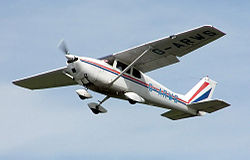
Piper · 1951–1964
Piper Tri-Pacer
 i
iSpecifications
MOSAIC eligiblePerformance
Cruise
114KTAS
Range
460nm
Climb
725fpm
Ceiling
15,000ft
Fuel Burn
8.5gph
Fuel Cap.
36gal
MPG
15.4mpg
Stall (Vs0)
43KIAS
T/O roll
1120ft
Ldg roll
800ft
Size & weight
Seats
4
Useful Load
940lbs
Full-fuel payload
724lbs
Max gross
2,000lbs
Wingspan
29.3ft
Length
20.6ft
Engine
Engine
Lycoming O-320-A1A
Power
150hp
TBO
2,000hrs
Overhaul
$42k
Owning it
Hull insurance
$1k/yr
Parts
good
Mechanics
common
Gear
Fixed
IFR
No
Category
certified
Full specification
V-speeds
Airframe
- Empty weight
- 1,060 lbs
- Max fuel weight
- 216 lbs
- Height
- 8.3 ft
- Wing position
- high
Obstacle performance
- Takeoff over 50 ft
- 1,600 ft
- Landing over 50 ft
- 1,280 ft
Paperwork
- Type certificate
- 1A6
- Certification basis
- CAR 3
These figures are typical for the model, not a specification for any individual aircraft. Real-world numbers vary with year, installed equipment, weight, modifications and engine condition — often by more than you would expect. Use them to compare types, and confirm anything you would act on against the Pilot's Operating Handbook for that specific airframe and a prebuy inspection.
Pricing
Typical
$38k
Range
$18k – $80k
Annual all-in
~$18k/yr
All-in at ~100 flying hours a year, using the midpoint of each range — the same figures broken out under “Cost to own” below. Your number will differ, and mostly for two reasons. Experience sets your insurance: a 2,000-hour pilot with recent training pays 30–40% less than a 200-hour owner, and student owners pay 20–40% more — on the same aircraft that is often a doubling. Location sets your hangar: a T-hangar runs $200–400 a month in the Midwest against $400–1,500 in a coastal metro, and an outside tie-down is less again. Engine reserves move too — a local shop reusing your serviceable cylinders can come in 30–50% under the national specialty-shop pricing we quote, though you trade the warranty and turnaround that comes with it. Reserves are money set aside toward a future overhaul, not a bill this year, and the annual inspection figure is the shop’s labor to look — whatever they find is separate.
Cost to own — estimate
Set your yearly hours and local fuel price. Fixed costs (insurance, hangar, annual inspection) don't change with hours; fuel, maintenance and the engine reserve do.
- Fuel (8.5 gph)
- $5,525
- Engine reserve
- $2,100
- Maintenance, parts & wear items ($12/hr)
- $1,200
- Insurance
- $900–$1,800
- Hangar
- $3,621–$9,054
- Annual inspection (labor only)
- $1,200
- Databases & subscriptions
- $400
- Total per year
- $18,113
- Per flight hour
- $181
- Miles flown / year (at cruise)
- 13,119 mi
- Cost per mile
- $1.38/mi
- Time in the air
- 2 hr 38 min
- Fuel burned
- 22 gal
- Out of pocket
- $232
Fuel, engine reserve and wear only. Insurance, hangar and the annual are already paid whether you make the trip or not, so they are not charged here.
Estimate, not a quote. Where a line shows a range, the total, per-hour and per-mile figures use its midpoint— insurance moves most with your experience and time in type, hangar with where you base the aircraft, so your own number could sit at either end. Annual inspection is the shop's labor to open and inspect — what they find is the maintenance line, which covers oil changes, plugs, tires, brakes, hoses, lights, a battery and vacuum pump amortised over their life, and the unscheduled squawks that are the largest and least predictable part of it. Reserves are sinking funds toward an overhaul, not a bill you pay this year — and note that a propeller is due on hours or calendar time, typically six years, so flying less does not put it off forever.
Strengths
- Exceptional value: $30K–$45K acquisition cost with $82–$90/hour all-in operating expense
- Excellent parts support: 11,000+ produced; Lycoming O-320 is among most common engines ever built
- Capable cross-country platform: 114 KTAS, 460 nm range, comfortable for two front-seat occupants
- Docile, forgiving handling ideal for low-time pilots transitioning to four-seat aircraft
Weaknesses
- Fabric covering: typical candidates need $15K–$25K re-cover; condition is single biggest pricing variable
- Narrow nosewheel gear prone to shimmy and weathervaning; poor ground handling in crosswinds
- Vulnerable to hard-landing damage on tall, narrow gear; prop-strike history demands teardown inspection
- Modest climb performance (725 fpm PA-22-150; 400–500 fpm at gross weight in heat) requires density altitude awareness
Variants & History
| Variant | Years | Engine | HP | Gross Weight | Seats | Units Built | Key Differences |
|---|---|---|---|---|---|---|---|
| PA-22-108 Colt | 1961-1963 | Lycoming O-235-C1B | 108 | 1,650 lbs | 2 | ~1,800 | Stripped-down two-seat trainer. No flaps, single fuel tank (18 gal standard, 36 optional), no rear windows or door. Shorter 30-ft wingspan. Designed to compete with Cessna 150. |
| PA-22-125 | 1951-1952 | Lycoming O-290-D | 125 | 1,800 lbs | 4 | ~450 | First Tri-Pacer variant. Same engine as early PA-20 Pacer. |
| PA-22-135 | 1952-1954 | Lycoming O-290-D2 | 135 | 1,800 lbs | 4 | ~2,200 | Modest power increase. Same 1,800 lb gross weight. |
| PA-22-150 | 1955-1960 | Lycoming O-320-A1A | 150 | 2,000 lbs | 4 | ~4,500 | Most common variant. 200 lb gross weight increase over 135. Improved climb and useful load. The sweet spot of the lineup. |
| PA-22-150 Caribbean | 1960-1961 | Lycoming O-320 | 150 | 2,000 lbs | 4 | ~200 | Budget variant with reduced standard equipment. Same performance as PA-22-150. |
| PA-22-160 | 1959-1964 | Lycoming O-320-B2A | 160 | 2,000 lbs | 4 | ~2,100 | Final and most powerful variant. Best performance of the line. |
The PA-22-150 is the most common surviving variant and represents the best balance of performance, availability, and price. The PA-22-160 commands a slight premium for its extra 10 HP. The earlier 125 HP and 135 HP models are less desirable due to lower gross weights and weaker climb performance, though they cost less to acquire.
Performance
Source: Piper Owners' Handbook 753 526, Section One Specifications. At 75% power and sea level, the Handbook's own figure for the PA-22-150 Landplane is 107 KTAS burning 9.0 GPH. A second 75%-power row is published at 7,000 ft ("Optimum Cruising Speed"): 132 mph = 115 KTAS. The PA-22-160 (Lycoming O-320-B, 160 hp) adds a couple of knots to both rows per the same table. No lower-power (economy) row is published, so this page carries no econ_cruise_* figures.
Climb performance at 725 fpm (PA-22-150, Piper's own sea-level figure) is adequate for routine operations. The PA-22-160 improves to 800 fpm per the same table. At gross weight on warm days at altitude, expect noticeably less, which is sufficient but requires awareness of density altitude effects.
The Tri-Pacer's handling is docile and forgiving, making it an approachable airplane for low-time pilots. It is not sporty or crisp on the controls -- the fabric covering and generous wing area give it a soft, somewhat mushy feel in roll -- but it does what it is told without surprises. Stall behavior is gentle with adequate warning. The tall, narrow gear stance makes it susceptible to weathervaning in crosswinds, and many pilots report the ground handling as the airplane's least endearing characteristic.
The Colt (PA-22-108) deserves separate mention: with 108 HP and 1,650 lbs gross weight, it cruises at 93-100 KTAS on 6 GPH. It was designed as a trainer to compete with the Cessna 150 and is perfectly adequate in that role, though it lacks flaps in standard configuration, which complicates short-field operations.
Payload & Range
The PA-22-150's useful load is now sourced at 900 lbs (2,000 lb gross minus the Owner's Handbook's 1,100 lb empty weight) -- still generous for a four-seat airplane in this price class, though the margin over the PA-20 Pacer's own corrected 930 lbs is now much smaller than an earlier version of this page implied (the Pacer's gross weight had been understated by 150 lbs).
Scenario 1: Full Fuel + 2 Occupants (Cross-Country Touring)
| Item | Weight |
|---|---|
| Full fuel (36 gal) | 216 lbs |
| Pilot | 200 lbs |
| Front passenger | 180 lbs |
| Baggage | 60 lbs |
| Total payload | 656 lbs |
| Under gross by | 284 lbs |
| Range at economy cruise | ~420 nm |
This is the Tri-Pacer's comfortable operating envelope: two people, full fuel, and weekend bags. The 284 lb margin under gross means the airplane is not being pushed, and performance will be at or above book numbers.
Scenario 2: Four Occupants (Weekend Trip)
| Item | Weight |
|---|---|
| Pilot | 200 lbs |
| Front passenger | 180 lbs |
| Rear passenger 1 | 170 lbs |
| Rear passenger 2 | 150 lbs |
| Baggage | 40 lbs |
| Total payload | 740 lbs |
| Remaining for fuel | 200 lbs (33.3 gal) |
| Range at economy cruise | ~360 nm |
The Tri-Pacer handles four occupants more gracefully than the PA-20, thanks to its 200 lb higher gross weight. With four adults of average weight, you can carry nearly full fuel. This makes the airplane a genuine four-seat machine for trips under 300 nm, which is something the lighter PA-20 struggles with.
Scenario 3: Colt (PA-22-108) Training Mission
| Item | Weight |
|---|---|
| Fuel (18 gal, standard tank) | 108 lbs |
| Instructor | 200 lbs |
| Student | 180 lbs |
| Total payload | 488 lbs |
| Under gross by | 162 lbs (1,650 lb gross) |
| Endurance at 6 GPH | ~2.5 hours with reserve |
The Colt carries two adults with adequate fuel for a typical training session. The 18-gallon standard tank limits endurance, but the optional 36-gallon configuration extends range to approximately 500 nm, making the Colt a viable cross-country airplane as well.
The Tri-Pacer's Place in the Market
The Tri-Pacer competes primarily on value. It is not the fastest, most comfortable, or most attractive four-seat airplane available, but it may be the most airplane you can buy for the least money. A flyable PA-22-150 for $35,000 delivers 90% of the cross-country utility of a Cessna 172 at a fraction of the Cessna's $80,000-$150,000 market price. For a first-time buyer, a flying club, or a pilot who wants four seats on a strict budget, the Tri-Pacer deserves serious consideration despite its aesthetic shortcomings.
Mission Suitability
Flight Training (5/10): The four-seat Tri-Pacer is not an ideal primary trainer (too much airplane for ab initio instruction), but the two-seat Colt was specifically designed for training and served well at flight schools. The Tri-Pacer itself works as a step-up airplane for pilots transitioning to four-seat aircraft. Nosewheel gear and gentle handling are confidence-building. Fabric covering is a concern for ham-fisted students.
Backcountry (4/10): The nosewheel limits off-airport capability compared to the tailwheel PA-20 Pacer. However, Tri-Pacers converted to tailwheel configuration (PA-22/20 conversion) score much higher and are legitimate backcountry machines. In stock tricycle configuration, the Tri-Pacer handles well-maintained grass strips but should stay away from rough, unimproved surfaces where the nosewheel is vulnerable.
Business Travel (3/10): Modest cruise speed and vintage fabric-covered aesthetics limit business utility. However, for a self-employed pilot flying 150-250 nm trips to small airports, the Tri-Pacer gets the job done at a very low cost.
Aerobatics (1/10): Not approved for aerobatic flight. Normal Category certification only.
Cross-Country (6/10): This is where the Tri-Pacer earns its keep. With 36 gallons (total, not confirmed usable) and a 107 KTAS / 9.0 GPH cruise, Piper's own published range is 428 nm on the standard tank (521 nm with the optional 44-gal tank). Two front-seat occupants are comfortable; the rear seat is tight for adults on longer legs but works for children. A Tri-Pacer with a panel-mounted GPS and ADS-B compliance is a genuinely useful cross-country airplane at an acquisition cost below most cars.
Cargo Hauling (4/10): The useful load is now sourced at 900 lbs (2,000 lb gross minus the Handbook's 1,100 lb empty weight) -- still good for the class, though 40 lbs less than an earlier version of this page claimed against a lower, unsourced empty weight. Full fuel (216 lbs at the 36-gal total) and a pilot (200 lbs) leaves roughly 480 lbs for passengers and cargo. Not a hauler, but it carries a reasonable load for its size and price.
Local Fun Flying (7/10): The Tri-Pacer is a pleasant weekend airplane. It lacks the visceral appeal of a taildragger, but the ease of the nosewheel, the high-wing visibility, and the low operating cost make it an enjoyable airplane to own and fly casually. Docked versus the Pacer because the tailwheel version simply has more character.
Surveying (3/10): High wing helps with visibility, but no survey-specific features or modifications are common.

1998 Piper Archer
Archer III · GNS 430W · Honest Trainer · Fresh Annual
Avionics Ecosystem
Tri-Pacer panels vary enormously, from original 1950s steam gauges to surprisingly modern installations. The steel-tube fuselage and fabric covering present installation challenges similar to the PA-20.
Minimalist VFR ($0-$3,000): Many Tri-Pacers fly with basic analog instruments and a handheld GPS. Given the airplane's low acquisition cost, some owners intentionally keep avionics minimal. A portable ADS-B receiver (Sentry, Stratus) paired with an iPad running ForeFlight is a cost-effective solution.
Practical Upgrade ($5,000-$15,000): A panel-mounted GPS (Garmin GNS 430W, GTN 625, or Avidyne IFD 440) and an ADS-B Out transponder (Garmin GTX 345 or uAvionix tailBeacon) dramatically improve situational awareness and cross-country utility. An electronic engine monitor (JPI or EI) helps with engine management on the Lycoming.
Full Panel ($15,000-$42,000): Dual GI 275 displays, GTN 650Xi, and modern audio panel. At this investment level, the avionics cost approaches or exceeds the airframe value, which is a common pattern with affordable vintage aircraft. Owners doing this are typically committed to the airplane long-term.
The Tri-Pacer's panel is adequate for most retrofit installations. Garmin's GI 275 and uAvionix's AV-30 are particularly popular as they fit standard 3-1/8" instrument holes.
STCs & Modifications
The PA-22 shares the short-wing Piper modification ecosystem with the PA-20, plus several Tri-Pacer-specific conversions.
Tailwheel Conversion (PA-22/20)
The most significant Tri-Pacer modification is the tailwheel conversion, which effectively transforms the airplane into a Pacer:
| Kit | Details | Approx. Cost |
|---|---|---|
| Trimmer STC (SA02345AK) | PA-18 heavy-duty 3" extended landing gear with Maule oleo struts. The gold standard bush conversion. Includes Airframes Alaska PMA parts. | $5,000-$8,000 installed |
| Univair 22/20 conversion (L2200-01) | Basic conversion kit. Cleveland wheels and brakes additional. | $3,249 kit + $1,800 brakes + labor |
Once converted, the PA-22/20 gains access to the full range of bush tires (26-31" Bushwheels) and STOL modifications available to the PA-20. Many converted Tri-Pacers go on to become serious backcountry machines.
Engine Upgrades
| STC | Engine | HP | Notes | Approx. Cost |
|---|---|---|---|---|
| Lycoming O-320 (various) | O-320-A2B | 150 | Upgrade for 125/135 HP models to current production engine. | $20,000-$42,000 installed |
| Lycoming O-360 | O-360-A1A | 180 | Maximum practical upgrade. Significant performance improvement. | $35,000-$50,000 installed |
STOL & Backcountry Modifications
| Modification | Effect | Approx. Cost |
|---|---|---|
| Crosswind STOL kit (VGs) | Reduces stall speed 5-7 kts. Most cost-effective performance modification. | $1,500-$3,000 installed |
| Crosswind cuffed wings | Improved slow-flight handling and stall characteristics. | $2,500-$4,500 installed |
| Crosswind extended wing tips | Added span reduces stall speed and improves climb. | $3,000-$5,000 installed |
| Crosswind fenced wings | Stall fences improve lateral control at low speeds. | $2,000-$3,500 installed |
Other Modifications
| Modification | Notes | Approx. Cost |
|---|---|---|
| Auto fuel STC (EAA/Petersen) | Allows automobile gasoline. Significant operating cost savings. | $200-$300 |
| Metal skin STC | Replaces fabric with aluminum skins. Eliminates re-cover requirement but adds weight. | $15,000-$25,000+ |
| Shoulder harness STC | Essential safety upgrade for original lap-belt-only installations. | $300-$800 |
| Auxiliary fuel tanks | Additional wing tank capacity for extended range. | $2,000-$4,000 |
| Floats / skis | Various float and ski installations available. | $8,000-$20,000 |
Maintenance & Support
Parts Availability — Good
The PA-22's high production numbers (11,000+ including Colts) ensure a robust parts ecosystem:
- Airframe parts: Univair is the primary supplier and maintains comprehensive inventory for the PA-22 family. The Short Wing Piper Club facilitates parts trading among members. Supply is generally adequate for all routine maintenance.
- Engine parts: The Lycoming O-320 (PA-22-150/160) and O-235 (Colt) are among the most common aircraft engines ever built and enjoy excellent parts support from Lycoming and aftermarket suppliers. The O-290 in earlier models is more challenging, as noted in the PA-20 page.
- Fabric and covering supplies: All standard STC'd covering systems readily available.
- Landing gear: Nosewheel, main gear, and related components well supported through Univair and specialty vendors.
Mechanic Familiarity — Common
Any A&P experienced with tube-and-fabric aircraft can maintain a Tri-Pacer. The Lycoming four-cylinder engines are among the best-understood powerplants in aviation. Fabric work is the specialized skill; ensure your IA is competent with fabric inspection and repair.
Annual Cost Range
| Item | Typical Range |
|---|---|
| Annual inspection (labor + routine items) | $1,000-$2,200 |
| Engine reserve (2,000 hr TBO, $30K overhaul) | $15/hour (~$1,500/year at 100 hrs) |
| Insurance (full coverage, $35K hull) | $850-$1,100 |
| Hangar | $200-$500/month ($2,400-$6,000/year) |
| Fuel (100 hrs at 8.5 GPH, $6.50/gal) | $5,525/year |
| Miscellaneous (oil, tires, unexpected) | $800-$1,500 |
| Total (100 hrs/year) | $12,075-$17,825/year |
The per-hour operating cost of approximately $82-$90 (at 100 hours/year including fixed costs) makes the Tri-Pacer one of the least expensive four-seat airplanes to own and operate. Fabric hangaring is strongly recommended to extend covering life and protect the investment.

2019 Cirrus SR22
One Owner · Platinum · FIKI · Low 690 Hours · Hangared
Valuation Factors
The Tri-Pacer market is one of the most accessible in general aviation. High production numbers keep supply adequate, and the airplane's somewhat unglamorous reputation keeps prices low despite genuine utility.
Price Tiers (2025-2026)
| Condition / Configuration | Price Range |
|---|---|
| PA-22-108 Colt, flyable, average | $18,000-$42,000 |
| PA-22-125/135, flyable, average | $22,000-$35,000 |
| PA-22-150, flyable, average condition, mid-time engine | $42,000-$45,000 |
| PA-22-160, flyable, average condition | $35,000-$50,000 |
| PA-22-150/160, well-maintained, fresh cover, good engine | $45,000-$65,000 |
| PA-22/20 tailwheel conversion, modified for backcountry | $50,000-$80,000 |
| Full restoration / show quality | $60,000-$80,000+ |
Key Value Drivers
- Engine variant: PA-22-150 and PA-22-160 command higher prices than earlier 125/135 HP models due to better performance and the 2,000 lb gross weight.
- Engine time: Fresh overhaul on a Lycoming O-320 adds $10,000-$15,000 versus run-out.
- Fabric condition: Fresh covering adds $10,000-$15,000 versus fabric needing replacement. This is the single biggest variable in Tri-Pacer pricing.
- Tailwheel conversion: A PA-22/20 conversion adds $5,000-$10,000 to base value and opens the backcountry buyer market.
- Avionics: GPS and ADS-B compliance add $5,000-$10,000 to value.
- Colt pricing: The PA-22-108 Colt represents the absolute floor of certified four-cylinder aircraft pricing. With flyable examples under $25,000, the Colt is the least expensive way into a certified airplane with an enclosed cabin.
The Tri-Pacer's low values are a feature, not a bug, for budget-minded buyers. Depreciation risk is minimal on an airplane that already costs less than most used cars. The primary financial risk is fabric condition: an airplane that needs a $20,000 re-cover on top of a $42,000 purchase price is not actually a bargain.
ADs & Common Problems
Airworthiness Directives
The PA-22 shares most ADs with the PA-20, plus some model-specific items:
- Fuel selector valve inspection (Piper SB 141/354B): Recurring inspection for proper operation and leaks. Critical safety compliance item.
- Wing lift strut and fork inspection: Recurring inspection for cracks and corrosion at strut attach fittings. Structural integrity AD.
- Exhaust muffler inspection: Recurring inspection for cracks and CO intrusion risk. Particularly important on enclosed-cabin aircraft.
- Nosewheel shimmy damper: The Tri-Pacer's nosewheel is prone to shimmy. Damper inspection and maintenance is a recurring item.
- AD 85-02-05: Broad Piper AD. Verify compliance in logbooks.
Common Pre-Buy Red Flags
- Fabric condition: Same concern as the PA-20. Maule-test thoroughly. Budget $15,000-$25,000 for a complete re-cover if the existing fabric is aged. Many Tri-Pacers on the market have fabric that is approaching or past its useful life, and sellers may price accordingly.
- Nosewheel and gear condition: The Tri-Pacer's tall, narrow nosewheel gear takes abuse. Inspect the nosewheel fork, shimmy damper, steering linkage, and firewall for signs of hard landing damage or prop strikes. A prop-strike history demands a teardown inspection of the engine.
- Steel tube fuselage corrosion: Inspect lower longerons and belly area. Moisture trapped under fabric is a primary corrosion driver.
- Engine condition: The Lycoming O-320 and O-235 (Colt) engines have good parts support, but verify compression, oil analysis history, and time since major overhaul. The O-290 engines in earlier models share the parts scarcity issues noted for the PA-20.
- Control system rigging: After 60+ years, control cables stretch, pulleys wear, and rigging drifts out of tolerance. A thorough rigging check is essential.
- Fuel tank integrity: Inspect fuel tanks (bladder type) for leaks and deterioration.
Insurance Profile
The Tri-Pacer's nosewheel configuration provides a meaningful insurance advantage over the tailwheel PA-20 Pacer. Tricycle gear aircraft have lower ground-loop incident rates, and underwriters price accordingly.
Typical Premiums (2025-2026)
| Coverage | Qualified Pilot | Low-Time Pilot |
|---|---|---|
| Liability only ($1M smooth) | $350-$500/year | $450-$650/year |
| Full coverage ($1M liability + $25K hull) | $850-$1,000/year | $1,000-$1,300/year |
| Full coverage ($1M liability + $40K hull) | $900-$1,200/year | $1,100-$1,500/year |
Qualified pilot minimums (typical underwriting): Private certificate, 100+ total hours, 10+ hours in make/model. Requirements are notably less demanding than for the tailwheel PA-20.
The Tri-Pacer's low hull values keep insurance premiums low in absolute terms. Annual hull insurance of $900-$1,200 is among the lowest in four-seat aviation. For budget-conscious owners, this is a significant ongoing cost advantage.
PA-22/20 tailwheel conversion note: Converting a Tri-Pacer to tailwheel configuration changes the insurance category to tailwheel fixed-gear, which increases premiums significantly. Factor this into the conversion cost-benefit analysis.
For sale (0)
No listings for this model right now.
For sale elsewhere (2)
Current ads on Barnstormers, checked daily. Photos, full details and the seller are on the listing site.
1954 Piper Tri-Pacer
Listed on Barnstormers1960 Piper Tri-Pacer
Listed on BarnstormersADS-B Out · Engine monitor
View photos and full ad on Barnstormers ↗Also worth looking at
What buyers usually weigh against the Piper Tri-Pacer — aircraft flown for the same kind of mission.