Piper · 1950–1954
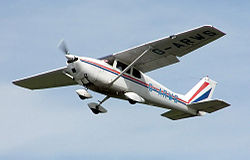
Piper Pacer
 i
iSpecifications
MOSAIC eligiblePerformance
Cruise
109KTAS
Range
450nm
Climb
620fpm
Ceiling
15,000ft
Fuel Burn
8.0gph
Fuel Cap.
36gal
MPG
15.7mpg
Stall (Vs0)
42KIAS
T/O roll
1210ft
Ldg roll
870ft
Size & weight
Seats
4
Useful Load
780lbs
Full-fuel payload
564lbs
Max gross
1,800lbs
Wingspan
29.3ft
Length
20.4ft
Engine
Engine
Lycoming O-290-D2
Power
135hp
TBO
2,000hrs
Overhaul
$28k
Owning it
Hull insurance
$1k/yr
Parts
fair
Mechanics
common
Gear
Fixed
IFR
No
Category
certified
Full specification
V-speeds
Airframe
- Empty weight
- 1,020 lbs
- Max fuel weight
- 216 lbs
- Height
- 6.2 ft
- Wing position
- high
Obstacle performance
- Takeoff over 50 ft
- 1,725 ft
- Landing over 50 ft
- 1,280 ft
Paperwork
- Type certificate
- 1A4
- Certification basis
- CAR 3
These figures are typical for the model, not a specification for any individual aircraft. Real-world numbers vary with year, installed equipment, weight, modifications and engine condition — often by more than you would expect. Use them to compare types, and confirm anything you would act on against the Pilot's Operating Handbook for that specific airframe and a prebuy inspection.
Pricing
Typical
$50k
Range
$25k – $100k
Annual all-in
~$17k/yr
All-in at ~100 flying hours a year, using the midpoint of each range — the same figures broken out under “Cost to own” below. Your number will differ, and mostly for two reasons. Experience sets your insurance: a 2,000-hour pilot with recent training pays 30–40% less than a 200-hour owner, and student owners pay 20–40% more — on the same aircraft that is often a doubling. Location sets your hangar: a T-hangar runs $200–400 a month in the Midwest against $400–1,500 in a coastal metro, and an outside tie-down is less again. Engine reserves move too — a local shop reusing your serviceable cylinders can come in 30–50% under the national specialty-shop pricing we quote, though you trade the warranty and turnaround that comes with it. Reserves are money set aside toward a future overhaul, not a bill this year, and the annual inspection figure is the shop’s labor to look — whatever they find is separate.
Cost to own — estimate
Set your yearly hours and local fuel price. Fixed costs (insurance, hangar, annual inspection) don't change with hours; fuel, maintenance and the engine reserve do.
- Fuel (8 gph)
- $5,200
- Engine reserve
- $1,400
- Maintenance, parts & wear items ($12/hr)
- $1,200
- Insurance
- $900–$1,800
- Hangar
- $3,586–$8,966
- Annual inspection (labor only)
- $1,200
- Databases & subscriptions
- $400
- Total per year
- $17,026
- Per flight hour
- $170
- Miles flown / year (at cruise)
- 12,544 mi
- Cost per mile
- $1.36/mi
- Time in the air
- 2 hr 45 min
- Fuel burned
- 22 gal
- Out of pocket
- $215
Fuel, engine reserve and wear only. Insurance, hangar and the annual are already paid whether you make the trip or not, so they are not charged here.
Estimate, not a quote. Where a line shows a range, the total, per-hour and per-mile figures use its midpoint— insurance moves most with your experience and time in type, hangar with where you base the aircraft, so your own number could sit at either end. Annual inspection is the shop's labor to open and inspect — what they find is the maintenance line, which covers oil changes, plugs, tires, brakes, hoses, lights, a battery and vacuum pump amortised over their life, and the unscheduled squawks that are the largest and least predictable part of it. Reserves are sinking funds toward an overhaul, not a bill you pay this year — and note that a propeller is due on hours or calendar time, typically six years, so flying less does not put it off forever.
Strengths
- Excellent backcountry capability with bush tire / STOL mods
- Responsive stick-and-rudder flying experience on grass strips
- Strong parts commonality with PA-22 Tri-Pacer; Univair support
- Reasonable fuel efficiency (~8 GPH) for era and class
Weaknesses
- Fabric covering degrades with age/UV; re-cover costs $15K–$25K
- O-290 engine parts increasingly scarce; no longer in production
- Modest climb (620 fpm sea level, 350–450 fpm hot/high/heavy)
- Steel tube fuselage prone to corrosion in moisture-prone areas
Variants & History
| Variant | Years | Engine | HP | Gross Weight | Units Built | Key Differences |
|---|---|---|---|---|---|---|
| PA-20 | 1950-1952 | Lycoming O-290-D | 125 | 1,800 lbs | ~500 | Initial production model. 125 HP. Same basic airframe as PA-16 Clipper with four seats. |
| PA-20-135 | 1952-1954 | Lycoming O-290-D2 | 135 | 1,950 lbs | ~620 | Upgraded engine with 10 more HP AND a 150 lb gross-weight increase over the "125" (TCDS 1A4 Section IV). Most common surviving variant. Minor refinements to trim and cowling. |
Both variants share the same 36-gallon (total) fuel system (two 18-gallon wing tanks) and the same basic airframe dimensions, but the gross weight is NOT shared: the "135" carries 1,950 lbs against the "125"'s 1,800 -- a genuine, certificate-stated difference, not a typo. (An earlier version of this page stored 1,800 lbs for the "135," which was the "125" column's figure; corrected against TCDS 1A4 Section IV and Piper Service Memo No. 59.) The 135 HP version is generally preferred for its modestly better climb, takeoff performance, and the extra useful load the weight increase buys.
Note on the PA-20/PA-22 relationship: The PA-22 Tri-Pacer is essentially the same airplane with tricycle gear, and many PA-22s have been converted back to tailwheel configuration under STC (designated PA-22/20). These conversions are common and in many cases produce an airplane that is functionally identical to an original PA-20.
Performance
Source: Piper Service Memo No. 59, "135" column (see data/vault/raw/poh/pohmemo59-pa20-135-2026-09-08.md). At 75% power and sea level, the Memo's own figure is 109 KTAS burning 7.7 GPH. A second 75%-power row is published at 7,000 ft ("Optimum Cruising Speed"): 134 mph = 116 KTAS, fuel burn not broken out separately by altitude (7.7 GPH is given once, for "75% power"). No lower-power (economy) row is published on this document, so this page carries no econ_cruise_* figures.
Climb performance is modest at 620 fpm at sea level (Piper's own figure). At gross weight on a warm day at altitude, expect noticeably less. The 135 HP engine provides adequate power for normal operations but becomes marginal at high density altitudes with a full load. Pilots operating in mountainous terrain should plan departures carefully and consider weight reduction on hot days.
The Pacer's tailwheel configuration gives it inherent advantages on grass and unimproved surfaces compared to its Tri-Pacer sibling. The prop sits higher, ground clearance is better, and the attitude provides superior visibility during taxi. Crosswind handling requires competent tailwheel technique but is not difficult for experienced conventional-gear pilots.
Short-field performance is respectable but not exceptional in stock configuration. Piper's own figures (flaps extended, gross weight, sea level, standard day) are a 1,220-foot takeoff ground roll and 1,600 feet over a 50-foot obstacle, landing in 500 feet ground roll and 1,280 feet over 50 feet -- and improve further with STOL modifications and larger tires. (An earlier version of this page overstated the landing ground roll by nearly 75% -- 870 ft against the sourced 500 ft.)
Payload & Range
The Pacer's useful load is now sourced at 930 lbs (1,950 lb gross minus 1,020 lb empty -- both TCDS/Service Memo figures, up from the 780 lbs an earlier version of this page carried against a wrong 1,800 lb gross). Fuel weights below use the 36-gallon figure as a TOTAL, not a confirmed-usable quantity (see the confidence note) -- real available payload will be a little higher than shown if unusable fuel on a given airframe is small, as is typical.
Scenario 1: Full Fuel + 2 Occupants (Touring / Backcountry)
| Item | Weight |
|---|---|
| Fuel (36 gal total) | 216 lbs |
| Pilot | 200 lbs |
| Front passenger | 170 lbs |
| Baggage / camping gear | 80 lbs |
| Total payload | 666 lbs |
| Under gross by | 264 lbs |
| Range at 75% cruise | ~504 nm (Piper's own figure, less allowance for start/taxi/climb) |
This is the Pacer's practical sweet spot: two people, full fuel, and light camping gear, now with real headroom rather than the near-gross loading the earlier (wrong-gross) version of this page implied.
Scenario 2: Four Occupants (Full Seats)
| Item | Weight |
|---|---|
| Pilot | 180 lbs |
| Front passenger | 170 lbs |
| Rear passenger 1 | 150 lbs |
| Rear passenger 2 | 130 lbs |
| Baggage | 20 lbs |
| Total payload | 650 lbs |
| Remaining for fuel | 280 lbs (~47 gal by weight -- more than the 36-gal tank holds) |
| Range at 75% cruise, full fuel | ~504 nm |
Four adults in a Pacer is comfortably within the corrected weight and balance envelope on fuel alone (36 gallons only uses 216 of the available 280 lbs), a meaningfully different picture than the earlier version of this page implied with its lower, uncorrected useful load.
Scenario 3: Backcountry Mission (Modified with 150 HP O-320)
| Item | Weight |
|---|---|
| Fuel (25 gal, reduced for short hops) | 150 lbs |
| Pilot | 200 lbs |
| Passenger | 180 lbs |
| Camping gear / supplies | 100 lbs |
| Total payload | 630 lbs |
| Under gross by | 150 lbs |
| Range | ~230 nm |
The O-320 conversion does not change gross weight but improves climb performance and density altitude margins substantially, which is the real benefit for backcountry operations. Staying well below gross weight is essential when operating from short, unimproved strips at elevation.
The Pacer vs. the Tri-Pacer: Understanding the Relationship
The PA-22 Tri-Pacer is essentially the same airplane with a nosewheel instead of a tailwheel. The Tri-Pacer outsold the Pacer nearly ten to one, reflecting the market's strong preference for tricycle gear in the 1950s. Today, the relationship has an interesting twist: many PA-22 Tri-Pacers have been converted back to tailwheel configuration (designated PA-22/20) using the Trimmer or Univair conversion kit, effectively creating "new" Pacers from the much larger Tri-Pacer fleet. These conversions are well-regarded and functionally equivalent to original PA-20s for most purposes, though purists note minor differences in fuselage geometry.
Mission Suitability
Flight Training (3/10): Not a primary trainer, but a reasonable tailwheel transition airplane. Insurance costs for training use are high, and the fabric covering adds financial risk with student pilots. A Citabria or Super Cub is a better choice for dedicated tailwheel instruction.
Backcountry (7/10): This is where the Pacer punches above its weight class. With bush tires (26-31 inch Bushwheels), a Crosswind STOL kit, and optionally an engine upgrade, the PA-20 becomes a genuinely capable backcountry machine at a fraction of the cost of a Cessna 180 or Super Cub. The Backcountry Pilot community considers the short-wing Pipers among the best values in bush flying. Stock, the airplane is adequate for improved grass strips; modified, it handles serious backcountry work.
Business Travel (2/10): Modest cruise speed, fabric covering, and lack of modern amenities make this an impractical business tool. The tailwheel configuration adds complexity at unfamiliar airports.
Aerobatics (1/10): Not approved for aerobatic flight. Normal Category certification only.
Cross-Country (5/10): Capable for weekend trips of 200-300 nm. With 36 gallons (total, not confirmed usable -- see the confidence note) and a 7.7 GPH burn at 75% power, Piper's own published range is 504 nm. The rear seat is tight for two adults on longer flights. A well-equipped Pacer with a modern GPS makes a pleasant touring airplane, but wind noise and vibration limit comfort on legs beyond two hours.
Cargo Hauling (3/10): The 930 lb useful load (1,950 lb gross minus 1,020 lb empty) is modest for a four-seat airplane. Two front-seat adults near full fuel leave a few hundred pounds for cargo. Not a hauler, but adequate for light backcountry camping gear.
Local Fun Flying (8/10): This is the Pacer's sweet spot. A fabric taildragger on a grass strip on a calm morning is pure flying joy. The airplane is light, responsive, and rewards good stick-and-rudder technique. The high wing provides excellent sightseeing visibility. It is the kind of airplane that makes you want to go fly on a Saturday morning for no particular reason.
Surveying (3/10): High wing helps with downward visibility, but the slow speed, limited endurance, and lack of survey-specific modifications make it a poor choice for commercial survey work.

1998 Piper Archer
Archer III · GNS 430W · Honest Trainer · Fresh Annual
Avionics Ecosystem
Most surviving Pacers have simple VFR panels, and many owners keep them that way intentionally. The steel-tube fuselage and fabric covering present some installation challenges that aluminum aircraft do not.
Minimalist VFR ($0-$3,000): Many Pacers fly with a basic six-pack, a single NAV/COM, and a handheld GPS on the yoke or suction-cupped to the windshield. For backcountry and local VFR flying, this is perfectly adequate.
Practical Upgrade ($5,000-$15,000): A panel-mounted GPS (Garmin GNS 430W, GTN 625, or Avidyne IFD 440) paired with a modern transponder (ADS-B Out compliant) transforms cross-country utility. An electronic engine monitor (JPI or EI) is a worthwhile addition for engine health monitoring.
Full Panel ($15,000-$30,000): Dual GI 275 displays, a GTN 650Xi, and a modern audio panel are possible but represent an investment that may exceed the airframe's value. Owners pursuing this level of upgrade are typically building a forever airplane with concurrent airframe restoration and engine work.
Panel space is limited in the Pacer. Creative panel layouts and careful planning are essential for modern avionics installations.
STCs & Modifications
The short-wing Piper modification ecosystem is extensive, driven by the backcountry community and supported by the Short Wing Piper Club.
Engine Upgrades
| STC | Engine | HP | Notes | Approx. Cost |
|---|---|---|---|---|
| Lycoming O-320 | O-320-A2B | 150 | Popular mid-range upgrade. Improved climb and useful load margin. | $20,000-$30,000 installed |
| Lycoming O-360 | O-360-A1A | 180 | Maximum practical upgrade. Transforms the airplane. | $35,000-$50,000 installed |
STOL & Backcountry Modifications
| Modification | Effect | Approx. Cost |
|---|---|---|
| Crosswind STOL kit (VGs) | Vortex generators reduce stall speed 5-7 kts. Best bang-for-buck STOL mod. | $1,500-$3,000 installed |
| Crosswind cuffed wings | Leading-edge cuffs improve slow-flight handling and stall characteristics. | $2,500-$4,500 installed |
| Crosswind extended wings | Wing tip extensions add span and reduce stall speed further. | $3,000-$5,000 installed |
| 26" Alaskan Bushwheels | Good all-around bush tire. No airframe mods needed on most installations. | $3,400/pair |
| 29" Alaskan Bushwheels | Excellent soft-field flotation. May require extended gear legs. | $3,800/pair |
| 31" Alaskan Bushwheels | Maximum flotation for sand, mud, and tundra. | $4,200/pair |
| Auxiliary fuel tanks | Additional wing tanks extending range for cross-country or ferry flights. | $2,000-$4,000 |
| Floats / skis | Edo floats and various ski installations available. | $8,000-$20,000 |
Other Modifications
| Modification | Notes | Approx. Cost |
|---|---|---|
| Auto fuel STC (EAA/Petersen) | Allows use of automobile gasoline, reducing operating cost significantly. | $200-$300 |
| Speed fairings/seals | Wheel pants and gap seals for cross-country speed improvement. | $500-$1,500 |
| Shoulder harness STC | Essential safety upgrade for aircraft originally equipped with lap belts only. | $300-$800 |
A fully modified backcountry Pacer with 180 HP conversion, STOL kit, and 29" Bushwheels can represent $30,000-$50,000 in modifications, potentially exceeding the airframe purchase price.
Maintenance & Support
Parts Availability — Fair
The PA-20 shares substantial parts commonality with the PA-22 Tri-Pacer, PA-16 Clipper, and other short-wing Pipers, which helps availability. However, challenges exist:
- Airframe parts: Univair is the primary aftermarket supplier and stocks most structural components, control surfaces, and hardware. The Short Wing Piper Club is an excellent resource for sourcing rare items.
- Engine parts (O-290): This is the Achilles' heel. The Lycoming O-290 has not been in production for decades, and parts availability is declining. Cylinders, crankcases, and certain accessories are becoming scarce and expensive. An O-320 or O-360 conversion resolves this issue permanently.
- Fabric and covering supplies: Poly-Fiber, Ceconite, and Randolph products are all readily available. This is not a constraint.
- Landing gear and tailwheel: Main gear legs, tailwheel assemblies, and related hardware are available through Univair and specialty suppliers.
Mechanic Familiarity — Common
Any A&P familiar with tube-and-fabric aircraft can work on a Pacer. The airframe is simple and well-documented. The critical skill is fabric work; not all A&Ps are proficient with fabric repair and inspection. An IA experienced with short-wing Pipers or similar tube-and-fabric aircraft is ideal for annual inspections.
Annual Cost Range
| Item | Typical Range |
|---|---|
| Annual inspection (labor + routine items) | $1,200-$2,500 |
| Engine reserve (2,000 hr TBO, $28K overhaul) | $14/hour (~$1,400/year at 100 hrs) |
| Insurance (full coverage, $50K hull) | $1,400-$1,800 |
| Hangar | $200-$500/month ($2,400-$6,000/year) |
| Fuel (100 hrs at 8 GPH, $6.50/gal) | $5,200/year |
| Miscellaneous (oil, tires, unexpected) | $800-$1,500 |
| Total (100 hrs/year) | $12,400-$18,600/year |
Fabric aircraft should ideally be hangared. Tie-down storage dramatically accelerates fabric deterioration and drives up long-term costs.

2019 Cirrus SR22
One Owner · Platinum · FIKI · Low 690 Hours · Hangared
Valuation Factors
The PA-20 Pacer market is small but active. Low production numbers (1,120 total) mean supply is limited, and attrition continues to reduce the fleet. Values have been gradually increasing as the backcountry community discovers the short-wing Pipers.
Price Tiers (2025-2026)
| Condition / Configuration | Price Range |
|---|---|
| Project / needs re-cover | $15,000-$25,000 |
| PA-20-125, flyable, average condition | $25,000-$40,000 |
| PA-20-135, flyable, average condition, mid-time engine | $35,000-$55,000 |
| PA-20-135, well-maintained, fresh cover, good engine | $55,000-$75,000 |
| Modified backcountry build (O-320/O-360, STOL, bush tires) | $70,000-$100,000+ |
| Full restoration / show quality | $80,000-$100,000+ |
Key Value Drivers
- Engine variant and time: An O-320 or O-360 conversion adds significant value over the original O-290, both for performance and parts availability. Fresh overhaul adds $10,000-$15,000 versus run-out.
- Fabric condition and age: Fresh Poly-Fiber or Ceconite covering adds $10,000-$15,000 to value versus fabric needing replacement.
- Modifications: STOL kits, bush tires, and engine upgrades all add value, though typically at 50-70% of installation cost.
- Avionics: A panel-mounted GPS with ADS-B compliance adds $5,000-$10,000.
- Logbook completeness: Continuous logs from new are increasingly rare and add a premium. Gaps raise questions about hidden damage history.
The PA-20 represents strong value compared to the Cessna 170B, which commands $75,000-$150,000 for comparable configurations. A well-modified Pacer delivers similar backcountry capability at 50-70% of the Cessna's price.
ADs & Common Problems
Airworthiness Directives
The PA-20 shares its AD list with the broader PA-20/PA-22 family. Key ADs include:
- Fuel selector valve inspection (Piper SB 141/354B): Recurring inspection of fuel selector valve for proper operation and leak detection. Critical safety item.
- Wing lift strut and fork inspection: Recurring inspection for cracks and corrosion in the wing strut attach fittings. Essential structural AD.
- Exhaust muffler inspection: Recurring inspection for cracks, which can lead to carbon monoxide intrusion into the cabin.
- AD 85-02-05: Broad Piper AD covering various airframe items. Verify compliance in logbooks.
Common Pre-Buy Red Flags
- Fabric condition: The single most important inspection item on any Pacer. Fabric degrades with UV exposure and age. Maule-test or punch-test the covering thoroughly. Re-covering the entire airplane runs $15,000-$25,000 in labor and materials. Budget for this if the covering is approaching 20+ years old.
- Steel tube fuselage corrosion: Inspect inside the fuselage tubes, especially in the lower longerons and around the tailwheel attach point. Moisture accumulation in the belly is the primary enemy.
- O-290 engine parts availability: The Lycoming O-290 is no longer in production, and parts are increasingly scarce. Cylinders, crankcases, and accessories can be difficult to source. Consider this carefully when evaluating an airplane with a mid-time O-290 versus one already converted to an O-320 or O-360.
- Landing gear attach points: Tailwheel aircraft see higher gear loads. Inspect the main gear legs, tailwheel spring, and mounting structure.
- Wing strut condition: Look for corrosion pitting, dents, and cracks at the attach fittings. Strut replacement is expensive.
- Control cable wear: Original cables and pulleys may show excessive wear after 70+ years of service.
Insurance Profile
Insurance for the Pacer falls into the tailwheel fixed-gear category, carrying higher premiums than equivalent nosewheel aircraft.
Typical Premiums (2025-2026)
| Coverage | Qualified Pilot | Low-Time TW Pilot |
|---|---|---|
| Liability only ($1M smooth) | $400-$600/year | $600-$900/year |
| Full coverage ($1M liability + $35K hull) | $1,280-$1,560/year | $1,630-$2,140/year |
| Full coverage ($1M liability + $50K hull) | $1,400-$1,800/year | $1,800-$2,400/year |
Qualified pilot minimums (typical underwriting): Private certificate, 200+ total hours, 100+ tailwheel hours, 25+ hours in make/model.
Insurance for the PA-20 is notably more expensive than for the tricycle-gear PA-22 Tri-Pacer, sometimes by a factor of two. This is a meaningful ongoing cost difference that should factor into the tailwheel-versus-nosewheel purchase decision.
For sale (0)
No listings for this model right now.
Also worth looking at
What buyers usually weigh against the Piper Pacer — aircraft flown for the same kind of mission.