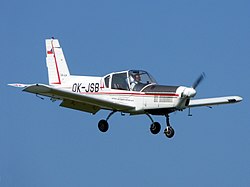
Avions Mudry / APEX Aircraft / CEAPR · 1976–1998
Mudry CAP 10B
 i
iSpecifications
MOSAIC eligiblePerformance
Cruise
140KTAS
75% power
Range
650nm
75% power
Climb
1200fpm
Ceiling
16,000ft
Fuel Burn
Not verified
75% power
Fuel Cap.
40gal
MPG
—mpg
Stall (Vs0)
46KIAS
T/O roll
—ft
Ldg roll
—ft
Size & weight
Seats
2
Useful Load
640lbs
Full-fuel payload
402lbs
Max gross
1,830lbs
Wingspan
26.4ft
Length
23.5ft
Engine
Engine
Lycoming AEIO-360-B2F (fuel-injected); Lycoming IO-360-B2F w/ Christen inverted-oil system also approved -- both are the SAME certificate line item (TCDS A36EU Model I), not different models
Power
180hp
TBO
1,800hrs
Overhaul
$45k
Owning it
Hull insurance
$5k/yr
Parts
fair
Mechanics
specialist
Gear
Fixed
IFR
No
Category
certified
Full specification
V-speeds
Airframe
- Empty weight
- 1,190 lbs
- Max fuel weight
- 238 lbs
- Height
- 8.4 ft
- Wing position
- low
Paperwork
- Type certificate
- A36EU
- Certification basis
- FAR 21.29 import basis: French AIR 2052 with amendments dated 7 Oct 1965 (equivalent to FAR 23 effective 1 Feb 1965); TC A36EU issued 13 Jun 1974, currently held by CEAPR (formerly Avions Mudry et Cie, then APEX Aircraft from 2002)
These figures are typical for the model, not a specification for any individual aircraft. Real-world numbers vary with year, installed equipment, weight, modifications and engine condition — often by more than you would expect. Use them to compare types, and confirm anything you would act on against the Pilot's Operating Handbook for that specific airframe and a prebuy inspection.
Pricing
Typical
$140k
Range
$90k – $220k
Annual all-in
~$15k/yr
All-in at ~100 flying hours a year, using the midpoint of each range — the same figures broken out under “Cost to own” below. Your number will differ, and mostly for two reasons. Experience sets your insurance: a 2,000-hour pilot with recent training pays 30–40% less than a 200-hour owner, and student owners pay 20–40% more — on the same aircraft that is often a doubling. Location sets your hangar: a T-hangar runs $200–400 a month in the Midwest against $400–1,500 in a coastal metro, and an outside tie-down is less again. Engine reserves move too — a local shop reusing your serviceable cylinders can come in 30–50% under the national specialty-shop pricing we quote, though you trade the warranty and turnaround that comes with it. Reserves are money set aside toward a future overhaul, not a bill this year, and the annual inspection figure is the shop’s labor to look — whatever they find is separate.
Cost to own — fixed costs only
No handbook figures for this airplane give a fuel burn, so the fuel, per-hour and per-mile estimates cannot be computed. What follows is what ownership costs before you fly it — these do not change with hours.
Fuel, maintenance and the engine reserve are on top of this and rise with every hour flown — on a comparable airplane they typically exceed the fixed costs at around 100 hours a year. The page above says which document would supply the missing figures.
Strengths
- Docile, forgiving two-seat aerobatic trainer; excellent for spin/upset work
- Side-by-side seating and visibility rare in aerobatic aircraft; fun cross-country capable
- Proven military trainer pedigree (French Armée de l'Air standard); honest, predictable handling
- Solid 650 nm range with 39.6 gal usable fuel and 640 lb useful load in Utility category
Weaknesses
- Wooden wing spar with extensive AD history; compliance status is make-or-break for resale
- Mandatory hangar storage; wood-structure moisture damage and fabric recovering (~15–20 yr cycle) are recurring costs
- Specialist maintenance only; few US A&Ps outside aerobatic communities have wood-structure experience
- No manufacturer presence; parts sourcing from France slow and expensive; type club knowledge essential
Overview
The Mudry CAP 10 is a French side-by-side two-seat low-wing wooden aerobatic trainer, first flown in 1968 and certificated (as the CAP 10B) in 1974 under FAA TCDS A36EU. Designer and entrepreneur Auguste Mudry (1917–2006) built the CAP ("Constructions Aéronautiques Parisiennes," a name originally used by Piel) line at Bernay in Normandy. Over 280 were built across the original CAP 10, the fuel-injected CAP 10B, and the composite-spar CAP 10C. It became the standard aerobatic/upset-recovery trainer of the French Armée de l'Air (EAC 00.315 training squadron at Cognac) and for ENAC, with civil sales across Europe and a modest US presence.
The type certificate has changed hands repeatedly without always being
re-registered with the FAA (its own Note 11 says so): Avions Mudry et Cie,
then APEX Aircraft (2002), then Akrotech Europe, CAP Aviation, Dyn'Aviation,
AUPA DYN'AERO and AERODIF are all listed as past holders, with CEAPR
holding it since 2015. There is no current manufacturer building new
airframes; CEAPR/CAP Aviation in France continues type-certificate support
and parts supply. Manufacturer web presence has effectively vanished —
ceapr.fr does not resolve at all, and cap10.com, mudry.fr and
capaviation.fr are all now parked or redirect placeholders. For US buyers
this is a niche but respected import, trading in the premium-Citabria-to-
Decathlon range rather than in Extra/Pitts unlimited territory (that territory
belongs to the single-seat CAP line described below, which this page does not
price).
See also: Pitts Special S-2, Extra 200/300/330 Series, aerobatics.
Variants & History
| Variant | Years | Seats | Engine | HP | MTOW (lb) | G Limits | Notes |
|---|---|---|---|---|---|---|---|
| CAP 10 | 1968–1976 | 2 | Lyc O-360-A | 180 | 1,650 | +6/−4.5 | Original wood wing, carbureted |
| CAP 10B | 1976–1998 | 2 | Lyc AEIO-360-B2F | 180 | 1,666 | +6/−4.5 | Fuel-injected, inverted oil, French AF primary aerobatic trainer |
| CAP 10C | 2000–2007 | 2 | Lyc AEIO-360-B2F | 180 | 1,720 | +6/−4.5 | Carbon-sandwich wing spar replacing wooden spar (response to spar ADs), enlarged rudder |
| CAP 20 | 1969–1974 | 1 | Lyc AEIO-360 / IO-540 | 200 | 1,550 | +8/−6 | First single-seater, derived from CAP 10 |
| CAP 20L | 1976 | 1 | Lyc AIO-320 | 200 | — | +8/−6 | Lightened variant |
| CAP 21 | 1980–1987 | 1 | Lyc AEIO-360 | 200 | 1,422 | +9/−6 | New laminar wing, 18 built |
| CAP 230 | 1985 | 1 | Lyc AEIO-540-L1B5 | 300 | 1,720 | +10/−10 | Stretched CAP 21 with 300 hp, French AF aerobatic team mount |
| CAP 231 | 1990 | 1 | Lyc AEIO-540-L1B5 | 300 | 1,808 | +10/−10 | 1990 World Aerobatic Champion |
| CAP 231EX | 1992 | 1 | Lyc AEIO-540 | 300 | 1,808 | +10/−10 | Composite wing (co-developed with Extra) |
| CAP 232 | 1994–2007 | 1 | Lyc AEIO-540-L1B5 | 300 | 1,800 | +10/−10 | Carbon-fiber wing, 420°/sec roll, ultimate Mudry single-seater |
Performance
Cruise is 140 KTAS at 75% power (Jane's All The World's Aircraft
1988-89) — no altitude is stated for that row, so cruise_altitude_ft is
left blank rather than assumed. Range is a directly published 650 nm, not a
derived figure. Climb (1,200 fpm) and service ceiling (16,000 ft) are also
Jane's figures; the previous page's 18,050 ft ceiling had no citation
anywhere and is corrected down 11%. Fuel burn is not stated in either
document located this session and is left blank — do not assume a figure
to pair with the 140 kt / 650 nm above; see the runbook's warning against
pairing figures from different rows.
The certificate governs two different operating configurations, and this page's frontmatter uses the heavier one. In Utility category the CAP 10B is cleared to 1,830 lb takeoff / 1,763 lb landing, both fuel tanks usable (19.0 gal front + 20.6 gal rear = 39.6 gal), 110 lb baggage allowed, and +4.4/−1.8 G flaps-up. In Acrobatic category the same airframe is limited to 1,675 lb, the rear tank must be run dry (front tank only, 19.0 gal usable, minimum 2.6 gal for the acrobatic sequence itself), no baggage at all, and the G envelope opens to +6.0/−4.5 flaps-up (+2.0/−2.0 flaps down) — this is the number that actually matters for what this airplane is bought to do. Maneuvering speed (Va) is correspondingly different by category: 108 kt at the heavier Utility weight, 127 kt at the lighter Acrobatic weight — both real, for different weights, not a disagreement. The CAP 10C's Major Change 000302 raises the Acrobatic-category weight only, to 1,720 lb; Utility weight and the G basis are unchanged.
Approved aerobatic maneuvers carry their own minimum entry speeds, per the certificate's placard requirements: loop 120 kt (1 pilot) / 125 kt (2 pilots), roll 120/125 kt, inverted loop 135/146 kt, hammerhead 108 kt both. A CAP10B modified per Major Change 000302 (the CAP10C wing) further limits snap-roll entry to a maximum of 86 kt.
Real-world handling: the fixed-pitch wooden Hoffmann prop is efficient but limits climb performance versus a constant-speed conversion. Roll rate is modest by pure-competition standards (roughly 180°/sec — well short of the single-seat CAP line's carbon-wing figures, which this page does not cover) but crisp and honest; the airplane is famously docile in the stall and recovers from spins cleanly, which is why it was adopted as a primary military aerobatic and upset-recovery trainer.
Payload & Range
Corrected this session: the prior page's fuel capacity (19 gal, front tank only) and useful load (498 lb) described the ACROBATIC-category configuration while the page's other numbers described neither category consistently. The certificate's two configurations give two different answers:
Utility category (1,830 lb MTOW, 39.6 gal usable both tanks, 640 lb useful load, 110 lb baggage allowed):
- Two 180 lb pilots (360 lb) + full fuel (238 lb) = 598 lb, leaving 42 lb for baggage — full fuel, both seats, and real baggage fit within the 110 lb allowance. This is a materially different (better) answer than the prior page's uncited numbers implied.
- Two 200 lb pilots (400 lb) + full fuel (238 lb) = 638 lb — 2 lb margin to the 640 lb limit, no baggage.
Acrobatic category (1,675 lb MTOW, front tank only — 19.0 gal usable, rear tank drained, no baggage permitted, 485 lb useful load from the same 1,190 lb empty weight):
- Two 180 lb pilots (360 lb) + full front tank (114 lb) = 474 lb — fits within the 485 lb Acrobatic useful load with 11 lb to spare, so two-place aerobatic instruction with nearly full front-tank fuel is genuinely feasible, not just technically legal at minimum fuel.
- Solo aerobatic flight (180 lb pilot) + full front tank (114 lb) = 294 lb, well inside the limit.

1980 Cessna 152
Honest Trainer · Mid-Time Engine · Fresh Annual
Mission Suitability
- Aerobatics (7) — A genuinely capable two-seat aerobatic trainer to Sportsman/Intermediate level, cleared to +6.0/−4.5 G in the acrobatic category, with docile stall/spin behavior that makes it forgiving to learn in. Scored below the Pitts S-2C (+6/−5, purpose-built single-role biplane) because the CAP 10B is a heavier, less agile cross-country-capable trainer first and an aerobatic mount second — not because it borrows a score from an unlimited competition airplane this page no longer describes.
- Local Fun Flying (8) — Canopy visibility, light controls, and side-by-side seating (rare in an aerobatic airplane) make it one of the most enjoyable "Sunday morning" aerobatic hacks in existence.
- Flight Training (6) — The type's historic core role: France's primary aerobatic and upset-recovery trainer. Overkill and expensive as an ab-initio primary trainer, but excellent for spin/upset endorsement work.
- Cross-Country (4) — With the corrected fuel and weight figures (39.6 gal usable, 640 lb useful load — both up sharply from the prior page's uncited 19 gal / 498 lb) two-up touring with a real baggage allowance is genuinely feasible, not merely tolerable. Still limited by a ~140 kt cruise and no IFR certification.
- Business / Cargo / Backcountry / Surveying (1) — No utility role. Not IFR, taildragger-narrow gear geometry (tricycle-adjacent but unforgiving), no cargo capacity to speak of.
Avionics Ecosystem
Factory CAP 10B panels are VFR-day: a basic six-pack, a Mode C transponder, one nav/com (often a King KX-155), and a G-meter. Many CAP 10Cs left the factory with a Garmin GNS 430 and GTX 327. Modern refurbishments commonly add a Garmin G5 or Dynon D3 portable AI, a GTN 650 slide-in replacement, and a GTX 335 ADS-B Out transponder. See Avionics Pricing Reference.
STCs & Modifications
- CAP 10B → 10C wing spar retrofit — the factory's own composite carbon-sandwich wing spar (TCDS Major Change 000302), superseding the wood-spar AD burden below. Significant cost (€50,000+) but restores full aerobatic utility and resolves the repetitive inspection.
- Hoffmann HO-V72 prop — standard wooden fixed-pitch; some operators fit a metal fixed-pitch prop for durability. The certificate permits no cutoff at all on either approved propeller, confirming fixed-pitch is a certificate limitation, not merely the common factory choice.
- Smoke system — common airshow addition.
- Auxiliary tank — the certificate's own rear tank (20.8 gal total / 20.6
usable) already covers what earlier sales material sometimes describes as
an "optional auxiliary" tank; see the sourcing note in
raw/press/mfr-cap10b-janes1988-2026-09-12.mdfor the discrepancy between Jane's framing and the certificate's treatment of it as standard equipment. - Canopy upgrades — bubble-canopy improvements on later CAP 10s.

1989 Aviat Husky
Husky A-1 · Tundra Tires · Backcountry Ready
Maintenance & Support
- Parts availability: fair. CAP Aviation/CEAPR in France continues to stock and manufacture airframe parts, wood fittings, and canopies for European operators, but shipping to the US is slow and expensive. AEIO-360 engine parts are universally available via Lycoming.
- Mechanic familiarity: specialist. An A&P/IA in the US who has seen a CAP 10 is uncommon outside California, Texas and Florida aerobatic communities. Wood-structure experience is effectively mandatory.
- Annual cost: typically $12,000–$25,000 depending on spar AD cycle and
fabric condition — not independently re-verified this session; carried
over from the prior pass (see
annual_cost_estimateabove, left untouched per this session's scope). - Expensive items: wing spar inspection/repair, fabric recovering,
canopy replacement (single-piece, sourced from France), AEIO-360 overhaul
(~$45,000 per
reference/engine-overhaul-pricing.md). - Type club: CAP Owners / Mudry Association — parts sourcing and tribal knowledge.
See Maintenance Ecosystem.
Valuation Factors
See Aircraft Valuation Methodology for the general
framework. Not independently re-priced this session — see the
price_min/max/typical_usd provenance note above.
CAP 10B price tiers (US market, prior-pass estimate, not re-verified):
- $90k–$130k — High-time airframe, run-out or mid-time AEIO-360, unresolved spar AD compliance burden, basic VFR panel.
- $130k–$180k — Mid-time engine, current on all spar ADs, refreshed fabric/paint, basic IFR-capable nav/com.
- $180k–$220k — Low-time engine, documented hangar history, modern avionics (GTN + G5), freshly complied ADs.
- $220k+ — CAP 10C (composite spar), low time, turnkey.
Engine time on the AEIO-360 is a major value driver. See Maintenance Ecosystem.
ADs & Common Problems
The CAP 10 wooden wing spar has a long, significant AD history driven by the French DGAC (now EASA), mirrored by the FAA:
- AD 98-12-10 — install inspection panels and perform repetitive wing spar inspections for cracks, traced to over-G events, snap rolls outside the envelope, and hard landings.
- FAA AD 2003-03 (EASA equivalent) — expanded inspection method after additional fractures were found that the 98-12-10 procedure missed.
- AD 2007/2008 cycle — additional repetitive inspection of the wooden center block of the spar after drying-related cracks were discovered.
- AD 2010-27 — further superseding AD on wing spar inspection.
Any pre-buy of a CAP 10 or 10B must include a current wing spar inspection status review and evidence of recent compliance. Aircraft with unresolved AD status are near-unsaleable. CAP 10C aircraft with the composite spar are exempt from most of this regime and command a premium for exactly that reason.
Other common issues: wooden-structure moisture (hangar storage is mandatory — outside-stored CAP 10s rapidly develop glue-line issues), fabric condition (expect recovering every 15–20 years), inverted fuel/oil system maintenance (must be done by a shop familiar with aerobatic engines), and tailwheel/narrow-gear stress from hard landings.
Insurance Profile
The CAP 10B sits in the aerobatic specialty category (see GA Insurance Underwriting):
- CAP 10B hull (1,000-hr PPL, tailwheel endorsement, 50+ hours aerobatic instruction received, $150k hull): approximately $3,500–$5,500/yr hull + $1,500–$2,000 liability.
- CAP 10B is more insurable than a Pitts for low-time pilots because of its docile handling and side-by-side instructional layout.
- European-registered aircraft transitioning to N-reg incur ferry- and import-related hull surcharges.
For sale (0)
No listings for this model right now.
Also worth looking at
What buyers usually weigh against the Mudry CAP 10B — aircraft flown for the same kind of mission.