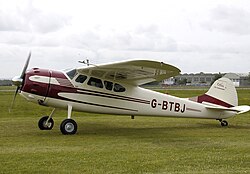
Maule · 1963+
Maule M-4 / M-5 / M-6 / M-7
 i
iSpecifications
Performance
Cruise
137KTAS
Range
480nm
Climb
1350fpm
Ceiling
20,000ft
Fuel Burn
12.5gph
Fuel Cap.
40gal
MPG
12.6mpg
Stall (Vs0)
40KIAS
T/O roll
500ft
Ldg roll
350ft
Size & weight
Seats
5
Useful Load
951lbs
Full-fuel payload
711lbs
Max gross
2,500lbs
Wingspan
32.7ft
Length
23.5ft
Engine
Engine
Lycoming O-540-J1A5D
Power
235hp
TBO
2,000hrs
Overhaul
$52k
Owning it
Hull insurance
$3k/yr
Parts
good
Mechanics
specialist
Gear
Fixed
IFR
Yes
Category
certified
Full specification
V-speeds
Airframe
- Empty weight
- 1,549 lbs
- Max fuel weight
- 240 lbs
- Height
- 6.3 ft
- Wing position
- high
Obstacle performance
- Takeoff over 50 ft
- 900 ft
- Landing over 50 ft
- 800 ft
Paperwork
- Type certificate
- 3A23
- Certification basis
- Part 23
These figures are typical for the model, not a specification for any individual aircraft. Real-world numbers vary with year, installed equipment, weight, modifications and engine condition — often by more than you would expect. Use them to compare types, and confirm anything you would act on against the Pilot's Operating Handbook for that specific airframe and a prebuy inspection.
Pricing
Typical
$226k
Range
$220k – $286k
Annual all-in
~$26k/yr
All-in at ~100 flying hours a year, using the midpoint of each range — the same figures broken out under “Cost to own” below. Your number will differ, and mostly for two reasons. Experience sets your insurance: a 2,000-hour pilot with recent training pays 30–40% less than a 200-hour owner, and student owners pay 20–40% more — on the same aircraft that is often a doubling. Location sets your hangar: a T-hangar runs $200–400 a month in the Midwest against $400–1,500 in a coastal metro, and an outside tie-down is less again. Engine reserves move too — a local shop reusing your serviceable cylinders can come in 30–50% under the national specialty-shop pricing we quote, though you trade the warranty and turnaround that comes with it. Reserves are money set aside toward a future overhaul, not a bill this year, and the annual inspection figure is the shop’s labor to look — whatever they find is separate.
Cost to own — estimate
Set your yearly hours and local fuel price. Fixed costs (insurance, hangar, annual inspection) don't change with hours; fuel, maintenance and the engine reserve do.
- Fuel (12.5 gph)
- $8,125
- Engine reserve
- $2,600
- Propeller reserve
- $175
- Maintenance, parts & wear items ($12/hr)
- $1,200
- Insurance
- $2,050–$5,650
- Hangar
- $4,611–$11,527
- Annual inspection (labor only)
- $1,200
- Databases & subscriptions
- $400
- Total per year
- $25,619
- Per flight hour
- $256
- Miles flown / year (at cruise)
- 15,766 mi
- Cost per mile
- $1.62/mi
- Time in the air
- 2 hr 11 min
- Fuel burned
- 27 gal
- Out of pocket
- $265
Fuel, engine reserve and wear only. Insurance, hangar and the annual are already paid whether you make the trip or not, so they are not charged here.
Estimate, not a quote. Where a line shows a range, the total, per-hour and per-mile figures use its midpoint— insurance moves most with your experience and time in type, hangar with where you base the aircraft, so your own number could sit at either end. Annual inspection is the shop's labor to open and inspect — what they find is the maintenance line, which covers oil changes, plugs, tires, brakes, hoses, lights, a battery and vacuum pump amortised over their life, and the unscheduled squawks that are the largest and least predictable part of it. Reserves are sinking funds toward an overhaul, not a bill you pay this year — and note that a propeller is due on hours or calendar time, typically six years, so flying less does not put it off forever.
Strengths
- Exceptional STOL performance with 35-40 KIAS stall speed
- Remarkable useful load and backcountry capability unmatched in class
- Factory support still active in Georgia; parts availability excellent
- Versatile configuration options (wheels, floats, skis, turboprop)
Weaknesses
- Fabric covering requires re-cover every 15-25 years at $15,000-$25,000
- Requires specialist mechanics experienced with fabric aircraft
- Engine runs hot in tight cowling; active CHT monitoring needed
- Tailwheel variants demand experienced pilots; not beginner-friendly
Overview
The Maule M-series is one of GA's best-kept secrets — a family of high-wing, fabric-covered STOL aircraft that has been in continuous production since 1963 at the Maule factory in Moultrie, Georgia. Designed by B.D. "Belford" Maule, these steel-tube-and-fabric aircraft combine exceptional short-field performance, remarkable load-carrying ability, and surprising cruise speed into a versatile package available with tailwheel or tricycle gear, and on wheels, floats, or skis.
The M-series spans four major model groups: M-4 (1963-1983, 145-220HP), M-5 (1973-1980s, 210-235HP), M-6 Super Rocket (limited production, extended wingspan), and M-7 (1984-present, 160-420HP). Total production across all variants exceeds 2,300 aircraft. The M-7-235B Super Rocket is the current production mainstay.
Maule aircraft are hand-built in small numbers — annual production is typically 20-40 aircraft. This artisanal approach means long lead times for new aircraft but also means each airplane receives individual attention. The factory is known for accommodating custom configurations.
The M-7 can seat five (two front, three rear bench) and is available in an astonishing array of configurations: tailwheel (M-7), tricycle gear (MT-7), on floats, on amphibious floats, on skis, and even as a turboprop (M-7-420 Starcraft with Allison 250). No other GA manufacturer offers this breadth of configuration from the factory.
Variants & History
| Variant | Years | Engine | HP | Gross Weight (lbs) | Key Changes |
|---|---|---|---|---|---|
| M-4-210C Rocket | 1963-1983 | Continental IO-360-A | 210 | 2,300 | Original production model; 117 built with cargo door |
| M-4-220C Strata Rocket | 1965-1983 | Franklin 6A-350-C1 | 220 | 2,300 | Franklin engine; 190 built; best M-4 performance |
| M-5-210C Lunar Rocket | 1973-1980s | Continental IO-360 | 210 | 2,300 | 30% more flap area; enlarged tail surfaces |
| M-5-235C Lunar Rocket | 1975-1980s | Lycoming O-540 | 235 | 2,500 | 235HP; increased gross weight |
| M-6-235 Super Rocket | 1980s | Lycoming O-540 | 235 | 2,500 | 3 ft more wingspan; more fuel; limited production |
| MX-7-160 Sportplane | 1984-present | Lycoming O-320 | 160 | 2,100 | Economy model; fixed-pitch prop |
| MX-7-180 Star Rocket | 1986-present | Lycoming O-360 | 180 | 2,300 | Mid-range; popular trainer/utility |
| M-7-235B Super Rocket | 1986-present | Lycoming O-540 | 235 | 2,500 | Primary production model; constant-speed prop |
| M-7-235C Orion | 1990s-present | Lycoming IO-540 | 235 | 2,500 | Fuel-injected; improved high-altitude performance |
| M-7-260C | 2000s-present | Lycoming IO-540 | 260 | 2,500 | 260HP fuel-injected; top performer |
| MT-7-235 | 1986-present | Lycoming O-540 | 235 | 2,500 | Tricycle gear version |
| MXT-7-180 | 1986-present | Lycoming O-360 | 180 | 2,300 | Tricycle gear; 180HP |
| M-7-420 Starcraft | 1999-present | Allison 250-B17C | 420 SHP | 2,500 | Turboprop conversion |
Performance
The M-7-235B cruises at 137 KTAS at 75% power on 12.5 GPH. At economy cruise (~65% power), fuel burn drops to 10 GPH with speeds around 110-120 KTAS. The 40-gallon standard tanks provide approximately 480 nm range; optional long-range tanks (72+ gallons) extend range significantly.
The Maule's defining characteristic is its STOL performance. The massive flaps (60° deflection available) produce published stall speeds as low as 35-40 KIAS — among the lowest of any certified aircraft. Takeoff over a 50-foot obstacle can be accomplished in 600 feet at light weights, and the aircraft can operate from remarkably short, unimproved strips.
The M-7's rate of climb at 1,350 FPM with the 235HP O-540 is excellent for a utility aircraft. Service ceiling of 20,000 feet provides good mountain-flying margins.
The fabric-covered steel tube construction makes the Maule uniquely tough for backcountry operations — minor fabric damage from branches or gravel is far cheaper to repair than aluminum or composite damage. The high-wing configuration provides excellent ground clearance and protects wing surfaces from debris.
Payload & Range
M-7-235B Super Rocket (O-540, 235HP, 40 gal standard fuel):
| Scenario | Fuel (gal) | Fuel Weight (lbs) | Payload (lbs) | Pax + Bags | Range (nm) |
|---|---|---|---|---|---|
| Full fuel, 2 pax | 40 | 240 | 711 | 2 × 200 + 311 bags/cargo | 480 |
| Full fuel, 4 pax | 40 | 240 | 711 | 4 × 170 + 31 bags | 480 (tight) |
| Full fuel, 5 pax | 40 | 240 | 711 | 5 × 140 + 11 bags | 480 (very tight) |
| Reduced fuel, 4 pax + cargo | 30 | 180 | 771 | 4 × 170 + 91 cargo | 350 |
The M-7's 951 lbs useful load is excellent for a 235HP single — comparable to the Cessna 182. Two adults with full fuel have outstanding payload capacity for backcountry cargo operations. Five seats are available but practical loading with five adults requires careful fuel planning. With optional long-range tanks (72 gal), range extends to 800+ nm but useful load decreases accordingly.
Mission Suitability
- Flight Training (4): The MX-7-180 and MXT-7-180 are used for tailwheel and backcountry training. Not ideal for primary training due to cost, tailwheel complexity (tailwheel variants), and limited availability. The tricycle MXT variants are more accessible for training.
- Backcountry (9): This is the Maule's primary mission. Exceptional STOL performance, high useful load, tough construction, high wing with good clearance, and availability on floats/skis/tundra tires. One of the few certified alternatives to the PA-18 Super Cub for serious backcountry work, with more cabin space and load capacity.
- Business Travel (3): 137 KTAS is moderate. Five seats available but cabin comfort is basic. Fabric-covered aircraft don't project the same image as a Bonanza or SR22.
- Aerobatics (1): Not aerobatic certified (utility category only, +3.8G/-1.5G).
- Cross-Country (5): Adequate cruise speed, good range with extended tanks. The high wing provides a stable ride in turbulence. Limited by noise level and basic cabin amenities on long trips.
- Cargo Hauling (7): Excellent. The M-7's 951 lbs useful load, rear cargo door, and five-seat capacity make it a genuine utility hauler. The high wing and wide cabin accommodate oversized cargo. Popular with bush operators for supply runs.
- Local Fun Flying (7): The Maule is a blast to fly — excellent visibility from the high wing, responsive controls, and the ability to access tiny strips makes every flight an adventure. The STOL capability means you can explore strips that exclude most other aircraft.
- Surveying (6): High wing provides excellent downward visibility. Good slow-flight characteristics for low-altitude survey work. Extended fuel tanks provide endurance for long survey missions.
Avionics Ecosystem
- Typical older Maule (M-4/M-5): Basic VFR panel with standard six-pack, single nav/com. Many older Maules are VFR-only backcountry machines.
- Modern M-7 factory: Maule offers Garmin G3X Touch or G500 TXi as factory options. New-build Maules can have very capable panels.
- Common upgrades ($10,000-$25,000): Garmin G5/GI-275, GTN 650Xi, ADS-B transponder. The panel space accommodates modern glass avionics well.
- IFR: Capable with appropriate avionics. The M-7-235C Orion with fuel injection is particularly well-suited for IFR operations.
STCs & Modifications
The Maule has excellent configuration flexibility from the factory:
- Float installations: Edo and Wipaire floats available. Amphibious floats from Wipaire (Wipline 2100/2350). Float-equipped Maules are popular in Alaska and Canada.
- Ski installations: Federal and Airglas wheel-skis. Essential for winter backcountry operations.
- Tundra tires: 29" and 31" tundra tires for soft/unimproved surfaces. Most backcountry Maules run tundra tires.
- Engine upgrades: Various O-540 and IO-540 options through the factory. The M-7-260C with IO-540 is the top performer.
- Turboprop: The M-7-420 Starcraft conversion uses the Allison 250-B17C turboprop — 420 SHP for astonishing performance.
- Extended range tanks: Factory and aftermarket options for 60-72+ gallon fuel capacity.
- Vortex generators: Available for further STOL improvement.
Maintenance & Support
- Annual inspection: $1,500-$3,000. Fabric inspection adds time beyond metal airframe annuals.
- Engine overhaul: $52,000 for O-540 at 2,000-hour TBO. The O-540 is a well-supported Lycoming engine.
- Fabric re-cover: $15,000-$25,000 every 15-25 years. The single largest maintenance expense unique to fabric aircraft. Budget $1,000/year for fabric reserves.
- Parts availability: Good. Maule Air Inc. in Moultrie, Georgia is still in business and maintains parts support for all models. Steel tube components can be fabricated by qualified welders.
- Mechanic familiarity: Specialist. Fabric-covered steel tube aircraft require mechanics experienced with fabric inspection, repair, and re-covering. Not every A&P shop does fabric work.
- Annual all-in cost: $15,000-$22,000 at 100 hours/year.
- Operating cost: $100-$140/hour all-in.
Valuation Factors
- M-4 series (1963-1983): $60,000-$130,000. Older but functional; Franklin-engine models less desirable.
- M-5 series (1973-1980s): $80,000-$160,000. Improved STOL performance over M-4.
- M-7 MX-7-180 (160-180HP): $90,000-$180,000. Economy models; good trainers.
- M-7-235B/C (235HP): $150,000-$300,000. Primary production model; most available.
- M-7-260C (260HP): $200,000-$350,000. Top performer; premium pricing.
- New factory M-7: $300,000-$540,000+ depending on configuration.
- Float-equipped: Add $52,000-$60,000 to landplane values.
Per Aircraft Valuation Methodology: Configuration is the primary value driver — float-equipped, tundra-tired, Alaska-modified Maules command significant premiums. Fabric condition is critical; recent re-cover adds $15,000-$20,000 to value. Engine time on the O-540 (overhaul at $52,000) is standard. The M-7-235C Orion (fuel-injected) and M-7-260C command premiums over carbureted models.
ADs & Common Problems
Key ADs:
- Wing lift strut corrosion: Repetitive inspection AD for internal corrosion of wing struts. This is the most significant recurring AD. Struts with wall thickness below 0.020 inches require replacement. The inspection involves removing strut fairings and using ultrasonic testing.
- Elevator control rigging: AD issued after two accidents caused by reversed elevator controls during maintenance. Requires specific rigging verification procedures.
- Rudder cable Nicopress sleeve: AD for improper crimping of rudder cable sleeves. Inspection required to prevent cable slippage.
- Fabric condition: While not an AD per se, fabric covering has a finite life. Ceconite/Poly-Fiber covering typically lasts 15-25 years depending on UV exposure and climate.
Common Problems:
- Fabric deterioration: The most visible maintenance item. Fabric covering degrades with UV exposure. Re-covering costs $15,000-$25,000 and is needed every 15-25 years.
- Tailwheel shimmy: Common on tailwheel variants. Requires proper shimmy damper maintenance.
- Engine cooling: The 235HP O-540 in the tight Maule cowling can run hot. CHT monitoring recommended.
- Brake wear: Tailwheel Maules use differential braking for ground handling, accelerating brake wear.
- Landing gear legs: Spring steel gear legs can develop fatigue cracks at attach points. Inspect carefully at annual.
Insurance Profile
Per GA Insurance Underwriting:
- Hull insurance: $2,000-$4,000/year. Tailwheel premium applies on tailwheel variants. Float operations increase premiums further.
- Liability: $500-$1,000/year.
- Pilot minimums: Tailwheel endorsement mandatory. 200+ hours total with 50+ hours tailwheel recommended. Float endorsement for amphibian operations.
- Tailwheel premium: Expect 25-50% higher hull rates than equivalent tricycle gear aircraft. Experienced tailwheel pilots (500+ hours, 200+ tailwheel) get significantly better rates.
- Float operations: Additional premium for float flying — typically 15-25% above landplane rates.
For sale (0)
No listings for this model right now.
Also worth looking at
What buyers usually weigh against the Maule M-4 / M-5 / M-6 / M-7 — aircraft flown for the same kind of mission.