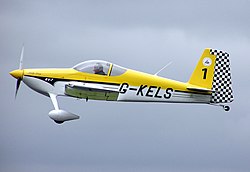
Sequoia/Frati · 1955+
Sequoia Falco F8L

Specifications
Performance
Cruise
175KTAS
Range
757nm
Climb
1500fpm
Ceiling
19,700ft
Fuel Burn
9.6gph
Fuel Cap.
40gal
MPG
21.0mpg
Stall (Vs0)
53KIAS
T/O roll
900ft
Ldg roll
750ft
Size & weight
Seats
2
Useful Load
668lbs
Full-fuel payload
428lbs
Max gross
1,880lbs
Wingspan
26.2ft
Length
21.3ft
Engine
Engine
Lycoming IO-320-B1A / IO-360-B1E
Power
160hp
TBO
2,000hrs
Overhaul
$42k
Owning it
Hull insurance
$4k/yr
Parts
fair
Mechanics
specialist
Gear
Retractable
IFR
Yes
Category
experimental
Full specification
V-speeds
Airframe
- Empty weight
- 1,212 lbs
- Max fuel weight
- 240 lbs
- Height
- 7.5 ft
- Wing position
- low
Obstacle performance
- Takeoff over 50 ft
- 1,500 ft
- Landing over 50 ft
- 1,350 ft
Paperwork
- Certification basis
- Experimental Amateur-Built
These figures are typical for the model, not a specification for any individual aircraft. Real-world numbers vary with year, installed equipment, weight, modifications and engine condition — often by more than you would expect. Use them to compare types, and confirm anything you would act on against the Pilot's Operating Handbook for that specific airframe and a prebuy inspection.
Pricing
Typical
$120k
Range
$85k – $180k
Annual all-in
~$23k/yr
All-in at ~100 flying hours a year, using the midpoint of each range — the same figures broken out under “Cost to own” below. Your number will differ, and mostly for two reasons. Experience sets your insurance: a 2,000-hour pilot with recent training pays 30–40% less than a 200-hour owner, and student owners pay 20–40% more — on the same aircraft that is often a doubling. Location sets your hangar: a T-hangar runs $200–400 a month in the Midwest against $400–1,500 in a coastal metro, and an outside tie-down is less again. Engine reserves move too — a local shop reusing your serviceable cylinders can come in 30–50% under the national specialty-shop pricing we quote, though you trade the warranty and turnaround that comes with it. Reserves are money set aside toward a future overhaul, not a bill this year, and the annual inspection figure is the shop’s labor to look — whatever they find is separate.
Cost to own — estimate
Set your yearly hours and local fuel price. Fixed costs (insurance, hangar, annual inspection) don't change with hours; fuel, maintenance and the engine reserve do.
- Fuel (9.6 gph)
- $6,240
- Engine reserve
- $2,100
- Propeller reserve
- $175
- Maintenance, parts & wear items ($22/hr)
- $2,200
- Insurance
- $2,000–$4,000
- Hangar
- $3,348–$8,371
- Annual inspection (labor only)
- $2,500
- Databases & subscriptions
- $700
- Total per year
- $22,775
- Per flight hour
- $228
- Miles flown / year (at cruise)
- 20,139 mi
- Cost per mile
- $1.13/mi
- Time in the air
- 1 hr 43 min
- Fuel burned
- 16 gal
- Out of pocket
- $184
Fuel, engine reserve and wear only. Insurance, hangar and the annual are already paid whether you make the trip or not, so they are not charged here.
Estimate, not a quote. Where a line shows a range, the total, per-hour and per-mile figures use its midpoint— insurance moves most with your experience and time in type, hangar with where you base the aircraft, so your own number could sit at either end. Annual inspection is the shop's labor to open and inspect — what they find is the maintenance line, which covers oil changes, plugs, tires, brakes, hoses, lights, a battery and vacuum pump amortised over their life, and the unscheduled squawks that are the largest and least predictable part of it. Reserves are sinking funds toward an overhaul, not a bill you pay this year — and note that a propeller is due on hours or calendar time, typically six years, so flying less does not put it off forever.
Strengths
- Exceptional speed-to-horsepower ratio (175 KTAS on 160 hp)
- Genuine aerobatic capability with inverted-flight option
- Responsive stick-and-rudder handling, head-turning craftsmanship
- Strong cross-country range (757 nm) with modest fuel burn
Weaknesses
- Two-seat configuration limits mission flexibility and payload
- Wood airframe requires hangar storage and specialized A&P support
- Builder variability creates significant risk in documentation and construction quality
- Sequoia Aircraft closed 2014; airframe parts must be fabricated from plans
Overview
The Falco F8L is a two-seat, low-wing, retractable-gear sport plane designed by legendary Italian engineer Ing. Stelio Frati in 1955. Often called "the wooden Ferrari of the sky," the Falco combines a stunning streamlined profile with genuine aerobatic capability and cross-country cruise performance that rivals many factory-built four-seaters. The prototype first flew on 15 June 1955 with a Continental C-90, and was quickly re-engined with a 135 hp Lycoming O-290. Italian factory production ran from 1955 to 1968 across three manufacturers — Aviamilano (1956–1958), Aeromere (1959 onwards, where the famous F.8L "America" series of 60 aircraft was built), and finally Laverda (1968, Super Falco Series IV, 20 units with the 160 hp O-320-B3B). Total Italian factory production was roughly 101 aircraft.
Production restarted in the 1980s when Alfred Scott's Sequoia Aircraft Corporation of Richmond, Virginia began selling extraordinarily detailed plans and a comprehensive kit to amateur builders. Sequoia operated until December 2014. By mid-2003 some 75 Sequoia-era Falcos had flown, distributed across Australia, Brazil, Canada, Chile, France, Germany, Italy, Netherlands, New Zealand, Norway, South Africa, UK and USA. Builders were typically perfectionists — a 2,000-hour quoted build time frequently stretched to 4,000–7,000 hours for show-quality examples. The Falco is beloved by pilots who value craftsmanship, speed, and the tactile responsiveness of a well-balanced stick-and-rudder aircraft. See aerobatics, Cross-Country Flying, and Local Fun Flying for mission context.
Variants & History
| Variant | Years | Builder | Engine | HP | Gross Wt | Notes |
|---|---|---|---|---|---|---|
| F.8 Prototype | 1955 | Aviamilano | Continental C-90 | 90 | ~1,500 lb | First flight 15 Jun 1955 |
| F.8 Series I | 1956–1958 | Aviamilano | Lyc O-290-D2B | 135 | 1,720 lb | Initial production ~10 units |
| F.8L Series II | 1959 | Aeromere | Lyc O-320-A | 150 | 1,800 lb | Aeromere begins production |
| F.8L Series III "America" | 1960–1965 | Aeromere | Lyc O-320-B | 160 | 1,880 lb | Majority of factory fleet, ~60 built |
| Super Falco Series IV | 1968 | Laverda | Lyc O-320-B3B | 160 | 1,880 lb | 20 built, refined panel/systems |
| Sequoia F8L (kit/plans) | 1980s–2014 | Builder (plans by Sequoia) | Lyc IO-320-B1A | 150 | 1,880 lb | 40 gal fuel, optional header tank |
| Sequoia F8L IO-360 | 1990s–2014 | Builder (plans by Sequoia) | Lyc IO-360-B1E | 180 | 1,880 lb | Cowl blisters for wider cylinders |
Performance
The Falco is genuinely fast. A 160 hp IO-320 Falco typically sees 175 KTAS at 75% power at 8,000 ft — that's Mooney 201 territory on 40 fewer horsepower. The 180 hp IO-360 version pushes cruise into the 185–190 KTAS range. Vne is a remarkable 212 KIAS at sea level, reflecting the clean aerodynamic design and confidence in the wood/ply structure. Book values are honestly reproducible; builders who finish to plans see quoted numbers.
Aerobatic limits apply only at the reduced aerobatic gross weight of 1,650 lb (vs. normal/utility gross of 1,880 lb). Within that envelope the Falco handles positive-g aerobatics gracefully — loops, rolls, Immelmanns, Cuban eights — and with the optional 3-gallon header tank it is cleared for inverted flight. It is not a true unlimited competition ship (g-limits and sustained inverted fuel/oil systems are the constraint), but it will do everything a Decathlon can do, faster and in more comfort.
Stall is docile at 53 KIAS with full flaps. Climb rate is strong (around 1,500 fpm at gross on the IO-320, more with IO-360). Service ceiling of 19,700 ft is rarely relevant but demonstrates excess power. Range with 40 gal usable and 9.6 gph at 75% yields about 3.9 hours endurance and 757 nm still-air range — a legitimate cross-country machine. See Cross-Country Flying.
Payload & Range
With 668 lb useful load, 40 gal usable fuel (240 lb), and two standard 180 lb occupants (360 lb), a Falco at gross carries 68 lb of baggage — enough for a weekend away but not extended touring. Scenarios:
- Two pilots, full fuel, minimal baggage: 180+180+240+68 = 668 lb, at gross. 757 nm range, 3.9 hr endurance — a genuine 600 nm cross-country machine against still air.
- Solo aerobatics, reduced fuel: 180 lb pilot + 20 gal (120 lb) = 300 lb against the 1,650 lb aerobatic gross, leaves 170 lb margin — comfortably under aerobatic limits with full header tank and room for parachute.
- Two pilots + 20 gal fuel: 180+180+120 = 480 lb, leaves 188 lb baggage capacity. Reduces range to ~350 nm but enables comfortable weekend trips with gear.
- Full-fuel solo ferry: 180 lb pilot + 240 lb fuel = 420 lb. 900+ nm practical range with reserves — transcontinental in two legs.
The Falco's useful load is modest compared to a Mooney or Bonanza, but for a two-seat aerobatic cross-country machine it hits a uniquely sweet spot: fast enough to cover real distance, capable enough to have fun when you get there, and efficient enough that fuel costs stay reasonable.
Mission Suitability
- Local Fun Flying (10) — This is what the Falco was born for. Sparkling handling, honest aerobatics, head-turning ramp appeal, and the visceral satisfaction of flying something you (or a previous owner) built with your own hands. Few aircraft deliver more joy per hour.
- Cross-Country (8) — 175+ KTAS on 9.6 gph from a 160 hp engine is extraordinary efficiency. Two-seat limitation and modest baggage cap the score; otherwise it would be a 10.
- Aerobatics (7) — Fully aerobatic within the 1,650 lb limit, inverted-capable with header tank. Not an unlimited competition aircraft (lower g-limits than Extra/Pitts), but excellent for sport aerobatics and intro sequences.
- Business Travel (5) — Fast enough and IFR-capable in modern builds, but two seats, experimental category insurance, and limited all-weather utility hold this back.
- Surveying (3) — Too fast, too low-wing, too limited in endurance for serious survey work.
- Training (2) — Retractable, high-performance, complex endorsement required. Transition training only, not primary.
- Backcountry (1) — Low wing, short prop clearance, fragile wood structure exposed to hangar rash. Stay on pavement.
- Cargo (1) — Tiny baggage compartment, 668 lb useful load shared between pilot, passenger, fuel, and bags.
Avionics Ecosystem
As an Experimental Amateur-Built, the Falco has complete flexibility in panel choice with no certified-gear requirement — see Avionics Pricing Reference.
- Vintage/Original Italian factory (Series III/IV): Often still wearing 1960s-era panels with round gauges, single VOR, no transponder upgrades. Frequent candidates for full modernization.
- 1990s Sequoia builds: Typically Garmin GNS 430 or King KX-155 nav/com, mechanical six-pack, basic autopilot (S-TEC 30 or Navaid wing-leveler).
- 2000s–2014 Sequoia builds: Commonly feature Dynon SkyView, Garmin G3X Touch, or Advanced Flight Systems EFIS, with GTN 650/750, TruTrak or Trio autopilots, and ADS-B In/Out via GDL 82 or uAvionix tailBeacon X.
- Show builds: Full dual G3X Touch, GTN 750Xi, GFC 500-equivalent autopilot, engine monitor, synthetic vision. Panel budgets of $40,000–$70,000 are common in top examples.

2009 Van's RV-7
RV-7 · Fast + Aerobatic · Dynon Glass · Great First RV
STCs & Modifications
The Falco being experimental means no STCs per se, but Sequoia Aircraft and builders have developed a number of approved mods and upgrades:
- IO-360 conversion (180 hp) — Adds roughly 10 KTAS cruise and 200 fpm climb. Requires cowl blisters to clear the wider IO-360 cylinder heads. Cost in a new build: engine delta ~$8,000, cowl rework ~$2,000.
- Header tank (3 gal) — Enables inverted flight for short-duration aerobatic maneuvers. Install cost ~$1,500 in parts if fitted during construction.
- Constant-speed prop — Hartzell offers specific STC-equivalent prop configurations for both the IO-320 and IO-360 Falco. Standard on nearly all builds.
- Fuel capacity increase — Optional wing tanks can bring total capacity from 40 to 48 gal; adds ~80 nm range.
- Glass panel retrofit — Common on older Italian factory aircraft, $25,000–$50,000 typical.
- Light weight batteries (Lithium EarthX) — Popular for CG management and aerobatic weight savings.
Maintenance & Support
See Maintenance Ecosystem.
- Parts availability (fair): Sequoia Aircraft closed in December 2014, taking its centralized parts support with it. The active Falco Builders Group and the seqair.com archive maintain plans and drawings; airframe parts must often be fabricated from plans. Engine and prop parts are standard Lycoming/Hartzell and fully supported.
- Mechanic familiarity (specialist): Wood aircraft expertise is rare. Owners typically perform their own condition inspections (Experimental Amateur-Built rules permit the original builder to hold a Repairman Certificate for annual condition inspections). Non-builder owners need an A&P familiar with wood structures — a small community of specialists in the US, UK, and Italy handle most major work.
- Annual condition inspection: $800–$2,000 if performed by an A&P; free if performed by the builder-owner.
- Typical annual operating cost: ~$9,000 including hangar, insurance, fuel (at 50 hours/year), reserves, and routine maintenance.
- Expensive items: Canopy replacement ($3,000–$5,000), landing gear motor rebuild ($2,000), prop overhaul ($3,500), engine overhaul ($39,000–$45,000).
- Hangar requirement: Critical. Wood aircraft left outdoors degrade rapidly; even shaded outdoor tiedown is inadvisable.
Valuation Factors
Prices for flying Sequoia Falcos currently range from about $85,000 (mid-time, older panel, cosmetic needs) to $180,000+ (show-quality, IO-360, glass panel, fresh engine). Typical well-maintained examples trade around $120,000. See Aircraft Valuation Methodology.
- Kit cost at time of build: $96,000 in 2001 (kit, including prop, excluding engine). Plans alone were $400. Sequoia estimated ~$13,000 in additional "loose" parts. With engine, avionics, and paint, finished build cost was typically $150,000–$250,000 — meaning most Falcos on the market sell at a loss relative to build cost.
- Builder quality: The single biggest valuation factor. A plaque-winning builder's aircraft can command a 30–50% premium over a workmanlike build.
- Engine: IO-360 Falcos command a $10,000–$20,000 premium over IO-320s.
- Panel: Modern glass panels add $25,000–$40,000 of value.
- Italian factory originals: Aeromere and Laverda examples command a collector premium when original and airworthy — think $150,000+ for a pristine Laverda Super Falco.
- Wood airframe discount: Some buyers discount wood construction out of fear; knowledgeable buyers do not.
- Engine time: Fresh overhaul adds ~$25,000; runout engine subtracts similarly.
ADs & Common Problems
Experimental Amateur-Built aircraft are not subject to FAA Airworthiness Directives, but the Falco community tracks several recurring issues:
- Glue joint degradation — The critical inspection item on any wood aircraft. Resorcinol glue (used in most Italian factory builds) is highly durable but requires inspection. T-88 and West System epoxy (used in nearly all Sequoia builds) are similarly reliable but susceptible to UV and moisture damage if the protective fiberglass/epoxy outer layer is breached.
- Hangar rash on wood skins — A single careless push-back scrape can penetrate the 1.2–2.5 mm birch plywood skin and require significant repair.
- Landing gear rigging — The electrically-actuated retractable gear requires careful rigging; switches and limit microswitches are common squawks.
- Canopy cracking — The bubble canopy is expensive to replace ($3,000–$5,000) and sensitive to over-torqued fasteners.
- Builder variability — Unlike a factory aircraft, the single biggest risk in any Falco purchase is the skill and documentation of the original builder. Weight-and-balance accuracy, glue joint quality, control rigging, and paperwork completeness vary enormously.
- Engine-mount cracks (IO-360 cowl blister builds) — Occasional reports of cracking where the additional mass and vibration of the IO-360 meets the original mount design.
Insurance Profile
See GA Insurance Underwriting. Insurance is one of the tougher aspects of Falco ownership:
- Category: Experimental, retractable, aerobatic — three factors that each push premiums up.
- Typical hull: $3,500–$4,500/year on a $120,000 hull for a 500+ hour pilot with retract and tailwheel-equivalent complex time. Ground-up builders (who have intimate knowledge of the aircraft) sometimes get favorable rates.
- Liability: $1 million smooth is often unavailable; $100,000 per-seat sublimits are typical on experimental aerobatic retracts.
- Underwriting quirks: Underwriters want documented transition training (often 5–10 hours dual in type), a complex endorsement, and builder log review for non-first-owner purchases. Aerobatic coverage requires additional endorsement and often excludes competition.
- Carriers: Avemco, Starr (via EAA), and Global Aerospace are the main carriers willing to quote; some years only one will write.
For sale (0)
No listings for this model right now.
Also worth looking at
What buyers usually weigh against the Sequoia Falco F8L — aircraft flown for the same kind of mission.