Diamond · 1994+
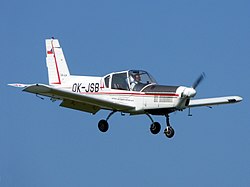
Diamond DA20-A1 Katana
 i
iSpecifications
Performance
Cruise
122KTAS
Range
703nm
Climb
667fpm
Ceiling
13,100ft
Fuel Burn
2.9gph
Fuel Cap.
20gal
MPG
48.4mpg
Stall (Vs0)
45KIAS
T/O roll
833ft
Ldg roll
669ft
Size & weight
Seats
2
Useful Load
495lbs
Full-fuel payload
373lbs
Max gross
1,653lbs
Wingspan
35.1ft
Length
23.5ft
Engine
Engine
Rotax 912 A3 / F3 / S3 (current production: 912 iSc3 Sport)
Power
100hp
TBO
—hrs
Overhaul
—
Owning it
Hull insurance
—/yr
Parts
—
Mechanics
—
Gear
Fixed
IFR
Yes
Category
certified
Full specification
V-speeds
Airframe
- Empty weight
- 1,158 lbs
- Max fuel weight
- 122 lbs
- Height
- 7.2 ft
- Wing position
- low
- Auto fuel (mogas)
- Auto fuel approved on some airframes — check the logbooks
Obstacle performance
- Takeoff over 50 ft
- 1,640 ft
- Landing over 50 ft
- 1,663 ft
Paperwork
- Type certificate
- TA4CH
- Certification basis
- FAR 21.29 and Part 23 (Feb 1965, Amdt 23-1 thru 23-42); JAR-VLA used as a safety equivalence
These figures are typical for the model, not a specification for any individual aircraft. Real-world numbers vary with year, installed equipment, weight, modifications and engine condition — often by more than you would expect. Use them to compare types, and confirm anything you would act on against the Pilot's Operating Handbook for that specific airframe and a prebuy inspection.
Pricing
Typical
$140k
Range
$80k – $400k
Annual all-in
~$16k/yr
All-in at ~100 flying hours a year, using the midpoint of each range — the same figures broken out under “Cost to own” below. Your number will differ, and mostly for two reasons. Experience sets your insurance: a 2,000-hour pilot with recent training pays 30–40% less than a 200-hour owner, and student owners pay 20–40% more — on the same aircraft that is often a doubling. Location sets your hangar: a T-hangar runs $200–400 a month in the Midwest against $400–1,500 in a coastal metro, and an outside tie-down is less again. Engine reserves move too — a local shop reusing your serviceable cylinders can come in 30–50% under the national specialty-shop pricing we quote, though you trade the warranty and turnaround that comes with it. Reserves are money set aside toward a future overhaul, not a bill this year, and the annual inspection figure is the shop’s labor to look — whatever they find is separate.
Cost to own — estimate
Set your yearly hours and local fuel price. Fixed costs (insurance, hangar, annual inspection) don't change with hours; fuel, maintenance and the engine reserve do.
- Fuel (2.9 gph)
- $1,885
- Maintenance, parts & wear items ($12/hr)
- $1,200
- Insurance
- $1,250–$3,500
- Hangar
- $4,949–$12,373
- Annual inspection (labor only)
- $1,200
- Databases & subscriptions
- $400
- Total per year
- $15,721
- Per flight hour
- $157
- Miles flown / year (at cruise)
- 14,040 mi
- Cost per mile
- $1.12/mi
- Time in the air
- 2 hr 28 min
- Fuel burned
- 7 gal
- Out of pocket
- $76
Fuel, engine reserve and wear only. Insurance, hangar and the annual are already paid whether you make the trip or not, so they are not charged here.
Estimate, not a quote. Where a line shows a range, the total, per-hour and per-mile figures use its midpoint— insurance moves most with your experience and time in type, hangar with where you base the aircraft, so your own number could sit at either end. Annual inspection is the shop's labor to open and inspect — what they find is the maintenance line, which covers oil changes, plugs, tires, brakes, hoses, lights, a battery and vacuum pump amortised over their life, and the unscheduled squawks that are the largest and least predictable part of it. Reserves are sinking funds toward an overhaul, not a bill you pay this year — and note that a propeller is due on hours or calendar time, typically six years, so flying less does not put it off forever.
Strengths
- Efficient two-seat trainer with modern Rotax power and sliding canopy visibility
- Active Diamond service network plus widespread Rotax parts availability
- Docile handling and low operating costs for flight training and local flying
Weaknesses
- Composite airframe repairs require certified composite shop only
- Rotax 912 ownership requires Rotax-specific mechanic training — not all A&Ps are equipped
- Tight payload and baggage limits cross-country and dual-purpose missions
- 703 nm range is no-reserve figure; real-world trip planning requires fuel subtraction
Overview
This page describes the DA20-A1 — the Rotax-powered Katana, sold today under the name "DA20i." The Continental-powered DA20-C1 Eclipse is a separate purchase with a different engine, different fuel-burn and range, and its own page: Diamond DA20-C1 Eclipse.
The DA20-A1 is a two-seat, low-wing, all-composite trainer built by Diamond Aircraft Industries Inc. in London, Ontario, Canada. It began life in 1994 as the Rotax-912-powered Katana and, after a run of Continental-powered C1 Eclipses aimed at the US flight-training market, Diamond has returned to selling the Rotax airframe as its current production DA20, marketed as the "DA20i Katana" with a more powerful 100 hp Rotax 912 iSc3 Sport engine.
The type certificate is FAA TCDS TA4CH, not an EASA sheet. The design was approved first by Transport Canada Civil Aviation (Canadian type certificate A-191); the FAA validated it under 14 CFR 21.29 and issued its own type certificate directly to the Canadian manufacturer. There is no EASA number in this airplane's history at all — an earlier version of this page cited "A41EU," which is not a Diamond certificate; it is the FAA sheet for the Short Brothers SD3-30/360 Sherpa. That was a wrong-document error, corrected here.
Variants & History
| Variant | Years | Engine | HP | Gross Weight (lbs) | Key Changes |
|---|---|---|---|---|---|
| DA20-A1 (original Katana) | 1994-2003 | Rotax 912 A3/F3 | 80 | 1,609 | Original Canadian-built Katana |
| DA20-A1 (912 S3) | later production | Rotax 912 S3 | 99 | 1,653 | Higher-power Rotax option on the same TC section |
| DA20i Katana (current) | ~2021-present | Rotax 912 iSc3 Sport | 100 | 1,653 (TCDS) / 1,764 (mfr — see disagreement below) | Fuel-injected FADEC-lite Rotax; current production |
| DA20-C1 Eclipse | 1998-2010s | Continental IO-240-B | 125 | 1,764 | Separate page — see diamond-da20-c1-eclipse |
A weight disagreement, recorded rather than resolved. Diamond's current spec sheet states 1,764 lb max take-off mass for the DA20i — identical to the DA20-C1's certificated weight. FAA TCDS TA4CH, Revision 17 (the current status record as of this retrieval), authorizes only 1,609 lb (912 A3/F3) or 1,653 lb (912 S3) for any DA20-A1 configuration; 1,764 lb appears nowhere in Section I. This page stores 1,653 lb — the certificate's higher Rotax weight — because the certificate is the legal limit and outranks a marketing page. If a newer TC amendment authorizing 1,764 lb for the Rotax airframe exists, it postdates this session's retrieval and should be checked before this figure is changed.
Performance
No single row of any source found this session states cruise speed, fuel
burn and range together at one power setting. Diamond's current spec sheet
gives "max. cruise speed" (122 kt) with no altitude or power percentage
stated, and separately gives a matched range/burn pair (703 nm / 2.9 gal/h) at
"8,000 ft, LRC PWR, no reserve" — a different, also-unlabelled setting. Rather
than pair the unmatched cruise speed with the LRC burn and range (the exact
mismatched-triple trap this catalogue exists to avoid), cruise_percent_bhp
and cruise_altitude_ft are left blank: cruise_speed_ktas is the max-cruise
figure, fuel_burn_gph and range_nm are the LRC figures, and none of the
three should be read as describing one flight.
"No reserve" is stated on the range figure. 703 nm is not a fuel-planning number; it is the certificated-fuel-to-empty distance the manufacturer publishes, and a real trip needs a reserve subtracted from it.
Takeoff and landing distances are single-sourced (Diamond's current spec sheet only) and describe standard equipped aircraft at MTOM, ISA, sea level — no second source was checked this session; treat as a single-source figure per the runbook's cross-check list.
Payload & Range
DA20-A1 / DA20i (100 hp Rotax 912 iSc3, 20.3 gal usable, 1,653 lb TCDS gross):
| Scenario | Fuel (gal) | Fuel Weight (lbs) | Payload (lbs) | Pax + Bags | Range (nm) |
|---|---|---|---|---|---|
| Full fuel, 2 pax | 20.3 | 122 | 373 | 2 x 180 + 13 bags | 703 (no reserve) |
At 495 lb useful load, two average adults with full fuel leave little margin for baggage — tighter than the previous (uncorrected) page's 598 lb figure implied, because that figure used the manufacturer's uncertificated 1,764 lb gross weight rather than the certificate's 1,653 lb. This is the practical consequence of the weight disagreement above: a buyer planning a loaded cross-country in this airplane should confirm the individual airframe's actual certificated gross weight from its own weight-and-balance report before planning around either number.

1980 Cessna 152
Honest Trainer · Mid-Time Engine · Fresh Annual
Mission Suitability
- Flight Training (9): Docile, efficient, modern two-seat trainer. Diamond markets the current DA20i squarely at flight schools and universities.
- Backcountry (1): Not applicable — low wing, hard-surface trainer.
- Business Travel (1): Two seats, no baggage capacity for business use.
- Aerobatics (1): Not aerobatic certified.
- Cross-Country (4): 703 nm range (no reserve) is workable for a two-seat cross-country machine, but baggage and payload are tight.
- Cargo Hauling (1): Minimal baggage area.
- Local Fun Flying (7): Efficient and enjoyable for local flying; the sliding canopy and low wing give excellent visibility.
- Surveying (3): Two seats only limits payload for equipment and an observer.
Avionics Ecosystem
- Basic panel: Standard six-pack with single nav/com, appropriate for a primary trainer.
- Upgraded: Garmin G5 / GI-275 flight instruments and a GTN navigator are the common retrofit path on older A1 airframes; current-production DA20i aircraft are typically ordered with a factory glass panel.
STCs & Modifications
Composite construction limits the aftermarket sharply. No engine-conversion STCs were found for the Rotax airframe this session; the airplane is sold as delivered.

1989 Aviat Husky
Husky A-1 · Tundra Tires · Backcountry Ready
Maintenance & Support
- Parts availability: Diamond maintains an active service network; Rotax parts are widely available through the broader Rotax dealer network (not Diamond-exclusive).
- Mechanic familiarity: Rotax engines require Rotax-specific training, which not every field A&P carries — flag this for a buyer new to Rotax ownership.
- Engine overhaul cost: intentionally left blank — see
validator_exempt.engine_overhaul_cost_usdabove.
Valuation Factors
Prices below are asking-price data from the site's own listings sync (2026-07-14), not a Vref or Aircraft Bluebook considered value — this session had no access to either guide. Per the runbook, a listings-derived figure is treated as the top of a range rather than the middle, and is dated for that reason. Used A1/Katana airframes from the 1990s-2000s ask roughly $80,000-$150,000; current-production DA20i aircraft ask $319,900-$399,900 new in the same listings snapshot. Buying the Aircraft Bluebook or a Vref subscription would close this gap outright — see the confidence note.
ADs & Common Problems
- Composite repair requires a certified composite shop; this is true of every Diamond in the catalogue.
- Rotax 912 gearbox inspection is a recurring maintenance item across the
Rotax 912 family generally (see
reference/mogas-approval.mdand the Rotax service-instruction passages already in the vault for the fuel side of this engine's requirements). - No AD research specific to the DA20-A1 airframe was carried out this session; this section should not be read as a complete AD history.
Insurance Profile
Rotax-powered two-seat fixed-gear trainer: among the least expensive GA
airplanes to insure. No fresh insurance-broker quote was sourced this session;
the figure is left off this page's Insurance section rather than repeating an
uncited number (typical_hull_insurance_annual_usd is not populated).
For sale (0)
No listings for this model right now.
Also worth looking at
What buyers usually weigh against the Diamond DA20-A1 Katana — aircraft flown for the same kind of mission.