Beechcraft · 1990+
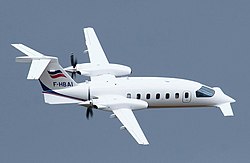
Beechcraft Super King Air 350
 i
iSpecifications
Performance
Cruise
312KTAS
Range
1,489nm
Climb
2731fpm
Ceiling
35,000ft
Fuel Burn
115.0gph
Fuel Cap.
539gal
MPG
3.1mpg
Stall (Vs0)
—KIAS
T/O roll
—ft
Ldg roll
—ft
Size & weight
Seats
9
Useful Load
5,544lbs
Full-fuel payload
1,933lbs
Max gross
15,000lbs
Wingspan
57.9ft
Length
46.7ft
Engine
Engine
Pratt & Whitney Canada PT6A-60A
Power
2100hp
TBO
3,600hrs
Overhaul
$420keach
Hot section
$50keach
Engines
2
Owning it
Hull insurance
$35k/yr
Parts
excellent
Mechanics
common
Gear
Retractable
IFR
Yes
Category
certified
Full specification
V-speeds
Airframe
- Empty weight
- 9,456 lbs
- Max fuel weight
- 3,611 lbs
- Height
- 14.3 ft
- Wing position
- low
Obstacle performance
- Takeoff over 50 ft
- 3,300 ft
- Landing over 50 ft
- 2,692 ft
Paperwork
- Type certificate
- A24CE
- Certification basis
- Part 23 Commuter Category
These figures are typical for the model, not a specification for any individual aircraft. Real-world numbers vary with year, installed equipment, weight, modifications and engine condition — often by more than you would expect. Use them to compare types, and confirm anything you would act on against the Pilot's Operating Handbook for that specific airframe and a prebuy inspection.
Pricing
Typical
$3.1M
Range
$1.9M – $6.0M
Annual all-in
~$265k/yr
All-in at ~100 flying hours a year, using the midpoint of each range — the same figures broken out under “Cost to own” below. Your number will differ, and mostly for two reasons. Experience sets your insurance: a 2,000-hour pilot with recent training pays 30–40% less than a 200-hour owner, and student owners pay 20–40% more — on the same aircraft that is often a doubling. Location sets your hangar: a T-hangar runs $200–400 a month in the Midwest against $400–1,500 in a coastal metro, and an outside tie-down is less again. Engine reserves move too — a local shop reusing your serviceable cylinders can come in 30–50% under the national specialty-shop pricing we quote, though you trade the warranty and turnaround that comes with it. Reserves are money set aside toward a future overhaul, not a bill this year, and the annual inspection figure is the shop’s labor to look — whatever they find is separate.
Cost to own — estimate
Set your yearly hours and local fuel price. Fixed costs (insurance, hangar, annual inspection) don't change with hours; fuel, maintenance and the engine reserve do.
- Fuel (115 gph)
- $69,000
- Engine reserve
- $23,333
- Propeller reserve
- $2,500
- Maintenance, parts & wear items ($160/hr)
- $16,000
- Hot section reserve
- $5,556
- Insurance
- $62,000–$139,500
- Hangar
- $16,224–$40,559
- Annual inspection (labor only)
- $12,000
- Databases & subscriptions
- $2,000
- Total per year
- $259,530
- Per flight hour
- $2,595
- Miles flown / year (at cruise)
- 35,904 mi
- Cost per mile
- $7.23/mi
- Time in the air
- 58 min
- Fuel burned
- 111 gal
- Out of pocket
- $1,119
Fuel, engine reserve and wear only. Insurance, hangar and the annual are already paid whether you make the trip or not, so they are not charged here.
Estimate, not a quote. Where a line shows a range, the total, per-hour and per-mile figures use its midpoint— insurance moves most with your experience and time in type, hangar with where you base the aircraft, so your own number could sit at either end. Annual inspection is the shop's labor to open and inspect — what they find is the maintenance line, which covers oil changes, plugs, tires, brakes, hoses, lights, a battery and vacuum pump amortised over their life, and the unscheduled squawks that are the largest and least predictable part of it. Reserves are sinking funds toward an overhaul, not a bill you pay this year — and note that a propeller is due on hours or calendar time, typically six years, so flying less does not put it off forever.
Strengths
- Twin-engine reliability and redundancy for serious cross-country and business travel
- Largest cabin-class turboprop support ecosystem; parts and service widely available
- 5,500+ lb useful load; proven cargo/medevac platform with 52 in cargo-door option
- 310+ knot cruise; 1,400–1,500 nm range on realistic business missions
Weaknesses
- Fuel burn roughly double a comparable single (PC-12); high operating cost for casual flying
- Requires type rating; not economical for local or training missions
- PT6A-60A overhaul at 3,600 hours runs ~$840k for both engines; mid-TBO hot-section inspection ($50k per engine) is mandatory at 1,800 hours
- Vne/Vno airspeed limits are altitude-dependent (263 kt IAS to FL21k, then Mach schedule to 35k); single spec field cannot capture this fully
Overview
The Beechcraft Super King Air 350 is the stretched, most-capable member of the King Air family and the best-selling cabin-class turboprop in history. Its FAA type-certificate designation is Model B300/B300C — "350" is a Beechcraft/Textron marketing name, not an FAA model number, the same way "B200" and "200" are marketing shorthand for the type-certificated 200-series. It was introduced in 1989-90 as a development of the Model 300, adding a 34-inch fuselage stretch, winglets, and the PT6A-60A engines it still carries today — 1,050 shp per side, per FAA TCDS A24CE.
Operators span corporate flight departments, fractional programs, air ambulance (Life Flight, REVA), special-missions providers (ISR, maritime patrol, photo/survey), and the U.S. and foreign militaries (MC-12W Liberty, RC-12, UC-12W — all carried on this same certificate). It remains in production today (as the King Air 360, a 2020 avionics/interior refresh). Because of its 15,000 lb Part 23 Commuter Category certification, it is the only King Air below 350 that requires a type rating of its pilots — the 300 shares that distinction.
Against the King Air B200 it carries a longer cabin, higher gross weight (15,000 lb against 12,500), and 850-vs-1,050 shp engines a side, for roughly 25 knots more cruise and a materially larger useful load. Against the PC-12 it trades single-engine efficiency for twin-engine redundancy and a wider CG envelope. See Business Travel and Cross-Country Flying for mission context.
Variants & History
| Variant | Years | FAA Designation | MTOW | ZFW | Key Differences |
|---|---|---|---|---|---|
| Model 350 | 1990-2008 | B300 | 15,000 lb | 12,500 lb | Original stretched 300 with winglets; Collins Pro Line 21 late in run |
| Model 350ER | 2007-present | B300 (ER option) | 16,500 lb | — | Extended-range fuel option and strengthened gear; A24CE's additional-requirements block for 16,500 lb MTOW covers this configuration on the same certificate section (not a separate type design) |
| Model 350i | 2009-2020 | B300 | 15,000 lb | 12,500 lb | Redesigned cabin (Venue CMS), quieter, Pro Line 21 standard |
| Model 350iER | 2009-2020 | B300 (ER option) | 16,500 lb | — | 350i cabin on the ER fuel/gear configuration |
| King Air 360 / 360ER | 2020-present | B300/B300C | 15,000 / 16,500 lb | 12,500 lb | Rockwell Collins Pro Line Fusion touchscreen avionics, digital autothrottle option, updated interior |
| B300C | 1990-present | B300C | 15,000 lb | 12,500 lb | 52 in x 52 in cargo door; the freight/medevac/military airframe (MC-12W, UC-12W) |
A24CE also carries options this page's frontmatter does NOT describe: an increased maximum zero-fuel weight of 13,400 lb (NOTE 21), and a restricted-category configuration at 17,500 lb MTOW (NOTES 8 & 19). The frontmatter describes the standard 15,000 lb B300/B300C.
The certified maximum is 17 occupants including 2 crew (A24CE Section IX); the Raytheon-era spec sheet's typical executive figure is 1 pilot + 9 passengers, and 9-11 seat double-club or commuter layouts are common. The frontmatter stores the typical 9 — this is not a 17-seat airplane in practice.
Performance
The stored triple is the Raytheon-era spec/performance sheet's own: High Speed Cruise 312 KTAS at FL240 (cruise_altitude_ft: 24000) burning 773 pph (115 gph). AOPA's 2014 Quick Look corroborates closely: "the 350 can do 310 KTAS on 773 pounds (115 gals) per hour at FL240" — same altitude, same burn, 2 knots apart. Neither document states a percent-power setting for this row, so cruise_percent_bhp is left blank rather than assumed.
The stored 1,489 nm range is the same manufacturer document's "Maximum Fuel with Available Payload" mission (1,789 lb payload, NBAA IFR reserves with a 100 nm alternate) — still flown at High Speed Cruise power per the table's own header, just a lighter payload than the raw cruise figure describes, which is why its average trip speed (280 kt) sits below the 312 kt cruise TAS: the mission profile includes the climb to FL240. The same table also gives 899 nm at max payload (2,800 lb) and 1,545-1,572 nm at lighter loadings (4 passengers to ferry/zero-payload) — none of those rows was substituted in, per rule 3's one-row-one-setting requirement.
This is a large correction from the page's previous unsourced figures. Range was previously stored as 1,806 nm and fuel burn as 100 gph; neither number appears anywhere in the sourced documents at any payload or power setting. 1,806 nm does not match any row of the manufacturer's own range table (which tops out at 1,572 nm, ferry/zero-payload); 100 gph does not match the stated 773 lb/hr ÷ 6.7 lb/gal = 115.4 gph at the cruise condition the page's own cruise speed describes.
Maximum Operating Altitude versus service ceiling — the two 35,000s are not the same claim. TCDS A24CE states "Maximum Operating Altitude 35,000 ft.," a certificated LIMIT — the highest altitude the airplane is approved to fly, regardless of how it climbs. The mfr spec sheet separately states "All Engine Service Ceiling: 35,000 ft." — a climb-PERFORMANCE figure (the altitude where all-engine rate of climb decays to 100 fpm). The two numbers coincide for this airframe; service_ceiling_ft is sourced to the service-ceiling line, not the operating-altitude limit, and the certificate's limit is a separate fact recorded here rather than in that field. The same document gives an engine-out service ceiling of 21,500 ft and an engine-out climb rate of 552 fpm at takeoff flaps — the number that matters most for terrain planning on one engine.
Climb at gross is 2,731 fpm all-engine, flaps up, reaching FL250 in 15 minutes.
The Vmo/Vno airspeed limit steps down with altitude, and this schema's single vne_kias/vno_kias field cannot show that. TCDS A24CE Section IX states 263 knots IAS up to 21,000 ft, then a Mach-limited schedule decreasing to 194 knots (0.58 Mach) by 35,000 ft. 263 is stored; a pilot planning a flight-levels descent should not assume 263 holds all the way to FL350. Maneuvering speed is 184 kt; maximum flap-extension speed is 202 kt (approach, 14°) / 158 kt (full, 35°); gear-extended and gear-operating limits are 184 kt / 166 kt (retraction).
Runway performance per the mfr sheet: takeoff field length at max weight, sea level, ISA is 3,300 ft; landing distance at max landing weight, sea level, ISA is 2,692 ft, at a 109 kt approach speed. Neither figure is broken out into a separate ground-roll number in any source checked for this page — takeoff_ground_roll_ft/landing_ground_roll_ft are left blank rather than carrying the page's previous, unsourced 2,086/1,730 ft figures forward.
Payload & Range
At 15,000 lb MTOW with 9,456 lb Basic Empty Weight, useful_load_lbs computes to 5,544 lb (max_gross_weight_lbs − empty_weight_lbs, per rule 5). Full fuel (539 gal × 6.7 lb/gal = 3,611 lb) leaves 1,933 lb for crew, passengers and bags on the takeoff-weight basis this schema uses.
The mfr spec sheet's own payload/range missions (computed from the ramp-weight, equipped-operating-weight basis, which is why the "Useful Load 5,400" figure there differs from this page's derived 5,544 — see raw/mfr/mfr-kingair350-specperf-2026-09-10.md):
| Configuration | Payload | Range (NBAA IFR reserves, HSC) | Avg. Speed |
|---|---|---|---|
| Max payload | 2,800 lb | 899 nm | 274 kt |
| Max fuel, available payload | 1,789 lb | 1,489 nm (stored) | 280 kt |
| 4 passengers | 800 lb | 1,545 nm | 286 kt |
| Ferry (zero payload) | 0 lb | 1,572 nm | 290 kt |
The airplane is rarely fuel-limited for a typical business-travel mission (4-6 people, moderate bags, sub-1,000 nm legs) — most operators fly full tanks with whatever payload fits, trading range headroom they will not use for simpler fuel planning.
Related pages: King Air B200/B200GT, King Air C90, Pilatus PC-12, Daher TBM, valuation-methodology, engine-overhaul-pricing, insurance-underwriting, maintenance-ecosystem, business-travel, cross-country, cargo-hauling, surveying
Mission Suitability
Business travel (10/10). Stand-up cabin, 9-11 seats, pressurized to 6.6 psi (15,293 ft cabin altitude at the service ceiling), 280-300+ knot real-world cruise, and twin-engine dispatch reliability. Nothing at the price does all of it.
Cross-country (9/10). 1,400-1,500+ nm legs at high-speed cruise power with real payload; longer at lighter loadings or on 350ER fuel. Only dinged versus a 10 because fuel burn runs roughly double a comparable single like the PC-12 for similar missions.
Cargo hauling (9/10). 5,500+ lb useful load on the ramp weight basis (the mfr sheet's own figure), and the B300C's 52 in cargo door made it the feeder-freight and medevac standard worldwide (MC-12W, UC-12W military variants share this certificate).
Surveying (9/10). Special-missions pedigree: belly pods, sensor provisions, long endurance. Widely used for aerial mapping, geophysical survey, ISR, and environmental monitoring.
Backcountry (3/10). Excellent field performance for a 15,000 lb airplane (3,300 ft takeoff field length) but this is a T-tail cabin-class turboprop — treat it as an airport airplane, not a bush machine.
Flight training (2/10), Local fun (1/10), Aerobatics (1/10). Used for type-rating recurrent training at FlightSafety/CAE/SimCom, never as an ab-initio platform; direct operating cost makes casual flying uneconomic; transport-category airframe, not aerobatic-approved.
Avionics Ecosystem
- 1990-2004 (Model 350, early production): Collins Pro Line II, analog-heavy CRT EFIS. Most upgraded by now; original panels are the floor of the market.
- 2004-2008 (late 350): Collins Pro Line 21 optional then standard.
- 2009-2020 (350i): Pro Line 21 standard with Integrated Flight Information System, dual FMS, Venue cabin management.
- 2020-present (360): Rockwell Collins Pro Line Fusion, three 14-inch touchscreens, synthetic vision, autothrottle option.
Aftermarket: Garmin G1000 NXi retrofit for older 350s; Pro Line Fusion retrofits for late Pro Line 21 airframes. ADS-B Out is universal on any airplane still flying IFR. See Avionics Pricing Reference.
STCs & Modifications
- Blackhawk XP67A — replaces the PT6A-60A with PT6A-67A engines (1,200 SHP each per Blackhawk's marketing; note A24CE Section IX itself already lists the PT6A-67A as an alternate factory-approved engine, "See NOTE 17 for alternate P&W PT6A-67A production or kit installation" — this is a certificated option on the same type design, not solely an STC upgrade path).
- Raisbeck Engineering mods — ram air recovery, swept props, aft-body strakes — common on the 350 as on the smaller King Airs.
- BLR Aerospace winglets/vortex generators — the 350 has factory winglets from new; BLR offers further aerodynamic refinements.
- Executive interior refurbishment, medevac conversion (Aerocare, LifePort) — common completions.
- Garmin GFC 600 autopilot retrofit — available where the original Collins autopilot becomes unsupportable.
Maintenance & Support
The King Air 350 shares the largest turboprop support network in the world with the rest of the family: Textron Aviation service centers, authorized independents, and hundreds of experienced King Air shops. Parts availability is excellent through Textron and an active aftermarket; P&WC engine support is global.
Engine costs (per reference/engine-overhaul-pricing.md): hot section inspection $50,000 per engine at 1,800 hours (this page's own maintenance-section figure, not the class default); overhaul $420,000 per engine at 3,600-hour TBO — the class-band figure for the PT6A-60A, which has no published per-model P&WC flat-rate entry (the flat-rate program stops at the -135A). Budget roughly $840,000 for a pair, before HSI.
See Maintenance Ecosystem.
Valuation Factors
Market asking, 2026-09-10 (Controller.com and AvBuyer live listings, see raw/market/market-kingair350-asking-2026-09-10.md): roughly $1.85M-$6.0M across the full production run, average asking around $3.1M. This is an age-driven spread across 36 model years, not variant conflation — the splitting rule's price caveat applies (a 1990 steam-panel 350 and a 2025 King Air 360 are the same certificated airframe four decades apart). This is a MARKET-ASKING source, not Vref/Aircraft Bluebook, and asking is not selling — treat the range as a ceiling-leaning estimate. No Vref/Bluebook subscription was available in this research pass; see validator_exempt.
Value drivers (qualitative, not independently re-sourced this pass — carried forward from the page's prior valuation section): engine program enrollment (P&WC ESP Gold), fresh hot sections, avionics generation (Pro Line Fusion/G1000 NXi retrofits), paint/interior condition, and ER-configuration premium over standard-gross airframes.
ADs & Common Problems
- PT6A hot-section inspection — due at mid-TBO (1,800 hours,
hsi_interval_hours); scrutinize logbooks for compliance. - Landing gear 6-year / 8,000-hour inspection — mandatory comprehensive gear overhaul; a critical pre-buy checkpoint.
- Wing attach fitting inspections — recurring, compliance status must be documented.
- Cabin door seal and latch wear — known point; check recent seal replacement.
- Collins Pro Line 21 display unit failures — exchange units are a real cost on early 350i panels.
- Bleed-air and pressurization components — outflow valves and flow packs are expensive overhaul items.
- Engine trend monitoring — ECTM/ITT margin review is a mandatory pre-buy step.
Beechcraft's Service Information Letter program (Phase 1-4 inspections) rotates on a cycle; pre-buy should verify where the airframe sits in it.
Insurance Profile
Cabin-class turboprop insurance category — the most expensive GA segment outside jets. A type rating is required (turbine over 12,500 lb MTOW). Stored typical_hull_insurance_annual_usd: 35000 scales the general turbine hull band in reference/insurance-costs.md ($10,000-$30,000+) up for the 350's larger typical hull value versus the B200's — not a 350-specific quote; see validator_exempt-style caveat in sourced. Most insurers require FlightSafety/CAE/SimCom initial and recurrent training and, for corporate/charter ops, a qualified second-in-command. See GA Insurance Underwriting.
For sale (0)
No listings for this model right now.
Also worth looking at
What buyers usually weigh against the Beechcraft Super King Air 350 — aircraft flown for the same kind of mission.