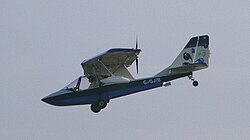
Zlin Aviation · 1999+
Zlin Savage Cub
 i
iSpecifications
MOSAIC eligiblePerformance
Cruise
90KTAS
Range
390nm
Climb
940fpm
Ceiling
14,400ft
Fuel Burn
5gph
Fuel Cap.
17gal
MPG
20.7mpg
Stall (Vs0)
25KIAS
T/O roll
360ft
Ldg roll
295ft
Size & weight
Seats
2
Useful Load
600lbs
Full-fuel payload
498lbs
Max gross
1,235lbs
Wingspan
27.9ft
Length
21.3ft
Engine
Engine
Rotax 912ULS
Power
100hp
TBO
2,000hrs
Overhaul
$13k
Owning it
Hull insurance
$2k/yr
Parts
fair
Mechanics
specialist
Gear
Fixed
IFR
No
Category
light sport
Full specification
V-speeds
Airframe
- Empty weight
- 635 lbs
- Max fuel weight
- 102 lbs
- Height
- 6.6 ft
- Wing position
- high
- Auto fuel (mogas)
- Auto fuel specified by the engine maker — 91 premium
Obstacle performance
- Takeoff over 50 ft
- 620 ft
- Landing over 50 ft
- 520 ft
Paperwork
- Certification basis
- ASTM F2245 S-LSA
These figures are typical for the model, not a specification for any individual aircraft. Real-world numbers vary with year, installed equipment, weight, modifications and engine condition — often by more than you would expect. Use them to compare types, and confirm anything you would act on against the Pilot's Operating Handbook for that specific airframe and a prebuy inspection.
Pricing
Typical
$95k
Range
$65k – $145k
Annual all-in
~$15k/yr
All-in at ~100 flying hours a year, using the midpoint of each range — the same figures broken out under “Cost to own” below. Your number will differ, and mostly for two reasons. Experience sets your insurance: a 2,000-hour pilot with recent training pays 30–40% less than a 200-hour owner, and student owners pay 20–40% more — on the same aircraft that is often a doubling. Location sets your hangar: a T-hangar runs $200–400 a month in the Midwest against $400–1,500 in a coastal metro, and an outside tie-down is less again. Engine reserves move too — a local shop reusing your serviceable cylinders can come in 30–50% under the national specialty-shop pricing we quote, though you trade the warranty and turnaround that comes with it. Reserves are money set aside toward a future overhaul, not a bill this year, and the annual inspection figure is the shop’s labor to look — whatever they find is separate.
Cost to own — estimate
Set your yearly hours and local fuel price. Fixed costs (insurance, hangar, annual inspection) don't change with hours; fuel, maintenance and the engine reserve do.
- Fuel (5 gph)
- $3,250
- Engine reserve
- $650
- Maintenance, parts & wear items ($12/hr)
- $1,200
- Insurance
- $900–$2,400
- Hangar
- $3,566–$8,914
- Annual inspection (labor only)
- $1,200
- Databases & subscriptions
- $400
- Total per year
- $14,590
- Per flight hour
- $146
- Miles flown / year (at cruise)
- 10,357 mi
- Cost per mile
- $1.41/mi
- Time in the air
- 3 hr 20 min
- Fuel burned
- 17 gal
- Out of pocket
- $170
Fuel, engine reserve and wear only. Insurance, hangar and the annual are already paid whether you make the trip or not, so they are not charged here.
Estimate, not a quote. Where a line shows a range, the total, per-hour and per-mile figures use its midpoint— insurance moves most with your experience and time in type, hangar with where you base the aircraft, so your own number could sit at either end. Annual inspection is the shop's labor to open and inspect — what they find is the maintenance line, which covers oil changes, plugs, tires, brakes, hoses, lights, a battery and vacuum pump amortised over their life, and the unscheduled squawks that are the largest and least predictable part of it. Reserves are sinking funds toward an overhaul, not a bill you pay this year — and note that a propeller is due on hours or calendar time, typically six years, so flying less does not put it off forever.
Strengths
Weaknesses
Overview
The Zlin Savage family is a Czech-manufactured line of cub-style Light Sport Aircraft built by Zlin Aviation s.r.o. in Brno, Czech Republic. The design originated in Italy in 1997 under the Russo Aviation marque before production transferred to the Czech Republic in 1999. The Savage bears a strong visual and philosophical kinship to the Piper Super Cub — welded 4130 chromoly steel tube fuselage, high strut-braced wing, fabric covering, tandem seating, and tailwheel — but is engineered from the ground up as a modern LSA with Rotax power and contemporary construction tolerances.
The family has evolved into three distinct models serving different market segments: the Savage Cub (standard bush/fun LSA), the Savage Bobber (open-frame ultralight/microlight variant), and the Savage Norden (high-performance STOL machine with all-aluminum wing, leading-edge slats, and turbocharged powerplant). By October 2022, more than 450 Savage aircraft had been delivered worldwide across these lines.
In the United States, Savage aircraft are sold and supported by SportairUSA based in Arkansas. The aircraft holds FAA Special LSA (S-LSA) certification and is popular with sport pilots, backcountry pilots, and glider towing operators. Its VS1 of approximately 33 KIAS places it comfortably within the MOSAIC sport pilot stall speed limit of 59 KCAS, making the entire Savage Cub family MOSAIC (Modernization of Special Airworthiness Certification)-eligible under the 2025 final rule. See MOSAIC (Modernization of Special Airworthiness Certification) for full MOSAIC eligibility details.
The Savage is not related to the older Zlin Aircraft a.s. (formerly Moravan) piston trainers such as the Z-142 or Z-242. Zlin Aviation s.r.o. is a separate company operating under the same city heritage.
Variants & History
| Variant | Years | Engine | HP | MTOW (lb) | Empty (lb) | Key Differences |
|---|---|---|---|---|---|---|
| Savage Classic | 1999–present | Rotax 912UL / 912ULS / 914 / Jabiru 2200 | 80–115 | 1,235 | 635 | Base US S-LSA; enclosed fuselage; touring focus |
| Savage Cruiser | 2003–present | Rotax 912ULS | 100 | 1,235 | 635 | Modified windshield, windows, fuselage bottom for reduced drag |
| Savage Cub | 2007–present | Rotax 912ULS | 100 | 1,235 | 635 | Piper Super Cub styling; tundra tire compatible; bush focus |
| Savage Bobber | 2012–present | Rotax 912ULS / 914 | 100–115 | 1,042 | ~550 | Open-frame fuselage; FAI microlight compliant; 25 kg lighter than Classic |
| Savage Cub S | 2013–present | Titan Stroker IO-340 | 180 | 1,235 | ~730 | Extended fuselage; enlarged tail; 60 ft T/O roll; highest performance |
| Savage Norden | 2022–present | Rotax 916iS | 161 | 1,763 | ~800 | All-aluminum wing; electric slats; double-slotted Fowler flaps; cargo door |
Notes on variant selection: The Cub S with the Titan 180hp IO-340 is the most capable bush variant but exceeds the gross weight of other Cub models only marginally due to better useful load — it is covered under the same S-LSA airworthiness certificate. The Norden operates at a heavier MTOW (800 kg / 1,763 lb) enabled by its certified wing loading and is targeted at serious backcountry operators; it carries its own FAA S-LSA certificate (granted 2022, certificate #157 in the US fleet). The Bobber's open tubular fuselage reduces weight to meet European FAI microlight limits (472.5 kg / 1,042 lb MTOW) and offers an unusual open-cockpit experience.
Performance
The standard Savage Cub with the 100 hp Rotax 912ULS is a docile, honest-flying aircraft with no bad habits. Book cruise at 75% power is approximately 90 KTAS; real-world cruise is typically 85–92 KTAS depending on density altitude, load, and tire size. With 26-inch tundra tires installed, expect a 3–5 knot cruise penalty versus stock tires.
Stall characteristics are gentle. In clean configuration the aircraft stalls at approximately 33 KIAS with natural buffet and a straight-ahead break. With full flaps and power, the stall drops to approximately 25 KIAS — exceptional for an S-LSA and well suited to short backcountry strips. Vortex generators are a common owner-installed option (no STC required on LSA) and reduce stall speed approximately 3 knots further.
Climb performance with the 100 hp engine is solid but not spectacular: 940 fpm at sea level standard day at max gross. At density altitudes above 5,000 ft or on hot days, real-world climb rates drop noticeably. The 115 hp Rotax 914 turbo option largely eliminates density altitude degradation in the Classic/Cruiser models.
The Cub S with the 180 hp Titan IO-340 transforms the performance envelope entirely. Climb rate reaches 2,100 fpm, and takeoff roll drops to 60 feet solo or 81 feet at max gross on a standard day — numbers that rival purpose-built carbon cubs at a significant price advantage. Cruise at 75% power is 112 mph (97 KTAS) even with 31-inch Alaskan Bushwheels.
The Norden's all-aluminum wing with electrically retractable leading-edge slats and double-slotted Fowler flaps (deployable beyond 60 degrees) produces extraordinary STOL performance. Prototype testing showed liftoff within approximately 30 meters (~100 ft) in light conditions. Stall speed ranges from 37 mph clean to under 23 mph with full slats and maximum flap and power. The Rotax 916iS turbo maintains rated power to 15,000 ft, giving the Norden exceptional high-altitude performance for mountain operations. Cruise with 29-inch tires is approximately 87–100 KTAS at comfortable power settings.
The Bobber's lighter weight (MTOW 1,042 lb) and open-frame fuselage result in a sportier feel; the lack of fuselage fabric covering actually reduces susceptibility to lateral gusts. Maximum speed is approximately 109 mph (95 KTAS), with a climb rate around 984 fpm on the 100 hp engine.
Payload & Range
Savage Cub (100 hp Rotax 912ULS)
| Scenario | Pilot (lb) | Pax (lb) | Baggage (lb) | Fuel (gal) | Fuel Weight (lb) | Total Useful (lb) | Notes |
|---|---|---|---|---|---|---|---|
| Pilot only, full fuel | 190 | 0 | 30 | 17 | 102 | 322 / 600 | 278 lb margin; ~390 nm range |
| Two pax, full fuel | 190 | 170 | 0 | 17 | 102 | 462 / 600 | 138 lb margin for baggage |
| Two pax + bags, reduced fuel | 190 | 170 | 40 | 10 | 60 | 460 / 600 | 140 lb margin; ~230 nm range |
| Max fuel + single pax + bags | 190 | 0 | 50 | 17 | 102 | 342 / 600 | Maximizes range solo |
The Cub's 17-gallon tanks are a hard range limiter. At typical 5 GPH burn, full fuel gives approximately 3.2 hours of endurance (with a 30-minute reserve), translating to 280–300 nm practical range. The 390 nm book range assumes leaned mixture at economy cruise. Two average adults (190 + 170 lb) with typical luggage (30–40 lb) leaves only 90–100 lb for fuel — approximately 15 gallons — limiting range to roughly 240–270 nm practical with reserve. Full-fuel, two-pax operations require careful weight management and leave minimal baggage allowance.
Savage Cub S (180 hp Titan IO-340)
The Cub S has a higher fuel burn (~8–9 GPH) but retains similar useful load (~505 lb) and the same 17-gallon fuel system in base configuration. Its role is optimized for maximum short-field performance rather than cross-country range; pilots seeking extended range will find the stock fuel system constraining. Some Cub S aircraft have been fitted with auxiliary fuel to extend range.
Savage Norden (161 hp Rotax 916iS)
| Scenario | Pilot (lb) | Pax (lb) | Cargo (lb) | Fuel (gal) | Fuel Weight (lb) | Total Useful (lb) | Notes |
|---|---|---|---|---|---|---|---|
| Pilot only, full fuel | 190 | 0 | 0 | 48 | 288 | 478 / 500 | Near max fuel; ~500+ nm range |
| Two pax, full fuel | 190 | 170 | 0 | 48 | 288 | 648 — exceeds 500 lb useful | Reduce fuel by ~25 gal |
| Two pax, half fuel | 190 | 170 | 40 | 24 | 144 | 544 — exceeds useful | Trim baggage; approximately 240 nm range |
| Single pilot, half fuel + max cargo | 190 | 0 | 130 | 24 | 144 | 464 / 500 | Excellent cargo hauling scenario |
The Norden's 48-gallon tank paired with the efficient 916iS (~7–10 GPH depending on power setting) provides meaningful cross-country range of 400–550 nm. However, useful load of 500 lb is tight for two adult pilots at full fuel — a common limitation of the heavier STOL platform. The large cargo area with external access door makes the Norden particularly capable as a single-pilot cargo/supply aircraft in remote operations.
Mission Suitability
| Mission | Score | Rationale |
|---|---|---|
| Flight Training | 5/10 | Suitable for taildragger endorsement and sport pilot initial training; tandem seating makes dual instruction workable but side-by-side is preferred for primary training; limited instrument capability |
| Backcountry / Bush Flying | 8/10 | Core mission; excellent STOL, tundra tire options, robust steel tube airframe, low stall, and bush-proven design; Cub S and Norden reach 9–10 for serious backcountry |
| Business Travel | 2/10 | VFR-only, 90 KTAS cruise, no IFR, tandem seating; entirely unsuited for business travel |
| aerobatics | 2/10 | Not aerobatics-approved; basic maneuvers only; Bobber's lighter weight allows more spirited handling but no inverted systems |
| Cross-Country Flying | 4/10 | Possible for short VFR cross-country; 17-gallon tanks limit range to ~390 nm; low cruise speed makes longer trips tedious; Norden with 48-gallon tanks improves this category |
| Cargo Hauling | 3/10 | Small useful load (~600 lb) limits payload; Norden has a dedicated external cargo door and larger useful load, improving this to 6/10 |
| Local Fun Flying | 9/10 | Quintessential fun flyer; responsive, light controls, open-air feel in Bobber, easy to fly, economical Rotax power, STOL capability makes any grass strip accessible |
| surveying | 5/10 | High wing provides good downward visibility; low and slow capable; no IFR limits utility; could support aerial survey/patrol in appropriate conditions |
Avionics Ecosystem
The Savage family is sold as S-LSA, meaning the factory configuration is fixed and owner modifications to avionics must go through a Repairman or licensed A&P per ASTM standards. In practice, Zlin builds aircraft to customer specification at the factory, so avionics packages vary widely.
Base/Minimal configuration (budget builds, ~$65K–80K range):
- Basic steam gauges: airspeed, altimeter, VSI, magnetic compass
- Trig TY91 VHF radio (2.25-inch)
- Trig TT21 Mode C transponder
- Engine monitoring via standalone Rotax instrument cluster
- No moving-map GPS
Mid-tier configuration (most new aircraft, ~$90K–115K):
- Kanardia Nesis IV 10.1-inch touchscreen EFIS/EMS (popular factory option) with integrated AHRS, GPS, terrain, and ADS-B
- Dynon SkyView HDX 7-inch EFIS as an alternative
- Garmin Aera 760 portable GPS
- Trig radio and transponder suite
- ADS-B In via Garmin GDL 52 or integrated
Premium/Norden configuration (~$130K–250K):
- Garmin G3X Touch 10.6-inch PFD/MFD with integrated EMS
- Garmin GTR 200 NAV/COM
- Garmin GTX 335 ADS-B Out transponder
- AV-30 backup AI
- EMSIS engine monitoring
- Ballistic parachute system (Magnum or BRS) often factory-installed on Norden
The Savage is not intended as an IFR platform and does not carry pitot heat, certified WAAS GPS, or autopilot in any standard configuration. The Kanardia Nesis IV is popular in European markets and New Zealand; US buyers often prefer Dynon or Garmin glass. See Avionics Pricing Reference for equipment cost benchmarks.

2011 CubCrafters Carbon Cub
Carbon Cub SS · STOL Legend · Tundra Tires
STCs & Modifications
As an S-LSA, the Savage does not use FAA STCs in the traditional sense — modifications must comply with ASTM F2295 and be approved by the manufacturer or performed by an appropriately rated individual. Zlin Aviation supports and documents several factory options and common owner modifications:
Tundra/Bushwheel tires (factory option):
- 26-inch, 29-inch, or 31-inch Alaskan Bushwheel options
- 6-inch HD extended landing gear available for 29-inch and 31-inch tires
- Performance impact: 3–5 knot cruise reduction; dramatically improved off-pavement capability
- Install cost: ~$2,500–$5,000 depending on tire size and gear extension
Vortex generators:
- Available from multiple vendors (Micro AeroDynamics compatible)
- Reduce stall speed ~3 knots
- No additional regulatory approval required for LSA
- Cost: ~$600–$900 installed
Floats (Savage Cub):
- EDO-style float kits available; Savage Cub S has been successfully operated on floats
- Seaplane float brackets factory-installed on Norden
- Float conversion changes aircraft character significantly; heavier water rudder required
- Adds approximately 120 lb to empty weight
Shock/suspension upgrades:
- T3 tailwheel shock with wider wheel (owner-replaceable)
- Berenger brake/wheel upgrade for improved stopping on soft surfaces
- Porter-style dual hydraulic shock absorbers (10-inch travel, standard on Norden)
- Cost: $800–$2,500 for typical tailwheel/brake upgrade
Ballistic parachute:
- Magnum or BRS systems available factory-installed or retrofit
- Increasingly common on new builds, especially in Europe
- Adds approximately 30 lb; cost ~$8,000–$12,000 installed
Engine upgrades (Cub to Cub S):
- Titan IO-340 (180 hp) retrofit available through SportairUSA
- Requires new engine mount, cowling, and prop
- Transforms climb and takeoff performance; approximate upgrade cost ~$30,000–$40,000 with installation
Maintenance & Support
Rotax 912ULS (standard Cub engine): The Rotax 912ULS is among the most reliable and maintainable engines in general aviation. Key scheduled maintenance events:
- 50-hour oil and filter change
- 100-hour inspection (combined with annual condition inspection for LSA)
- 600-hour or 1,000-hour gearbox inspection (depending on clutch type and fuel)
- 5-year rubber replacement (mandatory calendar item): ~$2,500–$4,000
- TBO: 2,000 hours or 15 years; overhaul at a certified shop: ~$12,000–$14,000
- New exchange engine from Lockwood/Rotax: ~$18,000–$22,000 installed
Rotax 916iS (Norden engine):
- Same 2,000-hour TBO
- iS (fuel-injected) variant has BRP Utility Diagnostic Software (BUD) for electronic diagnostics
- New engine cost: ~$50,000; overhaul typically 55–65% of new (~$28,000–$32,000)
- Fewer qualified shops in the US relative to 912; plan for shipping to authorized Rotax center
Airframe: The welded 4130 chromoly steel tube fuselage is robust and field-repairable by any competent A&P with TIG welding capability. Annual condition inspection (LSA requirement) is straightforward: 10–15 hours of labor at $85–$120/hr = ~$900–$1,800 plus parts. Typical annuals run $1,200–$2,500 for well-maintained aircraft.
Parts availability: Zlin Aviation parts availability in the United States is rated "fair." SportairUSA maintains a parts inventory for common wear items (cables, fairings, fabric patches, gear components). Long-lead structural parts may require 4–8 weeks from the Czech Republic. Rotax engine parts availability is excellent through Lockwood Aviation, Aircraft Spruce, and other Rotax distributors. Fabric materials (Oratex, Ceconite, Poly-Fiber) are universally available.
Mechanic familiarity: Rotax-certificated mechanics are found at most LSA-friendly shops. However, Zlin-specific airframe experience is concentrated at and around SportairUSA and a handful of LSA-specialist shops. First-time Savage owners should plan an initial maintenance consultation with SportairUSA to review aircraft-specific inspection items.
Annual cost estimate breakdown (Savage Cub, typical owner):
| Item | Annual Cost |
|---|---|
| Annual condition inspection labor | $1,200–$2,000 |
| Oil changes (3×/year, 50-hr interval) | $150–$250 |
| Rotax routine consumables | $300–$500 |
| Hangar/tiedown | $1,200–$3,600 |
| Insurance | $1,600–$2,200 |
| Miscellaneous/reserve | $500–$1,000 |
| Total estimated annual | $5,000–$9,500 |
See Maintenance Ecosystem for LSA maintenance framework and Rotax engine support resources.
Valuation Factors
The Savage market is small and thinly traded in the United States (~30 registered as of 2021, growing slowly). Pricing is influenced heavily by:
Engine configuration: The 100 hp Rotax 912ULS standard Cub commands $65,000–$100,000 depending on year, hours, and equipment. The 115 hp Rotax 914 turbo adds roughly $10,000–$15,000 of value. The 180 hp Titan IO-340 Cub S commands $110,000–$145,000. The Norden with Rotax 916iS starts at approximately $220,000 new and has traded used at $225,000–$275,000 for near-new examples.
Avionics: Glass panel upgrades (Garmin G3X, Dynon SkyView) add $8,000–$15,000 of value versus steam gauge aircraft. The Kanardia Nesis IV system is well-regarded in Europe but less recognized by US buyers; expect a modest discount versus Garmin/Dynon equipped examples.
Bush equipment: Tundra tire packages (26-inch+), extended gear, and upgraded brakes add $3,000–$7,000 of market value and are desirable to the target buyer pool.
Fabric condition: Aircraft past the 10-year mark should be discounted $8,000–$15,000 if fabric has not been renewed; actual re-cover costs can reach $20,000, making fabric condition a significant negotiating point.
Hours since new/overhaul: Rotax 912 TBO is 2,000 hours. An engine at 800–1,200 hours with good maintenance documentation has modest time remaining; engines past 1,500 hours should be discounted proportionally (~$6,500 per 1,000 hours remaining value prorated from $13,000 overhaul cost).
Import/paperwork quality: Aircraft with complete FAA S-LSA documentation, original Zlin maintenance manual, and US-format logbooks command a premium. Aircraft with incomplete records or converted from experimental status are worth 10–20% less and may face insurance complications.
See Aircraft Valuation Methodology for the general valuation framework applied to engine time, avionics, and condition factors.
ADs & Common Problems
As an S-LSA, the Savage Cub is subject to manufacturer-issued Notices of Corrective Action (NCAs) rather than FAA Airworthiness Directives. Zlin Aviation issues NCAs per ASTM F2295 for fleet-wide safety issues. No major fleet-grounding NCAs have been widely documented in public sources as of 2025.
Known pre-buy inspection points:
- Rudder cable fraying: Rudder cables (3/32 7×19 galvanized or stainless) are known to fray, particularly near fairleads and pulleys. Inspect entire length on pre-buy; replace proactively. Cost: ~$200–$400 for cable replacement.
- Control cable tension: Factory rigging sometimes leaves cables slightly over-tensioned, resulting in heavy control forces. Re-rigging is straightforward but should be verified by an experienced Savage technician.
- Tailwheel steering spring tension: Overly tight steering springs cause hypersensitive ground handling on rough surfaces. Adjustment is simple but impacts handling character; verify with demo taxi.
- Fabric condition: Inspect fabric for UV degradation, particularly on top surfaces. Zlin uses Oratex or Ceconite; expect first re-cover at 10–15 years depending on exposure. Re-covering cost: ~$12,000–$20,000 depending on variant.
- Wing attach fittings: Standard strut-braced high-wing attach fittings should be inspected for corrosion, particularly on aircraft operated near salt water. Zlin uses standard AN/MS hardware throughout.
- Rotax 912 rubber parts (5-year replacement): The Rotax 912ULS requires replacement of all rubber components (hoses, carburetor diaphragms, fuel lines) every 5 years regardless of flight hours. This is a calendar-driven maintenance item often overlooked on low-time aircraft. Cost: ~$2,500–$4,000 at a Rotax-trained shop.
- Gearbox inspection at 600/1,000 hours: Rotax 912 gearbox requires disassembly inspection; interval depends on overload clutch type and leaded fuel percentage. Budget $450–$850.
- Import documentation: Verify the aircraft was properly imported as an S-LSA with complete manufacturer documentation, not converted from E-LSA status, which affects insurance and resale.
The Norden is a newer design (2022 US certification) and has limited long-term fleet experience. Early Norden owners have noted the electric slat system requires periodic inspection of limit switches and actuators. The aluminum wing is more resistant to fabric degradation but requires attention to aluminum fastener corrosion in humid climates.
Insurance Profile
The Savage Cub occupies the "LSA taildragger" insurance category — a specific underwriting subset that draws higher rates than side-by-side LSAs due to the tailwheel's additional ground handling complexity and the narrow LSA buyer pool.
Typical annual hull/liability costs (2024 estimates):
| Configuration | Hull Value | Pilot Experience | Annual Premium (est.) |
|---|---|---|---|
| Savage Cub 100hp, base avionics | $70,000 | 200 hr TT, tailwheel endorsement | $1,800–$2,200 |
| Savage Cub 100hp, glass panel | $90,000 | 500 hr TT, tailwheel, prior LSA | $1,600–$2,000 |
| Cub S 180hp | $130,000 | 500 hr TT, tailwheel endorsement | $2,200–$3,000 |
| Savage Norden 916iS | $250,000 | 500 hr TT, complex endorsement | $3,500–$5,000 |
Underwriting factors specific to the Savage:
- Tailwheel endorsement required by all major underwriters; some require logged tailwheel hours in similar type
- Low US fleet size means underwriters have limited actuarial data; some markets (Lloyd's syndicates, Avemco) are most familiar
- Float-equipped aircraft require separate underwriting as amphibious/seaplane; premiums increase 25–40%
- Backcountry operations (unprepared strips, mountain flying) require disclosure and may add 10–20% to premiums or require named-location exclusions
- Sport Pilot certificate holders face no additional premium penalty relative to Private pilots for this class of aircraft
Training at a recognized Savage/LSA taildragger school can reduce premiums 15–20% with most underwriters. See GA Insurance Underwriting for general LSA underwriting guidance.
For sale (0)
No listings for this model right now.
Also worth looking at
What buyers usually weigh against the Zlin Savage Cub — aircraft flown for the same kind of mission.