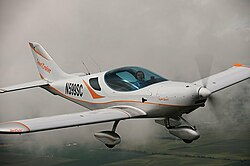
Progressive Aerodyne · 1992+
Progressive Aerodyne SeaRey

Specifications
MOSAIC eligiblePerformance
Cruise
78KTAS
Range
315nm
Climb
650fpm
Ceiling
13,000ft
Fuel Burn
5.3gph
Fuel Cap.
23gal
MPG
16.9mpg
Stall (Vs0)
33KIAS
T/O roll
350ft
Ldg roll
325ft
Size & weight
Seats
2
Useful Load
490lbs
Full-fuel payload
352lbs
Max gross
1,430lbs
Wingspan
30.7ft
Length
22.3ft
Engine
Engine
Rotax 912ULS (Adventure/Sport) / Rotax 914UL (Elite)
Power
100hp
TBO
2,000hrs
Overhaul
$14k
Owning it
Hull insurance
$5k/yr
Parts
fair
Mechanics
specialist
Gear
Retractable
IFR
No
Category
light sport
Full specification
V-speeds
Airframe
- Empty weight
- 940 lbs
- Max fuel weight
- 138 lbs
- Height
- 7 ft
- Wing position
- high
- Auto fuel (mogas)
- Auto fuel specified by the engine maker — 91 premium
Obstacle performance
- Takeoff over 50 ft
- 1,100 ft
- Landing over 50 ft
- 860 ft
Paperwork
- Certification basis
- ASTM F2245 (S-LSA); FAR Part 103 / Amateur-Built (LSX kit)
These figures are typical for the model, not a specification for any individual aircraft. Real-world numbers vary with year, installed equipment, weight, modifications and engine condition — often by more than you would expect. Use them to compare types, and confirm anything you would act on against the Pilot's Operating Handbook for that specific airframe and a prebuy inspection.
Pricing
Typical
$95k
Range
$55k – $175k
Annual all-in
~$20k/yr
All-in at ~100 flying hours a year, using the midpoint of each range — the same figures broken out under “Cost to own” below. Your number will differ, and mostly for two reasons. Experience sets your insurance: a 2,000-hour pilot with recent training pays 30–40% less than a 200-hour owner, and student owners pay 20–40% more — on the same aircraft that is often a doubling. Location sets your hangar: a T-hangar runs $200–400 a month in the Midwest against $400–1,500 in a coastal metro, and an outside tie-down is less again. Engine reserves move too — a local shop reusing your serviceable cylinders can come in 30–50% under the national specialty-shop pricing we quote, though you trade the warranty and turnaround that comes with it. Reserves are money set aside toward a future overhaul, not a bill this year, and the annual inspection figure is the shop’s labor to look — whatever they find is separate.
Cost to own — estimate
Set your yearly hours and local fuel price. Fixed costs (insurance, hangar, annual inspection) don't change with hours; fuel, maintenance and the engine reserve do.
- Fuel (5.3 gph)
- $3,445
- Engine reserve
- $700
- Propeller reserve
- $175
- Maintenance, parts & wear items ($22/hr)
- $2,200
- Insurance
- $1,600–$4,500
- Hangar
- $4,108–$10,269
- Annual inspection (labor only)
- $2,500
- Databases & subscriptions
- $700
- Total per year
- $19,958
- Per flight hour
- $200
- Miles flown / year (at cruise)
- 8,976 mi
- Cost per mile
- $2.22/mi
- Time in the air
- 3 hr 51 min
- Fuel burned
- 20 gal
- Out of pocket
- $251
Fuel, engine reserve and wear only. Insurance, hangar and the annual are already paid whether you make the trip or not, so they are not charged here.
Estimate, not a quote. Where a line shows a range, the total, per-hour and per-mile figures use its midpoint— insurance moves most with your experience and time in type, hangar with where you base the aircraft, so your own number could sit at either end. Annual inspection is the shop's labor to open and inspect — what they find is the maintenance line, which covers oil changes, plugs, tires, brakes, hoses, lights, a battery and vacuum pump amortised over their life, and the unscheduled squawks that are the largest and least predictable part of it. Reserves are sinking funds toward an overhaul, not a bill you pay this year — and note that a propeller is due on hours or calendar time, typically six years, so flying less does not put it off forever.
Strengths
- Only affordable amphibious aircraft entry point in the U.S.
- Exceptional fun-flying capability; water access unmatched by comparable aircraft
- Docile handling, low stall speed, excellent visibility from high-wing layout
- LSA Repairman Inspection rating enables owner-performed condition inspections, reducing annual costs
Weaknesses
- Manufacturer closure (Oct 2023) eliminates new production and limits parts availability; only ~22% of airframe drawings available for reproduction
- Specialist maintenance only; very few A&Ps have SeaRey experience; travel to Florida specialist or in-house capability development required
- Slow cruise (78 KTAS Adventure), short range (315 nm), no IFR capability; unsuitable for business or cross-country travel
- No parking brake; single braking system via throttle handle; seats non-adjustable fore/aft
Overview
The Progressive Aerodyne SeaRey is an American two-seat, single-engine amphibious flying boat that holds a unique niche in general aviation: it is the most affordable entry point into amphibious flight in the United States. Manufactured by Progressive Aerodyne in Tavares, Florida, the SeaRey traces its lineage to a design conceived in the 1970s as the Advanced Aviation Hi-Nuski ultralight. Wayne Richter, Kerry Richter, and Paige Lynette formed Progressive Aerodyne in June 1992, and the prototype flew on November 13, 1992.
The SeaRey is a high-wing, two-seat taildragger with a semi-monocoque fiberglass hull, fabric-covered aluminum wings and tail, and a pusher-configuration Rotax engine mounted behind the cockpit. Retractable main wheels and a tailwheel allow operation from paved runways, grass strips, and water — truly amphibious. The design philosophy prioritizes fun and accessibility over speed or range; the SeaRey is categorically a recreational machine.
By 2011 approximately 480 aircraft had been delivered, predominantly as homebuilt kits. The aircraft is sold in two configurations: the LSX (amateur-built kit, experimental certificate) and factory-built S-LSA variants (Adventure and Elite). The S-LSA models require an ASTM F2245 condition inspection rather than an FAA annual, and owners can train for the LSA Repairman Inspection rating to perform their own condition inspections — a significant cost advantage.
Progressive Aerodyne closed its doors in October 2023. As of 2025, SEAREY LLC is managing the sale of company assets, inventory, and intellectual property for $950,000. Recreational Mobility (the SeaRey Specialist) in Malabar, Florida, is the only full-service U.S. SeaRey distributor and continues to support existing aircraft. The manufacturer's closure materially affects new-aircraft availability, parts sourcing, and long-term fleet support — see Maintenance Ecosystem for context on orphaned-manufacturer aircraft support.
Approximately 600 SeaReys are estimated to be flying worldwide, with a robust owner community and dedicated online forums. The aircraft is disproportionately popular in Florida and other warm-water states where year-round water access amplifies its appeal. Notable achievements include a 2015 solo around-the-world flight in a SeaRey — the first such circumnavigation in a single-engine flying boat.
Variants & History
| Variant | Years | Engine | HP | Gross Wt | Hull | Category | Key Differences |
|---|---|---|---|---|---|---|---|
| SeaRey Classic | 1992–2009 | Rotax 582 / 912 | 64–80 | 1,370 lb | Fiberglass A/B/C hull | Kit (E-AB) | Original design; A, B, C hull generations; smaller tail surfaces |
| SeaRey LSX | 2010–2023 | Rotax 912S / 914 | 100–115 | 1,505 lb | Fiberglass or carbon fiber | Kit (E-AB or E-LSA) | Stiffer wings, larger tail (+25%), Frise ailerons, meets LSA structural standards; 1,505 lb gross when built as E-AB |
| SeaRey Adventure (S-LSA) | 2010–2023 | Rotax 912ULS | 100 | 1,430 lb | Fiberglass | Special LSA | Factory-built; base S-LSA; analog instruments standard; ASTM certified |
| SeaRey Sport (S-LSA) | 2010–2023 | Rotax 912ULS | 100 | 1,430 lb | Fiberglass | Special LSA | Mid-tier factory build; Garmin aera GPS and transponder |
| SeaRey Elite (S-LSA) | 2013–2023 | Rotax 914UL | 115 | 1,430 lb | Carbon fiber | Special LSA | Top-tier factory build; turbocharged engine; glass panel (AFS 5500 EFIS); 85 lb lighter hull; 18,000 ft ceiling; higher cruise |
Hull generations (all variants): A hull = shallow V, straight step (1992–1994); B hull = deeper V, straight step (1995–2001); C hull = deep V, bluffer bow, double-V step (2001–present). The C hull dramatically improved rough-water handling.
Performance
All published figures are for S-LSA models at max gross weight (1,430 lb), sea level, standard day. Kit-built LSX at 1,505 lb gross will show modest degradation.
Cruise speed: The Adventure/Sport (912ULS) delivers approximately 78–82 KTAS at 75% power. The Elite (914UL turbo) achieves 87–92 KTAS at 75% power and up to 98 KTAS wide open. These numbers are modest by any measure — the SeaRey is not a cross-country machine. Real-world owners consistently report 75–80 KTAS in normal cruise with the 912ULS.
Climb: The 912ULS Adventure climbs at 650 fpm from sea level. The Elite's turbocharged 914 raises this to 950–1,100 fpm at sea level, maintaining strong climb performance at altitude — useful for mountain lake access. The Elite's 18,000 ft service ceiling versus 13,000 ft for the 912-powered variants is meaningful for high-altitude water operations.
Stall: VS0 is approximately 33 KIAS with full flaps; VS1 is approximately 41 KIAS clean. Stall behavior is described as docile — a "non-event" with power applied. The pusher configuration and high-wing layout contribute to benign stall characteristics.
Density altitude: The 912ULS suffers at high-density altitude as expected of a naturally aspirated engine. Mountain lake operations in summer at 6,000–8,000 ft DA will require conservative weight planning. The 914 turbo maintains rated power to approximately 15,000 ft pressure altitude, making it the appropriate choice for western states.
Water operations: Water takeoff roll is approximately 430–472 ft (sea level, calm water), slightly longer than land roll. Landing on water is approximately 350 ft. Operators report water landings to be among the easiest of any seaplane category due to the hull geometry and low speeds. Maximum demonstrated crosswind is 13 knots. No water rudder is required in calm conditions; the aircraft steers effectively with differential brake/throttle.
V-speed note: Factory documentation uses MPH/IAS. Converted figures used throughout: VNE 120 MPH = 104 KIAS; VS0 38 MPH = 33 KIAS; VS1 47 MPH = 41 KIAS; VX 58 MPH = 50 KIAS; VY 65 MPH = 56 KIAS.
Fuel burn: The 912ULS burns approximately 5.3 GPH at 75% power (5,000 RPM), giving roughly 4 hours endurance on 23 gallons with reserve. The 914 turbo burns approximately 5.3–6.9 GPH depending on power setting.
Payload & Range
Max gross weight: 1,430 lb (S-LSA); 1,505 lb (LSX kit-built E-AB)
Empty weight (typical Adventure S-LSA): 940 lb
Useful load: 490 lb
Fuel capacity: 23 gallons (138 lb)
Baggage: 60 lb maximum
Scenario 1 — Full fuel, 2 pax (light crew):
- Fuel: 23 gal = 138 lb
- Payload remaining: 490 − 138 = 352 lb
- Two pax at 176 lb average: fits with no baggage margin
- Baggage: 0 lb (352 lb ÷ 2 = 176 lb/pax; zero baggage margin at average weights)
- Range: ~315 nm (75% power, 30-min reserve)
- Verdict: Tight. A 190 lb pilot + 190 lb passenger = 380 lb crew, leaving only 112 lb for fuel — approximately 19 gallons, limiting range to ~265 nm. Weight discipline is essential.
Scenario 2 — Reduced fuel, 2 pax (practical day trip):
- Fuel: 14 gal = 84 lb (approximately 2.5 hours endurance)
- Crew: 340 lb (two average occupants)
- Baggage: 60 lb
- Total payload: 484 lb (within 490 lb useful load)
- Range: ~190 nm with 30-min reserve
- Verdict: Workable for lake-hopping and short cross-country with destination fuel stop.
Scenario 3 — Solo pilot, full fuel:
- Pilot: 185 lb
- Fuel: 23 gal = 138 lb
- Remaining for baggage: 490 − 185 − 138 = 167 lb
- Baggage shelf limited to 60 lb regardless
- Range: ~315 nm (full fuel, max range)
- Verdict: Solo operation offers meaningful range and a reasonable luggage allowance within the 60 lb baggage shelf limit.
Elite S-LSA note: Carbon fiber hull reduces empty weight by ~25 lb, improving useful load to approximately 515 lb — a meaningful improvement that allows full fuel + two average occupants + minimal baggage.
Payload summary: The SeaRey is fundamentally a two-seat recreational aircraft. Useful load is adequate for two light-to-average occupants with modest fuel for short legs. It is not a utility hauler. The baggage shelf limit of 60 lb is a harder constraint than gross weight for many real-world missions. Plan fuel stops for cross-country flights with typical crew weights.
Mission Suitability
| Mission | Score | Rationale |
|---|---|---|
| Flight Training | 4/10 | Taildragger endorsement and seaplane rating make it educationally unique, but complexity (retractable gear, water ops, pusher configuration) makes it a specialist trainer rather than a primary trainer. Insurance typically requires 15 hours of dual instruction before solo. No IFR capability. |
| Backcountry / Bush Flying | 6/10 | Water access is its defining backcountry superpower — lakes and rivers inaccessible to land aircraft are within reach. However, 650 fpm climb, 78 KTAS cruise, and a 1,430 lb gross limit constrain payload and altitude capability. Elite with 914 turbo scores higher in mountain terrain. No rough-field land capability per se. |
| Business Travel | 1/10 | 78 KTAS cruise, 315 nm range, no IFR, no autopilot standard, and two seats make it wholly unsuitable for business travel. |
| aerobatics | 1/10 | Not aerobatic. LSA category aircraft are prohibited from aerobatic flight. The pusher hull design would be dangerous in unusual attitudes. |
| Cross-Country Flying | 3/10 | Short range (315 nm), slow cruise (78 KTAS), and no IFR capability make cross-country travel uncomfortable. Can island-hop via water stops. Endurance of ~3.5–4 hours limits stage lengths. The Elite extends range slightly via higher cruise speed. |
| Cargo Hauling | 1/10 | Useful load of ~490 lb minus two occupants leaves essentially no payload for cargo. Baggage shelf holds 60 lb maximum. No cargo configuration available. |
| Local Fun Flying | 9/10 | The SeaRey's raison d'être. Landing on lakes, rivers, and the ocean before touching down on a paved runway — this capability defines pure recreational aviation. Docile handling, low stall speed, and modest operating costs amplify the fun factor. An exceptional score for its intended mission. |
| surveying | 5/10 | Slow cruise and good visibility from high-wing layout make it reasonable for visual surveys. Water access enables survey of coastal and riverine areas unreachable by land aircraft. Limited by range, payload (no sensor weight), and inability to carry a meaningful fuel+sensor combination. |
Avionics Ecosystem
The SeaRey is an LSA/experimental aircraft and is not subject to TSO certification requirements for most avionics. This enables use of the full Dynon, Garmin G3X, and MGL Avionics ecosystem at significantly lower cost than certified avionics.
Base (Adventure S-LSA factory standard):
- Analog ASI, altimeter, VSI, compass
- Garmin aera 500 (4.3-inch GPS display)
- PS Engineering PAR100EX radio (or equivalent)
- Garmin GTX 327 Mode C transponder
- ADS-B Out (required by AOPA 2020 compliance)
Sport/Mid-tier:
- Garmin aera 696 or 796 GPS (7-inch)
- Garmin GTR 200 comm radio
- ADS-B In via portable devices (Stratus, SkyGuard)
Elite S-LSA factory standard:
- Advanced Flight Systems 5500 EFIS (synthetic vision)
- Garmin aera 696 GPS
- Garmin GTR 200 comm
- Garmin GTX 327 transponder
- Cabin heater (required for any practical winter use)
- Docking lights
Upgraded experimental/kit builds (owner-installed):
- Dynon SkyView HDX 7" or 10" (most common glass upgrade)
- Garmin G3X Touch (popular high-end choice)
- Garmin GTN 650/750 for moving-map GPS (overkill for most SeaRey missions but sometimes installed)
- MGL Avionics EFIS (cost-effective alternative)
- ADS-B In/Out via uAvionix pingUSB or Garmin GDL 52
Notes: The small panel area and low cruise speed reduce the justification for sophisticated navigation avionics. Most SeaRey owners prioritize a basic EFIS for attitude awareness and engine monitoring over complex navigation suites. See Avionics Pricing Reference for cost reference on LSA/experimental avionics installs.

2011 CubCrafters Carbon Cub
Carbon Cub SS · STOL Legend · Tundra Tires
STCs & Modifications
S-LSA aircraft cannot be modified without manufacturer authorization; the following primarily applies to LSX kit-built aircraft and older Classic/E-LSA variants.
| Modification | Description | Approx. Cost | Notes |
|---|---|---|---|
| Rotax 914UL engine upgrade | Replace 912ULS with 115 hp turbo 914 | $28,000–$32,000 installed | Dramatic climb improvement; adds ~$30k to kit build cost; documented by SeaRey Specialist |
| Carbon fiber hull | Replaces fiberglass hull; saves ~25 lb | $3,800–$5,000 | Elite factory option; available as upgrade through SeaRey Specialist |
| Folding wing system | Allows trailering or hangar storage | $2,500–$3,500 installed | Incompatible with engine cowling; owner-installed on E-AB |
| Lifting bridle system | Crane/hoist attachment for marina/dock use | $500–$1,000 | Useful for dry dock storage at marinas |
| Vortex generators | On wing leading edges; improve slow-flight | $400–$800 installed | LSX design incorporated these from factory |
| Electric flaps | Replaces manual flap handle | $1,200–$1,800 | Factory option on Adventure; standard on Elite |
| ADS-B upgrade | uAvionix EchoUAT or GDL 52 | $700–$2,500 | Required for all aircraft in Class B/C/D/E airspace since 2020 |
| Warp Drive prop (3-blade) | 68" composite nickel-tipped propeller | $1,800–$2,500 | Factory standard; upgrades from 2-blade older kits improve cruise and climb |
| Bilge pump (electric) | Factory standard on S-LSA; retrofit for Classic | $200–$400 | Critical for water ops; inspect regularly |
Engine note: The Rotax 915iS (135 hp) was reported as tested in 2017 but was never offered as a factory production option for the SeaRey. No certified STC pathway exists for this engine on the S-LSA variants.
Maintenance & Support
See Maintenance Ecosystem for broader LSA maintenance context.
Condition inspection (S-LSA): The SeaRey S-LSA requires an annual condition inspection per ASTM F2245 and the manufacturer's maintenance manual. The AOPA review notes this inspection takes approximately 5 hours for an experienced mechanic familiar with the aircraft. Estimated inspection cost (by a specialist): $400–$800 labor plus any discrepancies found.
Owner-performed maintenance: Owners of S-LSA may obtain the FAA LSA Repairman — Inspection rating (16-hour course) to perform their own condition inspections. E-LSA and E-AB owners have broader maintenance privileges. This capability materially reduces annual costs.
Rotax engine service intervals:
- Oil and filter change: Every 100 hours or annually (whichever comes first)
- Coolant hose inspection: Every 100 hours (failure point)
- Gearbox oil: Every 100 hours
- Spark plugs: Every 100 hours
- Full 1,000-hour inspection per Rotax service manual
- TBO: 2,000 hours (Rotax 912ULS); 1,500 hours (older 912 variants)
- Overhaul cost: $12,000–$14,000 (shop overhaul); factory-new replacement ~$17,500–$19,600
Parts availability (post-closure): Progressive Aerodyne's closure in 2023 has reduced new-production parts availability. Recreational Mobility (SeaRey Specialist, Malabar FL) maintains inventory from 30 years of production and continues CNC routing of airframe parts. However, only approximately 22% of SeaRey airframe drawings are currently available for parts reproduction. Owners should maintain a spares inventory of wear items: gear actuator parts, fabric repair materials, Lexan windshield panels, bilge pump components. Rating: fair — adequate for now but degrading over time without a new manufacturer.
Mechanic familiarity: Very few A&Ps have SeaRey experience. The SeaRey Specialist and a small network of owner-trained repairmen handle most maintenance. This is a meaningful constraint for owners outside Florida. Rating: specialist — budget for travel to a specialist or plan to develop in-house capability.
Annual operating cost estimate (Adventure S-LSA, 100 hrs/year):
- Fuel (100 hrs × 5.3 GPH × $6.50/gal): ~$3,445
- Rotax 100-hr service (oil, filters, labor): ~$500–$800
- Condition inspection: ~$500–$1,000
- Engine reserve ($14,000 ÷ 2,000 hrs × 100 hrs): ~$700
- Hull/liability insurance: ~$4,000–$5,500
- Hangar/tie-down or marina storage: $1,500–$4,000 (highly variable)
- Miscellaneous (fabric, hardware, avionics): ~$500–$1,500
- Estimated total: $11,000–$17,000/year at 100 hours
Valuation Factors
See Aircraft Valuation Methodology for general LSA valuation framework.
Price tiers (as of 2025–2026):
| Configuration | Price Range | Notes |
|---|---|---|
| Classic kit (pre-2010) | $28,000–$55,000 | Fiberglass A/B/C hull; engine condition critical; 582 two-strokes very low value |
| LSX kit-built (2010–2023) | $45,000–$85,000 | E-AB certificate; quality depends entirely on builder skill; inspect rigorously |
| Adventure S-LSA (used) | $65,000–$110,000 | ASTM certified; condition inspection history required |
| Sport S-LSA (used) | $75,000–$120,000 | Avionics package adds value |
| Elite S-LSA (used) | $100,000–$175,000 | Carbon hull + 914 turbo + glass panel command premium |
| New from SeaRey Specialist (if available) | $166,000–$199,000 | Adventure or Elite; limited availability post-closure |
Key value drivers:
- Engine hours vs. TBO: Rotax 912ULS 2,000-hour TBO is the longest in the LSA class. An engine with 500 hours remaining is worth significantly less than a low-time unit. Factory-new Rotax 912ULS from SeaRey Specialist lists at approximately $17,500–$19,600.
- Hull generation: C hull (post-2001) commands 10–20% premium over A/B hulls for identical total time.
- Carbon fiber hull: Adds $3,500–$5,000 in real value; reduces empty weight, improving useful load.
- Glass avionics: AFS 5500 or Dynon SkyView adds $8,000–$15,000 in perceived value vs. analog panel.
- Manufacturer closure: Progressive Aerodyne's 2023 closure creates mild downward pressure on S-LSA pricing due to parts uncertainty, partially offset by scarcity of new production.
- Water damage history: Any documented submersion or flooding event dramatically reduces value and may render the aircraft uninsurable. Request full maintenance logs and bilge pump service history.
- Annual/condition inspection compliance: S-LSA condition inspections should be current; gaps in inspection history are red flags for potential deferred maintenance.
ADs & Common Problems
Airworthiness Directives: As an S-LSA aircraft, the SeaRey is not subject to traditional FAA ADs. ASTM-based S-LSA are governed by manufacturer-issued mandatory service actions. With Progressive Aerodyne's closure, no new service bulletins are being issued. Owners should consult the SeaRey Specialist and online owner community (SeaRey Fliers Facebook group) for fleet-wide safety issues.
Critical Safety Issue — Gear-Up/Gear-Down Confusion: The most severe documented operational hazard is landing with gear in the wrong position. At least four owners flipped their SeaReys attempting water landings with main gear extended; a fifth experienced hull damage leading to sinking. The gear warning system (aural and visual) is present but requires active crew vigilance. Pre-landing checklists must be rigorously enforced. This is a human factors issue inherent to any amphibious aircraft with retractable gear.
Common Pre-Buy Red Flags:
- Hull delamination or cracks: Inspect full hull interior, especially around the step and keel. Water intrusion through gel coat cracks accelerates fiberglass degradation.
- Aluminum structure corrosion: The aluminum tube airframe receives linseed oil treatment from factory but requires inspection in high-humidity/saltwater environments. Check all bulkhead fittings and wing attach points.
- Landing gear actuators: Electric gear retraction uses individual jackscrew mechanisms. Inspect for wear, binding, and proper limit switch operation. No manual gear extension backup on many models — a significant consideration.
- Hull "C" vs. older hulls: Pre-2001 "A" and "B" hulls have inferior rough-water performance; confirm hull generation before purchase. C hull recommended for open-water operations.
- Rotax maintenance history: Verify 100-hour inspection compliance (Rotax requires 100-hour intervals, not annual); confirm coolant hose condition (Rotax failure mode), gearbox oil change records.
- Fabric condition: Wing and tail fabric should show no UV degradation or punctures. Replacement is a significant labor cost; budget $3,000–$8,000 for full recover.
- Kit build quality (LSX): For amateur-built aircraft, inspect all control connections (many are exposed pushrod/torque tube systems), wiring quality, and structural attachments. Builder skill varies enormously.
- Water rudder/bilge pump function: Verify bilge pump operates; a non-functional pump is an unacceptable safety deficiency in any seaplane.
Known Operational Issues:
- No parking brake — reported by multiple reviewers as a design miss
- Flap handle location (pulls between seats) requires adaptation for new pilots
- Single braking system via throttle handle (not conventional toe brakes)
- Seats are not adjustable fore/aft (rudder pedals adjust instead)
- Limited baggage (60 lb shelf behind seats only)
Insurance Profile
See GA Insurance Underwriting for general LSA insurance framework.
The SeaRey occupies a specialized insurance niche. Amphibious aircraft are underwritten differently from landplanes due to the added complexity of water operations and gear-position hazard.
Primary underwriters: Falcon Insurance (affiliated with Seaplane Pilots Association) is the most commonly cited seaplane-specialty insurer. AVEMCO has historically offered liability-only coverage for some amphibians but declined hull coverage in some cases. Global Aerospace and Starr Aviation also underwrite amphibious LSA.
Typical annual premiums (2024–2025 estimates):
- Liability only (no hull): $1,200–$2,000/year
- Hull + liability ($80,000–$120,000 hull value): $3,500–$5,500/year
- Hull + liability ($130,000–$180,000 hull value): $4,500–$6,500/year
Underwriting factors:
- Seaplane endorsement required: Pilot must hold or be pursuing a seaplane rating endorsement.
- Minimum dual instruction: Most underwriters require 15 hours of dual instruction in type before solo coverage is effective. The SeaRey Flight Instructors Association (SeaReyFI) is the recognized training organization.
- Taildragger endorsement: Required, as the SeaRey is a conventional-gear aircraft.
- Total flight time: LSA seaplane coverage is more accessible than certified amphibian coverage; 200+ total hours with seaplane time is a reasonable starting point.
- Storage: Dry storage (marina crane or trailer) versus wet docking affects rates; saltwater storage may be uninsurable with hull coverage.
- Progressive Aerodyne closure: Some underwriters may scrutinize parts availability for future claims; disclose manufacturer status upfront.
Operational risk notes: The gear-up/gear-down incident history (at least 4 documented flip accidents) is known to underwriters. Completion of a formal SeaRey checkout with a CFI-Sea is strongly recommended both for safety and favorable underwriting terms.
For sale (0)
No listings for this model right now.
For sale elsewhere (5)
Current ads on Barnstormers, checked daily. Photos, full details and the seller are on the listing site.
2004 Progressive Aerodyne SeaRey
Listed on Barnstormers2013 Progressive Aerodyne SeaRey
Listed on BarnstormersADS-B Out
View photos and full ad on Barnstormers ↗2017 Progressive Aerodyne SeaRey
Listed on BarnstormersADS-B Out · Dynon SkyView · Intercom
View photos and full ad on Barnstormers ↗2019 Progressive Aerodyne SeaRey
Listed on Barnstormers2018 Progressive Aerodyne SeaRey
Listed on BarnstormersGarmin G3X Touch
View photos and full ad on Barnstormers ↗Also worth looking at
What buyers usually weigh against the Progressive Aerodyne SeaRey — aircraft flown for the same kind of mission.