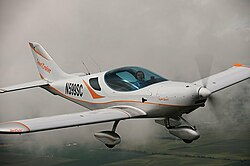
Aeroprakt · 1999+
Aeroprakt A-22 Foxbat / A-32 Vixxen
 i
iSpecifications
MOSAIC eligiblePerformance
Cruise
95KTAS
Range
530nm
Climb
690fpm
Ceiling
16,000ft
Fuel Burn
4.5gph
Fuel Cap.
30gal
MPG
24.3mpg
Stall (Vs0)
28KIAS
T/O roll
361ft
Ldg roll
299ft
Size & weight
Seats
2
Useful Load
640lbs
Full-fuel payload
460lbs
Max gross
1,323lbs
Wingspan
31.2ft
Length
19.7ft
Engine
Engine
Rotax 912ULS / 912iS
Power
100hp
TBO
2,000hrs
Overhaul
$13k
Owning it
Hull insurance
$1k/yr
Parts
good
Mechanics
specialist
Gear
Fixed
IFR
No
Category
light sport
Full specification
V-speeds
Airframe
- Empty weight
- 683 lbs
- Max fuel weight
- 180 lbs
- Height
- 7.5 ft
- Wing position
- high
- Auto fuel (mogas)
- Auto fuel specified by the engine maker — 91 premium
Obstacle performance
- Takeoff over 50 ft
- 820 ft
- Landing over 50 ft
- 1,200 ft
Paperwork
- Certification basis
- ASTM F2245 (S-LSA)
These figures are typical for the model, not a specification for any individual aircraft. Real-world numbers vary with year, installed equipment, weight, modifications and engine condition — often by more than you would expect. Use them to compare types, and confirm anything you would act on against the Pilot's Operating Handbook for that specific airframe and a prebuy inspection.
Pricing
Typical
$130k
Range
$65k – $185k
Annual all-in
~$15k/yr
All-in at ~100 flying hours a year, using the midpoint of each range — the same figures broken out under “Cost to own” below. Your number will differ, and mostly for two reasons. Experience sets your insurance: a 2,000-hour pilot with recent training pays 30–40% less than a 200-hour owner, and student owners pay 20–40% more — on the same aircraft that is often a doubling. Location sets your hangar: a T-hangar runs $200–400 a month in the Midwest against $400–1,500 in a coastal metro, and an outside tie-down is less again. Engine reserves move too — a local shop reusing your serviceable cylinders can come in 30–50% under the national specialty-shop pricing we quote, though you trade the warranty and turnaround that comes with it. Reserves are money set aside toward a future overhaul, not a bill this year, and the annual inspection figure is the shop’s labor to look — whatever they find is separate.
Cost to own — estimate
Set your yearly hours and local fuel price. Fixed costs (insurance, hangar, annual inspection) don't change with hours; fuel, maintenance and the engine reserve do.
- Fuel (4.5 gph)
- $2,925
- Engine reserve
- $650
- Maintenance, parts & wear items ($12/hr)
- $1,200
- Insurance
- $1,150–$3,250
- Hangar
- $3,688–$9,220
- Annual inspection (labor only)
- $1,200
- Databases & subscriptions
- $400
- Total per year
- $15,029
- Per flight hour
- $150
- Miles flown / year (at cruise)
- 10,932 mi
- Cost per mile
- $1.37/mi
- Time in the air
- 3 hr 09 min
- Fuel burned
- 14 gal
- Out of pocket
- $151
Fuel, engine reserve and wear only. Insurance, hangar and the annual are already paid whether you make the trip or not, so they are not charged here.
Estimate, not a quote. Where a line shows a range, the total, per-hour and per-mile figures use its midpoint— insurance moves most with your experience and time in type, hangar with where you base the aircraft, so your own number could sit at either end. Annual inspection is the shop's labor to open and inspect — what they find is the maintenance line, which covers oil changes, plugs, tires, brakes, hoses, lights, a battery and vacuum pump amortised over their life, and the unscheduled squawks that are the largest and least predictable part of it. Reserves are sinking funds toward an overhaul, not a bill you pay this year — and note that a propeller is due on hours or calendar time, typically six years, so flying less does not put it off forever.
Strengths
- Exceptional STOL performance with 28 KIAS stall speed
- Low operating costs (~$2,700/year fuel at 100 hrs)
- Roomy side-by-side cabin with outstanding visibility
- Simple all-metal aluminum airframe, straightforward maintenance
Weaknesses
- Parts supply uncertainty due to Ukraine conflict; 4–12 week lead times for airframe components
- Modest climb rate (750 fpm) limits high-elevation backcountry operations
- Fabric-covered control surfaces require specialized recovery expertise if damage occurs
- Rotax 912 mechanics not as universally available as Lycoming/Continental shops
Overview
The Aeroprakt A-22 Foxbat and its evolved successor the A-32 Vixxen are Ukrainian-designed, high-wing, two-seat light sport aircraft built by Aeroprakt Ltd. of Kyiv, Ukraine. Designed by Yuri Yakovlev, the A-22 prototype first flew on October 21, 1996; German certification was achieved in 1999 and US SLSA approval followed. As of 2024, approximately 1,600 aircraft across the A-22 family have been manufactured, making it one of the most widely distributed LSA designs in the world.
The A-22 earned its reputation primarily as an exceptional STOL performer and trainer. Its roomy side-by-side cabin (among the widest in LSA at roughly 46 inches at shoulder level), outstanding visibility from the high-wing configuration, and forgiving slow-speed handling combine to make it an approachable aircraft for both new and experienced sport pilots. In the US market the A-22LS carries the "Valor" designation from Aeroprakt USA; in the UK and Australia it is universally called the "Foxbat." The A-32 Vixxen, introduced in 2014 after three years of development, retains the Foxbat's platform strengths while adding a significantly faster cruise, improved aerodynamics, and a 12:1 glide ratio versus the A-22's 9:1. Both models are sold as factory-built S-LSA in 31 countries; in the UK they are kit-built only.
Both aircraft are powered by the Rotax 912ULS (or the fuel-injected 912iS option) and use an all-metal riveted aluminum airframe with fabric-covered control surfaces. The airframe is straightforward to inspect, with no complex systems, and the open structure requires minimal disassembly time for annual condition inspections. Ukraine's ongoing conflict since 2022 has periodically disrupted Aeroprakt's production schedule and created parts supply uncertainty; buyers and operators should factor this into purchasing decisions.
Variants & History
| Variant | Years | MTOW | Engine | HP | Key Differences |
|---|---|---|---|---|---|
| A-22L2 | 1999–present | 472.5 kg (1,042 lb) | Rotax 912UL/ULS | 80–100 | European ultralight standard; 450 kg base, 472.5 kg with ballistic parachute |
| A-22LS (Foxbat / Valor) | 2005–present | 600 kg (1,323 lb) | Rotax 912ULS or 912iS | 100 | US SLSA version; increased MTOW; standard long-range wing tanks (113 L); electric trim |
| A-22LS Kelpie | 2014–present | 600 kg (1,323 lb) | Rotax 912ULS | 100 | Bush variant for Australia; 8×6 tundra tires; 315 kg empty; optimised for paddock operations |
| A-22 SuperSport | 2018–present | 600 kg (1,323 lb) | Rotax 912ULS or 912iS | 100 | Updated interior, improved cowl and baffling over baseline LS |
| A-32 (Vixxen) | 2015–present | 600 kg (1,323 lb) | Rotax 912ULS or 912iS | 100 | Shorter wing (9.45 m vs 9.55 m), flush wing-body fairing, all-flying stabiliser, 12:1 glide, ~20 kt faster cruise |
| A-32L | 2015–present | 450 kg (992 lb) | Rotax 912ULS | 100 | European ultralight compliance; Y-stick standard; smaller MTOW |
Performance
A-22LS (Foxbat): The standard cruise of 93–95 KTAS at 4,650 RPM and ~4.0–4.5 gph is genuinely economical for an LSA. Real-world cruise is slightly lower than book at density altitudes above 3,000 ft. The 9:1 glide ratio is modest — pilots should plan glide approaches conservatively. The 690–750 fpm climb rate (at 54 KIAS) is adequate for flatland operations but marginal at high-density-altitude backcountry strips. The 140-ft book takeoff roll comes from no-wind, sea-level, optimum-weight conditions; plan for 300–400 ft in realistic operations. VNE of 124 KIAS provides adequate margin above typical cruise, but the airframe's 600 kg MTOW and +4/−2 G limit are strictly observed — steep-turn coordination matters more than in certified aircraft. The generous flap system (flaperons) provides a stall speed of just 28 KIAS with full flaps, which is exceptional for a side-by-side two-seater.
A-32 Vixxen: The aerodynamic refinements bring cruise to 109–115 KTAS, a 15–20 kt improvement over the A-22LS for the same 100 hp. Fuel burn drops to approximately 3.4–4.0 gph at cruise, translating into meaningful range gains. The all-flying horizontal stabiliser delivers lighter, more responsive pitch control. The 12:1 glide ratio meaningfully improves engine-out options. Stall speed of 27 KIAS (full flaps) is even lower than the A-22LS. Rate of climb is documented at 750 fpm (foxbataircraft.com) to 1,080 fpm (POH data at VX) — the discrepancy likely reflects different power/weight configurations and measurement conditions; 750–800 fpm is a conservative planning figure. Service ceiling is approximately 15,000 ft. The A-32 VNE of 125 KIAS allows comfortable IAS cruise in the 100–110 kt range.
Both models: Wing fuel tanks can develop slight imbalance in prolonged turns — periodic cross-checking of tank levels is recommended. Cold-weather starts with the 912ULS require patience; the engine warms up slowly and should not be pushed to cruise RPM until oil temperature is in the green. The 912iS option eliminates some cold-start concerns through fuel injection and electronic management.
Payload & Range
A-22LS (30-gal / 113 L tanks):
- Max fuel weight: 180 lb (30 gal × 6.0 lb/gal)
- Empty weight (typical): 683 lb
- MTOW: 1,323 lb
- Max payload at full fuel: 1,323 − 683 − 180 = 460 lb (two average adults + ~60 lb bags)
- Full fuel range: 30 gal ÷ 4.5 gph = 6.7 hr × 95 kt = ~635 nm (no reserve); ~530 nm with 45-min reserve
- Two 200-lb pilots + 100 lb bags = 500 lb payload; remaining fuel: 1,323 − 683 − 500 = 140 lb = ~23 gal → range ~485 nm with reserve
- Key constraint: Full seats + bags leaves ~23 gal; full fuel leaves ~60 lb for bags with two average adults. Typical useful load split is pilot + passenger (370–400 lb) + 60 lb bags + 25 gal fuel (~150 lb) — leaving a 40 lb buffer.
A-32 Vixxen (30-gal / 114 L tanks):
- Empty weight (typical): 705 lb
- Max payload at full fuel: 1,323 − 705 − 180 = 438 lb (two lighter pilots or one pilot + 238 lb of fuel + bags)
- Full fuel range: 30 gal ÷ 3.7 gph (cruise) = 8.1 hr × 110 kt = ~890 nm (no reserve); ~750 nm with 45-min reserve
- Two 200-lb pilots + 60 lb bags = 460 lb payload; remaining fuel: 1,323 − 705 − 460 = 158 lb = ~26 gal → range ~650 nm with reserve
- Key advantage over A-22LS: Lower fuel burn at higher cruise speed makes the A-32 a meaningfully better cross-country aircraft despite similar payload limits.
Both aircraft follow the classic LSA constraint: at 600 kg MTOW, full fuel and two average adults leaves little to no baggage margin. Pilots planning longer trips should load-plan carefully rather than defaulting to full tanks.
Mission Suitability
| Mission | Score | Rationale |
|---|---|---|
| Flight Training | 7 | Excellent visibility, forgiving stall/spin behavior, side-by-side seating ideal for instruction. Sensitive elevator on A-32 requires adjustment. LSA category limits night and IMC training. |
| Backcountry / Bush Flying | 8 | Outstanding STOL performance, high-wing visibility, tundra tire option (Kelpie), robust aluminum airframe. Modest climb rate limits high-elevation strips; no retractable gear to worry about. Not certified for floats in SLSA configuration. |
| Business Travel | 3 | A-32 has useful cruise speed for short hops, but 1,323 lb MTOW limits payload at range; no IFR certification; sport pilot restrictions limit utility. |
| aerobatics | 1 | +4/−2 G limit and no inverted oil system. Category prohibits intentional aerobatics. |
| Cross-Country Flying | 5 | A-32 with 30-gal tanks delivers 600+ nm range at 3.4 gph; A-22LS is limited to ~530 nm. Both are VFR-only. Weather sensitivity and no autopilot (unless optioned) make long trips fatiguing. |
| Cargo Hauling | 4 | Useful load of ~620–640 lb is reasonable for an LSA; large baggage compartment; rear bulkhead limits awkward loads. Full fuel + two average adults leaves ~200 lb for bags. |
| Local Fun Flying | 9 | Low operating cost, excellent handling, panoramic views, simple systems — near-ideal sport flyer. Rotax fuel economy keeps costs manageable. |
| surveying | 8 | High-wing with excellent downward visibility, slow-flight capability to 35 kt, stable platform for visual or camera work, STOL enables access to remote strips. |
Avionics Ecosystem
The A-22LS and A-32 are sold as S-LSA, so avionics are factory-installed per manufacturer specification rather than field STC'd. Aeroprakt USA offers three main panel configurations:
Budget / VFR Basic: Traditional steam gauges (ASI, altimeter, VSI, turn coordinator, compass) with a handheld or panel-mount GPS. Becoming less common on new aircraft due to cost parity with glass. Typical installed cost: included in ~$130K base.
Dynon SkyView HDX VFR (most popular for A-22LS): Dual 7-inch or 10-inch HDX touchscreens with integrated ADAHRS, engine monitoring, GPS/moving map, ADS-B In/Out, com radio, transponder, and optional Dynon dual-axis autopilot (SV-32 pitch and SV-42 roll servos). The autopilot functions exceptionally well given the light control forces. Wi-Fi connectivity for chart updates. Total system including autopilot: approximately $18,000–$22,000 installed. The Dynon HDX is widely regarded as the best value glass panel for LSA.
Garmin G3X Touch VFR (common for A-32): G3X 10.6-inch primary with GEA 24 engine monitoring, GTR 200B com, GTX 35R transponder with ADS-B Out, GDL 52 ADS-B In receiver. Integrates with Garmin GPS navigator. Approximately $20,000–$25,000 installed.
Garmin G3X with GTN650Xi IFR (A-32 specific): Factory IFR-capable build for the A-32 featuring G3X, GTN650Xi WAAS navigator, GFC 500 autopilot, GTR 225B com, GMA 245 audio panel. Provides IFR navigation capability (note: the aircraft is not FAA IFR certified as an S-LSA, but the avionics support IFR training and cloud flying under instrument meteorological conditions if the pilot holds an appropriate certificate and operates VFR). This configuration runs $30,000–$40,000 over a base aircraft.
Aeroprakt USA locks the exchange rate at deposit — important given that aircraft pricing is calculated in Euros. See Avionics Pricing Reference for market pricing on individual components.

2011 CubCrafters Carbon Cub
Carbon Cub SS · STOL Legend · Tundra Tires
STCs & Modifications
Because these are S-LSA aircraft, modifications must be manufacturer-approved rather than third-party STC'd. Aeroprakt and its network distributors have documented the following approved modifications:
Ballistic Parachute System (Magnum BRS): Factory option for both A-22LS and A-32. Adds approximately 15–20 lb empty weight but raises the effective MTOW under European regulations from 450 kg to 472.5 kg for the L2 variant. Highly recommended for training operations. Approximate installed cost: $4,000–$6,000.
Tundra Tire Upgrade (Kelpie / Backcountry): 8×6 Airtrac tundra tires replace standard 15×6.00-6 main gear. Adds ~5 lb; improves soft-field, grass, and gravel operations significantly. Available as Kelpie factory option or field-installed with manufacturer approval.
30-Gallon Long-Range Tanks: Upgrade from standard 24-gallon to 30-gallon (114-liter) wing tanks. No empty weight penalty worth noting; directly extends range. Strongly recommended at purchase.
Dynon Dual-Axis Autopilot: Factory-designed installation kit using SV-32 pitch and SV-42 roll servos. Integrated with Dynon SkyView unit including pitch trim autotrim. Well-proven installation.
Electronics International FT-60 Fuel Flow Transducer: Connects to Dynon EFIS for accurate fuel flow monitoring. Addresses the known fuel imbalance tendency between wing tanks.
Inverted Oil Cooler Modification: Routes oil cooler pipework to the top of the cowl rather than the bottom. Improves cooling efficiency in high-power sustained climbs.
Wheel Fairings / Spats: Adds approximately 2–4 kt cruise speed. Factory option; easily removable for soft-field or backcountry operations.
Maintenance & Support
See Maintenance Ecosystem for general LSA maintenance framework.
Annual Condition Inspection: S-LSA requires annual condition inspection by an FAA-certificated repairman (LSA — Inspection) or A&P. Unlike FAA Part 43 annuals, the inspection can also be performed by the owner if they hold an LSA Repairman (Maintenance) certificate. Typical shop flat-rate: $1,200–$1,800 including Rotax oil and filter change; additional squawks billed separately.
Mechanic Familiarity: Rotax 912 mechanics are reasonably available in LSA-active areas but are not as universally accessible as Lycoming/Continental shops. Aeroprakt's aluminum construction is straightforward for any A&P who will spend time with the manuals, but fabric surface work requires familiarity with Dacron/polyester techniques. Rated "specialist" — not rare, but owners should identify a qualified shop before purchasing.
Parts Availability: Rotax engine parts are well-supported through Rotax's global dealer network. Airframe parts (aluminum skins, control surface components, landing gear) come from Aeroprakt Ukraine. Post-2022 conflict has introduced lead time uncertainty — allow 4–12 weeks for non-stock airframe parts. Distributors including Foxbat Australia and Foxbat Aircraft (UK) maintain local spares inventory that mitigates some of this risk for their regional customers.
Scheduled Maintenance Costs:
- 25-hour initial service (new aircraft): $300–$500 (oil/filter, inspection)
- 50-hour service: $400–$600
- 100-hour / annual condition inspection: $1,200–$1,800 labor + parts
- Rotax rubber replacement (every 5 years): $2,500–$4,000
- Rotax 912ULS overhaul at TBO (2,000 hr): $12,000–$15,000 (or new engine at ~$32,000)
- Fabric recover (if needed): $3,000–$6,000
Estimated Annual Operating Costs (A-22LS, 100 hrs/year):
| Item | Annual Cost |
|---|---|
| Fuel (100 hr × 4.5 gph × $6.00/gal avgas) | $2,700 |
| Oil and consumables | $400 |
| Annual condition inspection (labor + parts) | $1,800 |
| Rotax rubber amortisation (5-yr cycle) | $600 |
| Engine reserve (TBO amortisation) | $650 |
| Insurance | $1,400 |
| Hangar / tiedown | $2,400 |
| Miscellaneous | $500 |
| Total | ~$10,450 |
Note: Use of 912iS (fuel-injected) option reduces fuel burn ~25%, saving ~$675/year at 100 hours; offset by higher initial cost.
Valuation Factors
The A-22/A-32 market is thin compared to certified aircraft; comparables are often scarce. See Aircraft Valuation Methodology for general principles.
Engine Time and Condition: The Rotax 912ULS TBO is 2,000 hours. Unlike certified aircraft, LSA owners are not required to overhaul at TBO for private operations — "on condition" is legally permissible — but this significantly affects resale value. Expect a $5,000–$8,000 discount per 500 hours over 1,000 on the tach. Rubber components (seals, hoses, magneto caps) must be replaced every 5 years regardless of hours ($2,500–$4,000 shop cost); recent rubber replacement is a positive value driver.
Avionics Package: Garmin G3X or Dynon SkyView with autopilot commands a $12,000–$18,000 premium over steam gauge aircraft. The IFR Garmin GTN650Xi package adds further value for instrument-rated buyers.
Variant and Model Year: A-32 Vixxen commands a 15–25% premium over equivalent A-22LS due to performance. Later serial numbers (post-2018) have improved cowling, baffling, and cabin finish. Pre-2010 A-22 aircraft without wing tanks (single rear-fuselage tank) are worth significantly less.
Tire Configuration: Kelpie / tundra tire aircraft carry a $2,000–$5,000 bush-use premium in backcountry markets.
Condition and Paint: The aluminum airframe is durable but fabric surfaces are susceptible to UV degradation if hangared outdoors. Fresh fabric recover adds $3,000–$6,000 in cost and value.
Price Tiers:
- Used A-22 (pre-2015, basic avionics): $65,000–$95,000
- Used A-22LS (2015–2020, Dynon glass): $95,000–$130,000
- New A-22LS (current, fully optioned): $140,000–$155,000
- Used A-32 Vixxen: $120,000–$165,000
- New A-32 Vixxen (base): $155,000–$175,000
- New A-32 Vixxen (IFR Garmin): $185,000–$200,000
ADs & Common Problems
The A-22 and A-32 are S-LSA aircraft subject to manufacturer service bulletins rather than FAA ADs. Compliance with mandatory service bulletins (MSBs) is required to maintain airworthiness. Key recurring items:
Fuel System — Wing Spar Inspection After Hard Landing: Mandatory inspection requires removal of fuel tanks for close examination of wing rear spars in the fuel tank bay following any heavy landing event. Structural integrity of the spar attachment is the concern.
Nose Landing Gear Fork Hinge Bracket: Service bulletin mandating replacement of nose wheel fork hinge bracket on affected serial number ranges. Nose leg fork bolt inspection also required periodically.
Fuel Imbalance: Wing tanks can develop unequal fuel distribution in prolonged turns or uncoordinated flight. Fuel drain holes added to tank bays in updated builds; earlier aircraft should be checked. EI FT-60 fuel flow installation helps monitoring.
Flaperon Hinge Axle Inspection: Mandatory inspection for wear on flaperon hinge axles. Fabric-covered flaperons are the primary control system — axle wear directly affects lateral and pitch control. Check carefully on pre-buy.
Elevator Pushrod Inspection: Periodic inspection of elevator pushrod for corrosion or wear at attachment points. Important given the A-32's all-flying stabiliser design.
Rudder Cable Inspection: Routine mandatory inspection for cable wear and fraying, particularly at fairleads.
Flexible Fuel Tubing: MPD 1998-019-R1 (UK LAA) covering flexible fuel line replacement applies to all permit aircraft including the A-22. Relevant for aircraft with high time or long calendar age.
Pre-Buy Red Flags:
- Aircraft stored outdoors in humid climates — fabric surface delamination or corrosion behind fabric panels
- Impact damage to nose gear (typically from rough field operations) — inspect entire nose gear assembly carefully
- Unknown hard landing history — full spar inspection warranted before purchase
- Rotax 912ULS above 1,500 hours without rubber replacement ($2,500–$4,000 every 5 years regardless of hours)
- Ukrainian-sourced aircraft post-2022 with documentation gaps due to conflict disruption
Insurance Profile
See GA Insurance Underwriting for general LSA insurance framework.
The A-22 and A-32 fall into the standard LSA category for underwriting purposes — no unusual risk factors compared to comparable high-wing LSA designs. The aircraft's aluminum construction and simple systems are viewed favorably by underwriters. Hull values from $70,000 (used A-22) to $185,000 (new IFR A-32) create a wide premium spread.
Typical Annual Premiums (private use, 250+ total hours, 25+ in type):
- Hull + liability (used A-22LS, $90,000 hull): $1,200–$1,600/year
- Hull + liability (new A-22LS, $150,000 hull): $1,800–$2,400/year
- Hull + liability (new A-32 IFR, $185,000 hull): $2,200–$3,000/year
Underwriting Factors:
- Training use: Rates increase 40–80% for aircraft used for hire in training operations; rental requires commercial coverage.
- Pilot hours: Pilots under 100 total hours face surcharges; fewer than 25 in type may require a check flight.
- Ukrainian manufacture: Some underwriters ask about parts availability given the ongoing conflict affecting production. This is an emerging factor; disclose honestly.
- Ballistic parachute: Some underwriters offer small discounts (5–10%) for aircraft equipped with a ballistic recovery parachute system.
- Liability limits: Standard is $1,000,000 smooth; higher limits available and recommended for flight school operations.
For sale (0)
No listings for this model right now.
For sale elsewhere (2)
Current ads on Barnstormers, checked daily. Photos, full details and the seller are on the listing site.
2018 Aeroprakt A-22 Foxbat / A-32 Vixxen
Listed on BarnstormersADS-B In · ADS-B Out · 406 MHz ELT · Garmin G3X Touch
View photos and full ad on Barnstormers ↗2024 Aeroprakt A-22 Foxbat / A-32 Vixxen
Listed on BarnstormersADS-B In · ADS-B Out · Autopilot (unspecified)
View photos and full ad on Barnstormers ↗Also worth looking at
What buyers usually weigh against the Aeroprakt A-22 Foxbat / A-32 Vixxen — aircraft flown for the same kind of mission.