Icon · 2016+
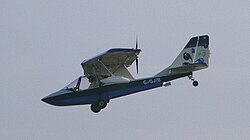
Icon A5
 i
iSpecifications
MOSAIC eligiblePerformance
Cruise
84KTAS
Range
427nm
Climb
629fpm
Ceiling
15,000ft
Fuel Burn
3.8gph
Fuel Cap.
20gal
MPG
25.4mpg
Stall (Vs0)
39KIAS
T/O roll
710ft
Ldg roll
530ft
Size & weight
Seats
2
Useful Load
430lbs
Full-fuel payload
310lbs
Max gross
1,510lbs
Wingspan
34.8ft
Length
23ft
Engine
Engine
Rotax 912 iS Sport
Power
100hp
TBO
2,000hrs
Overhaul
$14k
Owning it
Hull insurance
$13k/yr
Parts
fair
Mechanics
specialist
Gear
Retractable
IFR
No
Category
light sport
Full specification
V-speeds
Airframe
- Empty weight
- 1,080 lbs
- Max fuel weight
- 120 lbs
- Height
- 8.1 ft
- Wing position
- high
- Auto fuel (mogas)
- Auto fuel specified by the engine maker — 91 premium
Obstacle performance
- Takeoff over 50 ft
- 1,200 ft
- Landing over 50 ft
- 1,000 ft
Paperwork
- Certification basis
- ASTM F2245
These figures are typical for the model, not a specification for any individual aircraft. Real-world numbers vary with year, installed equipment, weight, modifications and engine condition — often by more than you would expect. Use them to compare types, and confirm anything you would act on against the Pilot's Operating Handbook for that specific airframe and a prebuy inspection.
Pricing
Typical
$280k
Range
$235k – $434k
Annual all-in
~$26k/yr
All-in at ~100 flying hours a year, using the midpoint of each range — the same figures broken out under “Cost to own” below. Your number will differ, and mostly for two reasons. Experience sets your insurance: a 2,000-hour pilot with recent training pays 30–40% less than a 200-hour owner, and student owners pay 20–40% more — on the same aircraft that is often a doubling. Location sets your hangar: a T-hangar runs $200–400 a month in the Midwest against $400–1,500 in a coastal metro, and an outside tie-down is less again. Engine reserves move too — a local shop reusing your serviceable cylinders can come in 30–50% under the national specialty-shop pricing we quote, though you trade the warranty and turnaround that comes with it. Reserves are money set aside toward a future overhaul, not a bill this year, and the annual inspection figure is the shop’s labor to look — whatever they find is separate.
Cost to own — estimate
Set your yearly hours and local fuel price. Fixed costs (insurance, hangar, annual inspection) don't change with hours; fuel, maintenance and the engine reserve do.
- Fuel (3.8 gph)
- $2,470
- Engine reserve
- $700
- Propeller reserve
- $175
- Maintenance, parts & wear items ($22/hr)
- $2,200
- Insurance
- $4,700–$13,000
- Hangar
- $4,802–$12,006
- Annual inspection (labor only)
- $2,500
- Databases & subscriptions
- $700
- Total per year
- $25,999
- Per flight hour
- $260
- Miles flown / year (at cruise)
- 9,667 mi
- Cost per mile
- $2.69/mi
- Time in the air
- 3 hr 34 min
- Fuel burned
- 14 gal
- Out of pocket
- $198
Fuel, engine reserve and wear only. Insurance, hangar and the annual are already paid whether you make the trip or not, so they are not charged here.
Estimate, not a quote. Where a line shows a range, the total, per-hour and per-mile figures use its midpoint— insurance moves most with your experience and time in type, hangar with where you base the aircraft, so your own number could sit at either end. Annual inspection is the shop's labor to open and inspect — what they find is the maintenance line, which covers oil changes, plugs, tires, brakes, hoses, lights, a battery and vacuum pump amortised over their life, and the unscheduled squawks that are the largest and least predictable part of it. Reserves are sinking funds toward an overhaul, not a bill you pay this year — and note that a propeller is due on hours or calendar time, typically six years, so flying less does not put it off forever.
Strengths
- Unique amphibious capability with water/land operation from lakes and beaches
- Excellent fuel efficiency (3.8 gph cruise) and 427 nm range on 100 hp
- Foldable wing system enables trailering and compact storage
- Wide 46-inch cockpit with outstanding visibility for recreational flying
Weaknesses
- Restrictive maintenance model: Icon-certified shops only, ~20–30 U.S. locations, thin service network
- Marginal climb performance (629 fpm sea level); density altitude significantly degrades departure capability
- Tight useful load (430–490 lbs total) encourages overloading; cumulative structural fatigue risk documented in logbooks
- High fixed annual costs (~$28k–$35k) including insurance, hangar/water access, and reserves for expensive maintenance
Overview
The Icon A5 is an American two-seat amphibious Light Sport Aircraft produced by Icon Aircraft of Vacaville, California (airframe manufacturing in Baja California, Mexico). It is among the most visually distinctive and commercially ambitious GA aircraft of the 21st century — a carbon-fiber flying boat designed to broaden aviation's appeal to people who have never considered owning a plane.
Icon Aircraft was founded in 2006 by Kirk Hawkins, a Stanford MBA graduate and former F-16 pilot. The company raised over $100 million in venture capital before a single production aircraft flew, positioning the A5 as an aspirational lifestyle product as much as an airplane. The design was shaped partly by BMW DesignworksUSA (cockpit interior) and Nissan designer Randy Rodriguez (exterior), and won numerous industrial design awards between 2008 and 2015. The prototype first flew July 9, 2008; production deliveries began in 2016 after years of delays.
The A5 targets recreational flyers and first-time aircraft owners rather than mission-focused pilots. Icon explicitly stated that approximately 35% of its customers were not yet pilots when they ordered. The aircraft features a foldable wing system (allowing road transport in a standard trailer), a whole-airframe Ballistic Recovery Systems (BRS) parachute (mandatory for U.S. registrations under the ASTM weight exemption), a proprietary spin-resistant wing, a wide 46-inch cockpit, and the ability to operate from both water and land. Operating surfaces include traditional ailerons, flaps, elevator, and rudder plus a retractable water rudder. Gear retracts into wing-mounted sponsons.
As of December 2025, Icon Aircraft had delivered 221 A5s since first delivery in 2016 — a small fleet by any GA standard. The company filed Chapter 11 bankruptcy in April 2024 with $170 million in debt, and was acquired in June 2024 by SG Investment America for $15.79 million. Production continued at a very low rate (9 aircraft in 2024, 3 in early 2025) under new ownership.
In December 2023, the FAA granted the A5 type certification in the primary category (model A5-8), making Icon one of very few LSA manufacturers to hold an FAA type certificate. This "Certified Edition" requires a private pilot certificate plus seaplane rating to fly in the U.S. and carries a higher base price of $434,000. The original S-LSA version remains the predominant configuration and can be flown on a sport pilot certificate with an amphibian endorsement.
Variants & History
| Variant | Year Range | MTOW | Engine | Notes |
|---|---|---|---|---|
| Founder's Edition | 2016–2017 | 1,510 lbs | Rotax 912 iS Sport (100 hp) | First 100 production aircraft; limited edition designation |
| Limited Edition | 2017–2019 | 1,510 lbs | Rotax 912 iS Sport (100 hp) | Production expansion phase; Garmin Aera 796 standard avionics |
| Standard S-LSA | 2019–2023 | 1,510 lbs | Rotax 912 iS Sport (100 hp) | Mainstream production; Garmin G3X Touch added 2021 model year |
| S-LSA with Gross Weight Package | 2024–present | 1,570 lbs | Rotax 912 iS Sport (100 hp) | 60-lb MTOW increase; E-PROPS 4-blade prop; retrofittable to earlier aircraft |
| Certified Edition (A5-8) | 2024–present | 1,570 lbs | Rotax 912 iS Sport (100 hp) | FAA primary category type certificate; requires PPL + SES rating; base $434,000 |
Note on weight exemption: All A5 variants from the beginning operated above the standard S-LSA weight limit of 1,320 lbs (1,430 lbs for seaplanes) under a specific FAA exemption. The BRS parachute was the qualifying condition for the exemption. MOSAIC, finalized in July 2025, eliminates the weight limit category-wide. See MOSAIC (Modernization of Special Airworthiness Certification).
Performance
Cruise speed context: The POH-published cruise of 84 KTAS at 8,000 ft, 5,000 RPM represents a realistic figure from pilot reports. Maximum speed is 95 KTAS, but this is rarely used in practice. Fuel burn at economy cruise (approximately 3.8 gph) gives roughly 5 hours endurance and a 427 nm range with a 45-minute reserve — impressive efficiency for 100 hp. Economy cruise at altitude (15,000 ft) can drop to 2.8–3.0 gph.
Climb performance: The POH-published rate of climb at Vy (58 KIAS) is 629 fpm at sea level, standard conditions, maximum gross weight. Real-world pilots have reported 500–800 fpm depending on conditions and loading. The power-to-weight ratio is marginal: 100 hp against up to 1,510 lbs. Density altitude significantly degrades climb performance — documented in a July 2019 accident where an overloaded aircraft failed to clear trees on departure. Vx is 54 KIAS (flaps up), best angle with 15°/30° flaps is 50 KIAS.
Stall and spin behavior: The spin-resistant wing uses a cuffed design with multiple proprietary airfoils that change span-wise, meeting FAR Part 23 requirements for spin resistance. The aircraft will stall (Vs1 clean: 45 KIAS, Vs0 flaps down: 39 KIAS) but will resist entered spins. An angle-of-attack indicator is standard equipment and serves as the primary stall-awareness tool — more intuitive than airspeed in a slow maneuvering aircraft. However, the spin-resistant design does not prevent loss of control from extreme mishandling or low-altitude aggressive maneuvering.
Water performance: Takeoff from water is longer than from a paved runway — approximately 920 ft at sea level versus 640–710 ft from runway at standard conditions. Water landings are approximately 700–840 ft. Swell height is limited to 12 inches demonstrated crosswind component. The hull is corrosion-resistant carbon fiber; saltwater operation is permitted with subsequent freshwater rinse. Maximum wave height in demonstrated operations is 12 inches. Water rudder retracts for flight.
Takeoff/landing figures note: The frontmatter figures (710 ft ground roll, 530 ft runway landing) reflect paved runway performance at sea level, standard day, maximum gross weight. Water performance is notably longer; the 50-ft obstacle clearance figures are estimated from published data since Icon does not publish over-50-ft obstacle performance in accessible spec sheets.
Glide: The 9:1 glide ratio (best glide 60 KIAS) is modest. At 3,000 ft AGL, expect about 5 nm of glide range — adequate for finding water in seaplane country but requires alertness over terrain. The Garmin G3X Smart Glide feature (available with 9.13 software) automates nearest-airport identification on engine power loss.
Vno note: The published Vno is not listed in publicly available Icon spec sheets. Based on the Vne (120 KCAS) and the cruise envelope, it is approximately 95 KCAS — the top of the normal operating (green arc) range, consistent with Va (87 KCAS) and maximum level speed. The frontmatter value of 95 KIAS reflects this estimate; consult the aircraft POH for the definitive arc marking.
Payload & Range
The Icon A5's useful load is the aircraft's most constraining operational parameter. At standard S-LSA gross weight (1,510 lbs), useful load is 430 lbs. The 2024 gross weight package raises this to 490 lbs.
Fuel weight:
- 20 gallons usable × 6.0 lb/gal = 120 lbs fuel at full tanks
Standard (430 lb UL) scenarios:
| Scenario | Fuel | Occupants | Bags | Remaining |
|---|---|---|---|---|
| Full fuel, two 170-lb occupants | 20 gal / 120 lbs | 340 lbs | — | −30 lbs over gross |
| Full fuel, two 150-lb occupants | 20 gal / 120 lbs | 300 lbs | 10 lbs | 0 lbs (at limit) |
| Two 200-lb occupants, reduced fuel | 7 gal / 42 lbs | 400 lbs | — | −12 lbs over gross |
| Two 170-lb occupants, 15 gal fuel | 15 gal / 90 lbs | 340 lbs | 0 lbs | 0 lbs (at limit) |
With 4-blade prop package (490 lb UL):
| Scenario | Fuel | Occupants | Bags | Remaining |
|---|---|---|---|---|
| Full fuel, two 170-lb occupants | 20 gal / 120 lbs | 340 lbs | 30 lbs | 0 lbs (at limit) |
| Two 200-lb occupants, 15 gal fuel | 15 gal / 90 lbs | 400 lbs | 0 lbs | 0 lbs (at limit) |
Key observations:
- The A5 cannot carry two average-weight adults (each ~190 lbs) with full fuel in standard S-LSA configuration. This is the most commonly cited real-world limitation.
- At maximum fuel (427 nm range potential), solo pilot + bags is the practical IFR (well, VFR cross-country) loading.
- The 2024 gross weight increase (+60 lbs) meaningfully expands two-adult utility but does not eliminate the constraint for heavier-than-average crew.
- Water takeoff performance degrades rapidly with weight; near-gross-weight water departures in warm conditions require careful density altitude awareness.
- The 60-lb baggage limit is a hard structural constraint regardless of loading; do not mistake remaining useful load capacity for additional baggage capability.
Page created 2026-04-08. Data sourced from Icon Aircraft official specifications, AOPA aircraft guide, Plane & Pilot reviews, NTSB accident records, BWI insurance data, and SkyTough ownership analysis. Pricing reflects 2024–2025 market conditions. Post-bankruptcy production and support status subject to change under SG Investment America ownership.
Mission Suitability
| Mission | Score | Rationale |
|---|---|---|
| Flight Training | 4/10 | Sport pilot training only — no IFR, no night currency building, restricted utility for instrument students. Excellent for initial amphibious LSA endorsement training. Not competitive with Cessna 152/172 or DA20 for broad training utility. Factory training program is well-structured. |
| Backcountry / Bush Flying | 6/10 | Amphibious capability opens lake and river access inaccessible to wheeled aircraft, but marginal climb performance, light useful load (430–490 lbs), and 1,570 lbs MTOW limit backcountry utility. Water surface conditions, not terrain, set the real limits. Dock-to-dock access is a unique strength. |
| Business Travel | 1/10 | No IFR capability, 84 KTAS cruise, 430 lb useful load, and no autopilot (optional on G3X models) make this unsuitable for mission-focused travel. The aircraft is a recreational product. |
| aerobatics | 1/10 | Not approved for aerobatics. The spin-resistant wing design is specifically built to reduce departure authority, antithetical to aerobatic flight. |
| Cross-Country Flying | 3/10 | 427 nm range is workable, but no IFR capability, no weather-avoidance avionics, 84 KTAS cruise, and VFR-only designation limit cross-country utility. Suitable for good-weather lake-hopping trips but not point-to-point transportation. |
| Cargo Hauling | 1/10 | Useful load of 430–490 lbs total (fuel + occupants + bags) precludes meaningful cargo. 60 lb baggage limit. |
| Local Fun Flying | 9/10 | This is exactly what the A5 was designed for. Lake access, beach landings, smooth sport handling, a wide cockpit with excellent visibility, foldable wings for trailering — this is an outstanding local recreation aircraft for pilots near water. The experience is genuinely unique in GA. |
| surveying | 4/10 | Slow cruise and water-landing capability are relevant for coastal and riparian survey work. No IFR, limited endurance, and low useful load limit systematic survey use. Good for informal aerial photography missions from lakes. |
Avionics Ecosystem
The Icon A5 uses a Garmin-centric ecosystem throughout its production history. Avionics are tightly integrated into the carbon fiber instrument panel; upgrades require factory-authorized installation.
Early production (2016–2020):
- Removable Garmin Aera 796 portable GPS/moving map as primary navigation
- Traditional round-dial airspeed indicator, altimeter, and attitude indicator
- Garmin GTR 200 COM radio
- Angle-of-attack indicator (standard on all aircraft)
- No autopilot
2021 model year and later:
- Garmin G3X Touch 7" primary flight display (standard)
- Integrated COM radio and transponder on single screen
- Bluetooth pairing with Garmin Pilot or ForeFlight
- Optional Garmin GMC 507 autopilot (2-axis: heading/track hold, altitude hold, vertical speed, IAS hold, GPS nav)
- Smart Glide available via G3X software update (version 9.13+)
Certified Edition (2024):
- Full G3X Touch suite
- Autopilot standard
- ADS-B Out standard
Avionics upgrade path for early aircraft: G3X retrofit is available through Icon Service Partners. The early Aera 796-based panel cannot self-certify for any additional equipment without factory involvement. Third-party avionics installations are not permitted under Icon's maintenance requirements.
See Avionics Pricing Reference for Garmin G3X Touch cost context.

2011 CubCrafters Carbon Cub
Carbon Cub SS · STOL Legend · Tundra Tires
STCs & Modifications
The Icon A5 is an S-LSA (and now Certified Edition). S-LSA rules do not use FAA STCs for modifications — changes are controlled by ASTM consensus standards and must be approved by the manufacturer. The Certified Edition follows primary category rules, also manufacturer-controlled.
Gross Weight / 4-Blade Propeller Package (2024):
- MTOW increased from 1,510 to 1,570 lbs (+60 lbs)
- E-PROPS 4-blade lightweight composite propeller replaces 3-blade configuration
- Retrofittable to earlier aircraft through authorized service centers
- Results in 490 lb useful load (up from 430 lbs)
- Estimated install cost: not publicly published; contact Icon service partner
Garmin G3X Retrofit:
- Available for aircraft originally equipped with Aera 796 panel
- Factory-approved through Icon Service Partners
- Adds touch PFD, integrated COM, ADS-B, and optional autopilot
- Estimated installed cost: $15,000–$25,000 depending on autopilot inclusion
BRS Parachute Repack:
- Required every 8 years regardless of activations
- Must be performed by BRS-certified technician
- Estimated cost: $3,500
- The parachute is mandatory equipment on all U.S.-registered A5s; its presence was the basis for the FAA weight exemption above the 1,430 lb seaplane LSA limit
Wing fold mechanism: No aftermarket modification available; factory design. Wings fold aft for trailering and storage, fitting in a standard boat trailer footprint.
Maintenance & Support
Maintenance model: The Icon A5 uses a factory-authorized service network model. All maintenance must be performed by personnel who have completed Icon Aircraft training. Parts must be sourced through Icon Aircraft authorized channels. This is the most restrictive maintenance model in recreational GA.
Annual condition inspection: Approximately $1,000–$2,500 at an Icon Service Partner. The annual must be performed by an Icon-certified A&P. Standard LSA annual condition inspection rules apply (does not require IA sign-off like certified aircraft).
Mandatory airframe overhaul: The A5 airframe requires factory-authorized inspection and overhaul every 10 years or 2,000 hours, whichever comes first. Cost is not published but is expected to be substantial ($20,000 range based on analogous composite aircraft procedures).
Engine: Rotax 912 iS Sport at 2,000-hour TBO. Engine overhaul is approximately $12,000–$14,000 at a Rotax-authorized shop. The engine is air/liquid cooled (liquid-cooled heads, air-cooled cylinders), accepts 91 octane mogas or 100LL. The iS version uses electronic fuel injection with dual ECUs and will switch to ECO (lean) mode below 97% throttle automatically — a meaningful efficiency and reliability advantage over the older ULS.
Expensive maintenance items:
- Engine overhaul (2,000 hr): ~$14,000
- Airframe overhaul (10 yr / 2,000 hr): ~$20,000 (estimated)
- BRS parachute repack (8 yr): ~$3,500
- Propeller overhaul: ~$2,000
- Garmin G3X avionics repair: per-item; no fixed-price options outside warranty
Parts availability concern: With only 221 aircraft flying and one manufacturer (recently through bankruptcy), proprietary parts availability is a legitimate long-term concern. Carbon fiber structural components, the folding wing mechanism, water rudder assembly, and hull hardware are Icon-specific. No aftermarket parts ecosystem exists. Under new ownership (SG Investment America), Icon has committed to continuing support, but the situation warrants caution for long-term ownership.
Service partner network: Icon maintains a national network of authorized service partners (contact via iconaircraft.com). The network is thin compared to mainstream GA — perhaps 20–30 locations U.S.-wide. Finding an authorized shop within a reasonable ferry distance is not guaranteed in all regions.
Typical annual fixed costs (owner-estimated):
- Insurance: $13,000–$15,000
- Annual inspection: $1,500
- Hangar/tie-down (water access required): $10,000–$15,000
- BRS/prop/miscellaneous reserves: $3,000
- Total fixed: approximately $28,000–$35,000/year
See Maintenance Ecosystem for general LSA maintenance framework.
Valuation Factors
New pricing (2024–2025):
- S-LSA base: approximately $409,000–$434,000 (pricing increased substantially over production life; early 2023 was approximately $350,000)
- Certified Edition: $434,000+ base; fully equipped exceeds $460,000
- Factory-standard G3X Touch + autopilot adds approximately $25,000–$30,000 to base
Used market (2025):
- Founder's Edition (2016–2017), 700+ hours: $230,000–$250,000
- Limited Edition (2017–2019), 150–300 hours: $265,000–$290,000
- Post-2021 with G3X, low time: $300,000–$350,000
- Gross weight package (2024 retrofit) adds approximately $10,000–$15,000 to used value
Key valuation factors:
- Total time: Critical on a small fleet with limited data points. Low-time aircraft (under 200 hours) command a premium.
- Avionics: G3X Touch vs. original Aera 796 panel is a $15,000–$25,000 value differential. Autopilot adds further premium.
- BRS repack date: Recent repack adds value; expired or near-expiry BRS is a negotiating point.
- 4-blade prop package: Early retrofit adds meaningful value if documented.
- Maintenance compliance: All authorized Icon Service Partner records in order. Any gap is a significant deduction.
- Bankruptcy effect: Post-bankruptcy ownership by SG Investment America raises uncertainty about long-term parts and support. Some buyers discount accordingly; the small fleet size already limits secondary market depth.
- Rarity premium: Only 221 aircraft built; condition examples are scarce. This supports resale values but also limits price discovery.
See Aircraft Valuation Methodology for general framework.
ADs & Common Problems
Regulatory framework: As an S-LSA, the Icon A5 does not receive traditional FAA Airworthiness Directives. Instead, Icon Aircraft issues Safety Directives (mandatory), Service Bulletins (required or recommended), and Service Letters (informational) through its Continued Operational Safety (COS) program. The Certified Edition is subject to standard FAA AD process.
Active/recent Safety Directives (2023–2024):
- Fuel tank leaks at low-level sensor (November 2023; December 2024)
- Stator wire harness chafing (November 2023)
- Wing fold tube cover installation compliance (October 2023)
- Water rudder pivot flange disbond (October 2023)
- Rudder pedal cable chafing (July 2024)
- Canopy latch leak mitigation (August 2024)
- BRS rocket motor security inspection (May 2024)
- ELT GPS connector wiring (December 2024)
- Lead acid battery maintenance (November 2024)
Pre-buy red flags:
- Unauthorized maintenance: Any aircraft serviced outside the Icon Service Partner network creates compliance questions. Verify all maintenance logs are signed by Icon-certified personnel.
- Overloading history: The A5's LSA useful load is tight (430 lbs standard). Pilots routinely press limits. Review logbooks for any weight/balance discrepancies; structural fatigue at joints from repeated overloading is a concern.
- Water damage: Salt water or long-term freshwater immersion can damage electronics and control system components despite corrosion-resistant airframe. Check for evidence of submersion incidents (the April 2017 Biscayne key biscayne aircraft was recovered from water).
- BRS expiration: Confirm parachute repack date; an expired BRS costs $3,500+ to repack and is a grounding condition.
- Wing fold wear: Inspect the wing fold mechanisms and locking pins carefully; this is a complex hinge system subject to wear and corrosion in marine environments.
- Canopy seal degradation: Leaking canopy is a documented recurring issue (safety directive issued 2024). Water intrusion damages avionics.
- Post-bankruptcy parts uncertainty: Given the 2024 bankruptcy sale, verify current Icon Aircraft support commitments and parts availability for any aircraft pre-purchase.
Accident pattern: All six documented Icon A5 accidents through mid-2019 resulted from pilot error, not mechanical failure. The pattern is experienced pilots (not sport pilot holders) executing low-altitude aggressive maneuvers. Zero accidents involved low-time sport pilots. The aircraft's benign handling characteristics may create a false sense of capability, encouraging high-time pilots to fly lower and more aggressively than warranted by the terrain or conditions.
Insurance Profile
The Icon A5 falls in a specialized and expensive insurance category. Underwriters treat it as a high-value, low-production amphibious LSA with a concentrated accident history.
Annual premiums (hull + liability):
- Qualified pilot (1,000+ hours total, 100 hours sea, 25 hours in type, factory training complete): $11,150–$14,700/year on $350,000 hull
- Less experienced pilot: $16,000–$21,750/year
- Liability only ($1,000,000 per occurrence): $770–$1,270/year
Hull premium rate: Approximately 3.3% of hull value annually for qualified pilots — roughly 2–3× the rate of a comparably-valued certified land plane.
Pilot qualification requirements for favorable rates:
- Private pilot certificate with SES (seaplane) rating, or sport pilot with amphibious endorsement
- Minimum 1,000 total hours (some underwriters require more)
- Minimum 100 hours of seaplane/float time
- Minimum 25 hours in Icon A5 specifically
- Completion of Icon Aircraft factory training program (mandatory for most underwriters)
- Clean accident/incident record
Underwriting considerations:
- The accident history (experienced pilots in low-altitude aggressive maneuvering) has made underwriters cautious. Low-time sport pilots with the amphibious endorsement may actually quote more favorably than high-time private pilots without seaplane experience.
- Hull deductible is typically 10% of agreed value.
- Passenger liability sublimit: $100,000 per passenger within $1,000,000 total.
- Post-bankruptcy parts availability is a developing underwriting concern; some insurers may add exclusions or increase rates for post-2024 aircraft.
See GA Insurance Underwriting for general LSA insurance framework.
For sale (0)
No listings for this model right now.
For sale elsewhere (1)
Current ads on Barnstormers, checked daily. Photos, full details and the seller are on the listing site.
Also worth looking at
What buyers usually weigh against the Icon A5 — aircraft flown for the same kind of mission.