Globe/Temco · 1946–1951
Globe/Temco Swift GC-1B
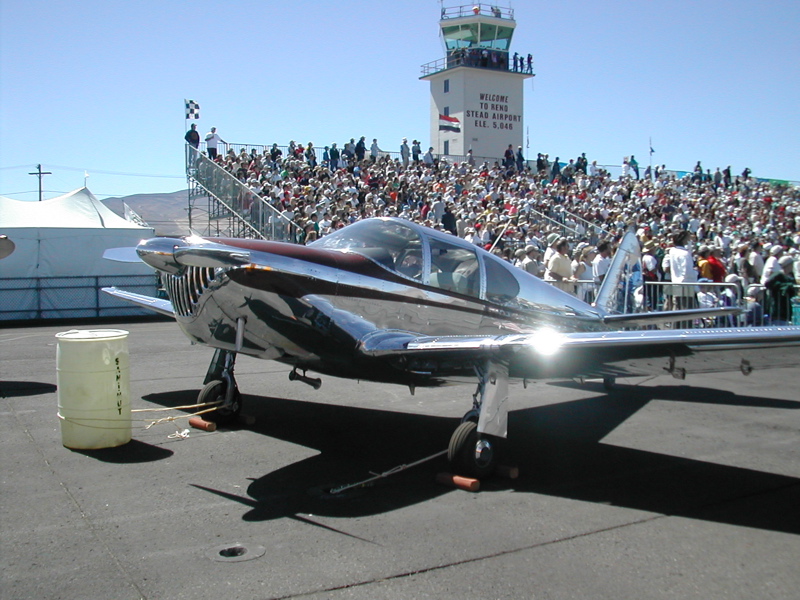 i
iSpecifications
MOSAIC eligiblePerformance
Cruise
122KTAS
Range
445nm
Climb
1000fpm
Ceiling
16,000ft
Fuel Burn
Not verified
Fuel Cap.
28gal
MPG
—mpg
Stall (Vs0)
42KIAS
T/O roll
684ft
Ldg roll
381ft
Size & weight
Seats
2
Useful Load
600lbs
Full-fuel payload
433lbs
Max gross
1,710lbs
Wingspan
29.3ft
Length
20.9ft
Engine
Engine
Continental C-125-1 / C-125-2
Power
125hp
TBO
1,200hrs
Overhaul
—
Owning it
Hull insurance
$2k/yr
Parts
good
Mechanics
specialist
Gear
Retractable
IFR
No
Category
certified
Full specification
V-speeds
Airframe
- Empty weight
- 1,110 lbs
- Max fuel weight
- 167 lbs
- Height
- 6.1 ft
- Wing position
- low
Paperwork
- Type certificate
- A-766
- Certification basis
- CAR 4a
These figures are typical for the model, not a specification for any individual aircraft. Real-world numbers vary with year, installed equipment, weight, modifications and engine condition — often by more than you would expect. Use them to compare types, and confirm anything you would act on against the Pilot's Operating Handbook for that specific airframe and a prebuy inspection.
Pricing
Typical
$65k
Range
$35k – $110k
Annual all-in
~$14k/yr
All-in at ~100 flying hours a year, using the midpoint of each range — the same figures broken out under “Cost to own” below. Your number will differ, and mostly for two reasons. Experience sets your insurance: a 2,000-hour pilot with recent training pays 30–40% less than a 200-hour owner, and student owners pay 20–40% more — on the same aircraft that is often a doubling. Location sets your hangar: a T-hangar runs $200–400 a month in the Midwest against $400–1,500 in a coastal metro, and an outside tie-down is less again. Engine reserves move too — a local shop reusing your serviceable cylinders can come in 30–50% under the national specialty-shop pricing we quote, though you trade the warranty and turnaround that comes with it. Reserves are money set aside toward a future overhaul, not a bill this year, and the annual inspection figure is the shop’s labor to look — whatever they find is separate.
Cost to own — fixed costs only
No handbook figures for this airplane give a fuel burn, so the fuel, per-hour and per-mile estimates cannot be computed. What follows is what ownership costs before you fly it — these do not change with hours.
Fuel, maintenance and the engine reserve are on top of this and rise with every hour flown — on a comparable airplane they typically exceed the fixed costs at around 100 hours a year. The page above says which document would supply the missing figures.
Strengths
- Exceptional ramp appeal and handling—sporty, honest, bubble canopy, true owner's airplane
- Strong community and parts support via Swift Museum Foundation (type-certificate holder)
- Affordable entry point to retractable-gear, all-metal classic (~$65k stock)
- Crisp roll response and tight stall characteristics; rewarding for VFR weekend flying
Weaknesses
- Stock 125 hp engine is slow (122 KTAS) and parts are now scarce; most surviving airframes have been re-engined
- Landing gear system is complex, leak-prone, and demands specialist maintenance; many unique components
- Short-coupled tailwheel geometry and narrow gear track require sharp tailwheel skills; punishes sloppy crosswind landings
- Limited useful load (600 lb stock) and baggage (100 lb); two seats only, no realistic cross-country or business mission
Overview
This page's frontmatter describes the stock GC-1B: Continental C-125, 125 hp, 1,710 lb gross, fixed-pitch or controllable propeller per the factory options list -- not a "Super Swift" conversion, and not the GC-1A. See Variants below for the GC-1A and the umbrella of aftermarket engine conversions, each with materially different numbers.
The Globe Swift is a sleek, all-metal, two-seat, retractable-gear, low-wing taildragger produced from 1946 to 1951. Designed by K.H. "Bud" Knox and first flown in January 1945, the GC-1A received its type certificate on 7 May 1946. With its bubble canopy, flush-riveted skin, and fighter-like lines, the Swift was marketed as a civilian equivalent to the wartime fighters returning pilots had been flying -- and its handling lived up to the look.
Production was split between Globe Aircraft Company in Fort Worth and Texas Engineering & Manufacturing Company (TEMCO), which was originally brought in as a subcontractor. When Globe slid into bankruptcy in 1947 after massive over-production outpaced demand, TEMCO acquired the type certificate, tooling, and remaining inventory and continued production through 1951. Total production was roughly 1,521 airframes: approximately 408 GC-1As with the 85 hp Continental C-85, and around 833 GC-1Bs with the 125 hp Continental C-125 (504 by Globe, 329 by TEMCO), plus continued TEMCO production.
The Swift is the definitive "owner's airplane." Fewer than 700 remain on the U.S. registry, and the type is sustained almost entirely by the Swift Museum Foundation, which purchased the type certificate and tooling from Univair in the early 1980s -- making it the only type club in the world to own its aircraft's TC (confirmed directly from TCDS A-766's own Type Certificate Holder Record: Globe -> TEMCO (1947) -> Universal Aircraft Industries (1956) -> Univair (1966) -> Swift Museum Foundation, Inc. (1980)). Swifts today are overwhelmingly owned by enthusiasts who value sporty handling, ramp appeal, and community more than speed-per-dollar efficiency. See Ryan Navion for the other North American post-war all-metal retractable, and Beechcraft Bonanza 35 V-tail (Early) for the four-seat contemporary that dominated the market the Swift could not.
SPLITTING-RULE FINDING, unresolved this session, not executed. The GC-1A (85 hp, 1,570 lb) and GC-1B (125 hp, 1,710 lb) share this page. Gross weight spread is 8.9% -- under Step 2's 15% threshold, no split on that ground alone. Horsepower differs by 47%, which is not itself a Step-2 field, but no source obtained this session states the GC-1A's actual cruise speed, range or climb -- Jane's 1947 was read only for the GC-1B. Whether the GC-1A crosses the 15% cruise-speed threshold cannot be tested with the sources this session found, and is left as an open question for a future pass rather than guessed at. The much larger spread on this page -- stock 125 hp vs. a 210 hp "Super Swift" conversion, 155-180 KTAS vs. 122 KTAS, a >40% cruise gap -- is NOT a splitting-rule question at all: STCs are never a certificated variant (runbook rule 32) and are correctly handled in prose/STC sections, not as a second frontmatter.
Variants & History
| Variant | Years | Engine | HP | Gross Wt (lb) | Built | Notes |
|---|---|---|---|---|---|---|
| GC-1A | 1946 | Continental C-85-12 or -12F | 85 | 1,570 | ~408 | Original model; underpowered, sluggish climb. TCDS max weight confirmed 1,570 lb. |
| GC-1B (Globe) | 1946-1947 | Continental C-125-1 or -2 | 125 | 1,710 | ~504 | Six-cylinder, "sparkling" performance vs GC-1A |
| GC-1B (TEMCO) | 1947-1951 | Continental C-125-1 or -2 | 125 | 1,710 | ~329+ | Post-bankruptcy production; identical spec |
| IO-360-D conversion (STC SA53NW) | 1950s-present | Continental IO-360-D | 210 | 1,710 (per TCDS NOTE 3 -- NOT raised by this STC) | n/a | ON the base certificate as an eligible optional engine (NOTE 3), unlike most aftermarket conversions. Certificate states NO new airspeed limits and NO weight increase for this installation alone. |
| "Super Swift" (separate weight/gross STCs) | 1950s-present | Continental O-300 / IO-360, Lycoming O-320/O-360/IO-360 | 145-220 | up to 1,970 (separate gross-weight-increase STC, not on TCDS A-766) | n/a | Umbrella term for heavily modified airframes; the 1,970 lb figure is NOT on the base certificate -- see ADs & Modifications |
Virtually every surviving Swift has been re-engined at some point. The 210 hp Continental IO-360-D is the most popular "big engine" conversion (and, per TCDS A-766 NOTE 3, is actually named on Globe/TEMCO's own certificate as STC SA53NW, not merely a third-party STC invisible to it), transforming the airplane into a genuine 160+ KTAS cruiser. Merlyn Products, the Swift Museum Foundation, and various shops hold STCs for 90, 145, 150, 180, 200, 210, and 220 hp installations, with SEPARATE gross-weight-increase STCs (not part of A-766) bringing MTOW as high as 1,970 lb.
Performance
Stock GC-1B figures are pedestrian: 122 KTAS cruise (Jane's All The World's Aircraft 1947 -- no power setting or altitude stated by that source, so this is not tied to a 75% reference condition the way later GAMA-format POHs are), 445 NM range at cruising speed with no stated reserve, 16,000 ft service ceiling, 1,000 fpm rate of climb. A stock Swift is not fast -- a C-172 will keep up.
A coincidence worth flagging rather than trusting. TCDS A-766's own structural cruise limit ("Level flight or climb 140 mph (122 knots) True Ind.") happens to equal Jane's flown cruising-speed figure exactly. These are two DIFFERENT kinds of number -- one a legal never-to-be-exceeded-in-cruise-configuration limit, the other a period technical annual's reported performance -- and their agreement here is not evidence for either one; it is recorded so a future researcher does not mistake the certificate for confirmation of the performance figure or vice versa.
The airplane's reputation for real speed comes entirely from the modified examples. A 210 hp IO-360 Swift with a constant-speed prop and (separate) gross-weight STC will cruise 155-165 KTAS on 10-11 GPH and climb 1,500+ fpm off a sea-level runway -- figures reported by Plane & Pilot's own spec sheet for a modified example, not by any source behind this page's stock-GC-1B frontmatter (rule 2: never borrow a modified airplane's numbers onto the stock one).
Because no two modified Swifts are alike, published performance charts are nearly useless for the fleet. Aviation Consumer and the Swift Museum Foundation both advise buyers that POHs are scarce and that each airplane's true numbers must be established by test flight. The V-speeds above reflect the GC-1B's own type certificate and Jane's 1947 entry; modified airframes see Vne and Va ratchet upward per STC paperwork.
The Swift is crisp and honest in roll, tight in the stall (Jane's gives 48 mph / 42 KIAS landing-configuration stall), and demands respect on landing: the short-coupled tailwheel geometry and narrow main gear track make it a handful for low-time tailwheel pilots, especially in crosswinds. It is often described as "a taildragger that punishes sloppy feet."
No free Owner's Handbook or Approved Airplane Flight Manual was found for the stock GC-1B. The genuine document exists -- Avialogs, flight-manuals-online.com and Essco Aircraft all sell scanned copies of the ERCO/TEMCO Swift GC-1A/GC-1B Operations and Maintenance Handbook -- but none is free, so fuel burn, Va, Vx, Vy and best-glide speed are left blank on this page rather than invented. Buying that handbook would close these gaps outright; see the confidence note in the research session's report.
Payload & Range
With a stock 600 lb useful load and 27.8 gal (167 lb) of fuel, a GC-1B carries roughly 433 lb of people and bags with full fuel -- enough for two 180-lb occupants and 73 lb of baggage (TCDS caps baggage at 100 lb, so the practical ceiling is the lower of the two). Full fuel + two average adults leaves some but not generous margin for bags. In practice most Swift pilots depart with partial fuel for local flying and fill up only when a long leg demands it.
Range scenarios (stock GC-1B, 122 KTAS cruise, no stated reserve per Jane's 1947 -- treat conservatively):
- Full fuel, 2 pax, 73 lb bags: ~445 NM no-wind at book cruise, before any personal reserve is subtracted.
- Tabs only (half fuel), 2 pax, heavier bags: roughly half the above, a typical weekend-trip loading.
- Solo, full fuel, max baggage: the full 445 NM figure applies with the most margin.
Modified 210 hp Super Swifts with long-range tanks and a separate 1,970 lb gross STC push these numbers dramatically: full fuel + 2 pax + 100 lb bags becomes viable, and 700-800 NM legs at 160 KTAS are achievable per period press figures for modified examples. The delta between a stock Swift and a fully modified Swift on payload-range is larger than on almost any other classic type, which is why two airframes with the same tail number prefix can command 3x the price difference.
See also Ryan Navion (four-seat post-war all-metal contemporary), Beechcraft Bonanza 35 V-tail (Early) (the six-cylinder retractable that won the market), Mooney M20C Mark 21 / Ranger (efficient two/four-seat retractable), and Aircraft Valuation Methodology / GA Insurance Underwriting / Maintenance Ecosystem for cross-cutting context.

1980 Cessna 152
Honest Trainer · Mid-Time Engine · Fresh Annual
Mission Suitability
- Flight Training (2/10): Two seats, retractable gear, demanding ground handling, specialist maintenance. Useless as a primary trainer; marginal even as a tailwheel transition trainer -- see american-champion-citabria or Piper J-3 Cub instead.
- Backcountry/Bush (2/10): Low wing, small prop clearance, narrow gear, delicate belly-mounted gear doors. Emphatically not a backcountry airplane. See maule-m7 or piper-pa-18-super-cub.
- Business Travel (3/10): Two seats only, no IFR platform in stock form, limited baggage (100 lb per TCDS), marginal range. A modified 210 hp Swift can make a credible weekend-getaway machine for a couple, but it is not a business airplane.
- Aerobatics (4/10): Not certified for aerobatics, but the airframe is structurally robust and many owners do gentle aileron rolls and loops informally. The stock 125 hp lacks vertical performance; 180+ hp conversions improve this. For real aerobatics see american-champion-decathlon or pitts-s-2.
- Cross-Country (5/10): Stock GC-1B is slow and short-legged (445 NM at an unstated reserve); a 210 hp Super Swift with long-range tanks does 700-800 NM at 160 KTAS, making it a legitimate two-place tourer. Mooney M20C Mark 21 / Ranger is the faster and more efficient alternative.
- Cargo Hauling (1/10): 600 lb useful load stock, no baggage volume beyond 100 lb, no cargo door. Disqualified.
- Local Fun Flying (9/10): This is the Swift's mission. Ramp appeal, sporty handling, bubble canopy, community at every fly-in, classic warbird aesthetic for a fraction of a T-6's cost. Few airplanes are as rewarding for VFR-weekend-morning flying.
- Surveying (3/10): Poor visibility over the nose, no belly port provisions, limited loiter time. Not a survey platform.
Avionics Ecosystem
Stock Swifts shipped with minimal instruments -- airspeed, altimeter, turn-and-bank, compass. Most survivors have been updated multiple times. Typical panel tiers:
- Day-VFR budget ($35-55K airplane): Round gauges, handheld or uninstalled comm, no transponder or ADS-B compliance (grounded from Mode C veil until upgraded). Buyers should budget $4-6K for a basic tailBeacon or uAvionix ADS-B Out install.
- IFR-legal mid-tier ($60-85K): Single nav/comm, used GNS 430W, Mode S transponder with ADS-B Out, basic autopilot rare. See Avionics Pricing Reference for install costs.
- Modern sport panel ($85K+): Dynon or Garmin G3X Touch (installed under non-required-equipment AML STC), GTN 650Xi, dual-axis autopilot. Typically found on Super Swift restorations and owner-flown show airplanes.
The Swift's small panel opening (originally sized for 1946 instruments) makes modern avionics retrofits tight but not impossible.
STCs & Modifications
The Swift is one of the most STC'd airplanes in general aviation, and unusually, its most popular engine conversion is named right on the base type certificate rather than hidden from it.
- Continental IO-360-D (210 hp) conversion, STC SA53NW: Named directly in TCDS A-766 NOTE 3 as an optional engine for the GC-1B. The certificate states no new airspeed limits and NO weight increase for this engine alone -- the 1,970 lb "Super Swift" gross weight comes from a SEPARATE STC, not from SA53NW. ~+30 KTAS cruise, ~+500 fpm climb per period press figures. Install cost (engine + mount + cowl + prop + paperwork) runs $55-80K on top of base airframe.
- Lycoming O-360-A1A (per STC SA803SO) with Hartzell HC-C2YK/YR propeller (TCDS NOTE 4): Also named directly on the base certificate. Merlyn Products and Swift Museum Foundation STCs cover lower-power Lycoming conversions too, ~+15-20 KTAS over stock.
- Constant-speed propeller STCs: Hartzell and McCauley conversions per TCDS Items 10/11, typically bundled with engine upgrades.
- Gross weight increase STCs: A SEPARATE STC (not A-766 NOTE 3) raises MTOW to 1,850 or 1,970 lb depending on engine. Essentially required to realize the benefit of the big-engine conversions.
- Fuel capacity increase: Long-range tanks bringing total capacity above the certificated 27.8 gal, pushing range past 700 NM on a 210 hp airframe.
- One-piece windshield and modernized canopy: Cosmetic but common.
- Gear door deletion/simplification STCs: Improves maintenance reliability at a small speed cost.
Because paperwork discipline across 80 years of modifications varies wildly, a pre-buy must include a forensic 337/STC audit. See Aircraft Valuation Methodology for how STC pedigree affects value.

1989 Aviat Husky
Husky A-1 · Tundra Tires · Backcountry Ready
Maintenance & Support
The Swift is sustained by the Swift Museum Foundation (Athens, TN), which holds the type certificate, the original Globe/TEMCO tooling, and the original factory drawings -- confirmed directly from TCDS A-766's own Type Certificate Holder Record. The Foundation manufactures PMA parts, maintains a parts store, operates an annual fly-in at its home field, and provides technical support via the "Monty the Answer Man" archive and direct member hotline. Foundation membership is effectively required to purchase PMA parts.
- Parts availability: Good for airframe items via the Foundation; poor for original Continental C-125 engine parts; excellent for the Lycoming and IO-360 conversions since those engines are mainstream.
- Mechanic familiarity: Specialist. A general A&P without Swift experience will struggle with the landing gear system and airframe quirks; most Swift owners travel to or ship to a known Swift shop for major work. Notable Swift specialists cluster around Athens TN, Texas, and the upper Midwest.
- Annual inspection cost: Typically $2,500-$5,000 without squawks; $8-15K is not unusual for a first annual after acquisition or for a deferred-maintenance airframe.
- Expensive items: Gear hydraulic pump overhaul ($2-4K), cylinder work on original C-125 (if parts can be found), fabric re-cover on early elevators, wing attach fitting inspections and replacement, cowling and gear door repair.
- Annual cost envelope: Budget ~$9,000-12,000/year all-in for a flying Swift (100 hr/yr), including insurance, hangar, fuel, reserves, and annual. See Maintenance Ecosystem for reference baselines. (
annual_cost_estimateis carried forward from the previous page -- it is a cost-model output computed by the supervising session, not re-derived here.)
Valuation Factors
Current market (2026) asking prices found this session: $63,000 (stock/lightly modified, the page's own synced Trade-A-Plane listing), $84,500 (180 hp Lycoming conversion, Controller.com), $109,000 (Platinum Fighter Sales) -- a thin, 3-listing sample that brackets the existing $35K-$110K band without justifying narrowing it (see the marketasking2026 passage). Key drivers per Aircraft Valuation Methodology:
- Engine installed: A stock 125 hp C-125 airframe is worth less than a run-out 210 hp IO-360 airframe. The IO-360 conversion alone can represent $40-60K of installed value.
- Time since major overhaul: With C-125 parts scarcity, a near-TBO original engine is a liability, not an asset -- the next overhaul may force a re-engine decision.
- Paperwork completeness: Clean 337/STC trail is worth 15-25% of airframe value on this type.
- Cosmetics and paint: Swifts are show airplanes; ramp appeal drives price more than on utility types. A fresh paint job in period-correct scheme adds $10-15K.
- Avionics: Modern IFR or sport panel adds $10-25K, but many buyers value a period-correct panel over glass.
- Gear door and belly condition: A Swift with straight belly skins and properly rigged gear doors commands a premium.
ADs & Common Problems
- Wing spar inspection: The Swift's two-spar wing structure has been the subject of recurring inspection ADs addressing corrosion and cracking in the main spar carry-through and attach fittings, particularly on airframes operated in coastal environments. The Swift Museum Foundation maintains inspection guidance and supplies replacement parts.
- Landing gear electro-hydraulic system: The Swift's gear retracts inward hydraulically via an electric pump. The system is reliable when maintained but has many unique components; leaks, pump failures, and sequencing gremlins are the single most common shop complaint. Budget for periodic actuator overhauls.
- Gear door rigging: Belly-mounted main gear doors are fussy to rig and prone to minor damage from hangar rash and unpaved operations.
- Tailwheel attach and rudder cables: Small tailwheel unit; cable wear is a recurring squawk.
- Control surface fabric and balance tabs (early airframes): Original fabric-covered elevators on some early GC-1As; most have been recovered or converted to metal.
- Continental C-125 parts scarcity: The original engine is long out of production and cylinders/cases are rare. This is a major reason most surviving Swifts have been re-engined.
- Pre-buy red flags: Missing 337s, undocumented engine or gross-weight STCs, corrosion in the wing root and landing gear attach area, gear system that cycles slowly or unevenly, and recent paint hiding skin issues.
Insurance Profile
The Swift sits in the vintage retractable tailwheel insurance bucket -- one of the more expensive categories for its hull value because of the combination of high claim frequency (ground-loops, gear-up landings) and specialist repair cost. Per AOPA Insurance Services and Swift Museum Foundation guidance (this session did not obtain a fresh quote -- see typical_hull_insurance_annual_usd's validator_exempt entry):
- Low-time pilot (100 hr TT, 10 hr tailwheel, 10 hr retract): ~$2,200-2,700/year on a $45K hull.
- Experienced pilot (100+ hr tailwheel, 100+ hr retract): ~$1,400-1,900/year on a $45K hull.
- Well-qualified Swift-current owner: Can drop to ~$1,100-1,400/year after three years on type with no claims.
Underwriters will typically require a minimum 5-hour checkout with a Swift-current CFI before issuing a policy, and many will mandate annual recurrent training. Hull values above $100K draw additional scrutiny. See GA Insurance Underwriting for category baselines.
For sale (0)
No listings for this model right now.
Also worth looking at
What buyers usually weigh against the Globe/Temco Swift GC-1B — aircraft flown for the same kind of mission.


