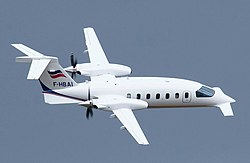
Embraer · 2009+
Embraer Phenom 300 / 300E / 300EV
 i
Specifications
Performance
Cruise
364KTAS
Range
1,970nm
Climb
—fpm
Ceiling
45,000ft
Fuel Burn
114.0gph
Fuel Cap.
799gal
MPG
3.7mpg
Stall (Vs0)
—KIAS
T/O roll
—ft
Ldg roll
—ft
Size & weight
Seats
10
Useful Load
Not verified
Full-fuel payload
—lbs
Max gross
17,968lbs
Wingspan
52.2ft
Length
51.3ft
Engine
Engine
Pratt & Whitney Canada PW535E
Power
0hp
TBO
—hrs
Overhaul
—each
Engines
2
Owning it
Hull insurance
$78k/yr
Parts
excellent
Mechanics
common
Gear
Retractable
IFR
Yes
Category
certified
Full specification
V-speeds
Airframe
- Max fuel weight
- 5,353 lbs
- Height
- 16.8 ft
- Wing position
- low
Paperwork
- Type certificate
- A60CE
- Certification basis
- Part 23
These figures are typical for the model, not a specification for any individual aircraft. Real-world numbers vary with year, installed equipment, weight, modifications and engine condition — often by more than you would expect. Use them to compare types, and confirm anything you would act on against the Pilot's Operating Handbook for that specific airframe and a prebuy inspection.
Pricing
Typical
Price unavailable
Range
No recent market listings found for this model
Annual all-in
~$270k/yr
All-in at ~100 flying hours a year, using the midpoint of each range — the same figures broken out under “Cost to own” below. Your number will differ, and mostly for two reasons. Experience sets your insurance: a 2,000-hour pilot with recent training pays 30–40% less than a 200-hour owner, and student owners pay 20–40% more — on the same aircraft that is often a doubling. Location sets your hangar: a T-hangar runs $200–400 a month in the Midwest against $400–1,500 in a coastal metro, and an outside tie-down is less again. Engine reserves move too — a local shop reusing your serviceable cylinders can come in 30–50% under the national specialty-shop pricing we quote, though you trade the warranty and turnaround that comes with it. Reserves are money set aside toward a future overhaul, not a bill this year, and the annual inspection figure is the shop’s labor to look — whatever they find is separate.
Cost to own — estimate
Set your yearly hours and local fuel price. Fixed costs (insurance, hangar, annual inspection) don't change with hours; fuel, maintenance and the engine program do.
- Fuel (114 gph)
- $68,400
- Engine program
- $75,000
- Maintenance, parts & wear items ($200/hr)
- $20,000
- Insurance
- $18,000–$45,000
- Hangar
- $21,691–$54,227
- Annual inspection (labor only)
- $28,000
- Databases & subscriptions
- $3,500
- Total per year
- $264,359
- Per flight hour
- $2,644
- Miles flown / year (at cruise)
- 41,888 mi
- Cost per mile
- $6.31/mi
- Time in the air
- 49 min
- Fuel burned
- 94 gal
- Out of pocket
- $1,347
Fuel, engine reserve and wear only. Insurance, hangar and the annual are already paid whether you make the trip or not, so they are not charged here.
Estimate, not a quote. Where a line shows a range, the total, per-hour and per-mile figures use its midpoint— insurance moves most with your experience and time in type, hangar with where you base the aircraft, so your own number could sit at either end. Annual inspection is the shop's labor to open and inspect — what they find is the maintenance line, which covers oil changes, plugs, tires, brakes, hoses, lights, a battery and vacuum pump amortised over their life, and the unscheduled squawks that are the largest and least predictable part of it. The engine line is an hourly maintenance program (JSSI, P&W ESP, Williams TAP or similar), not a reserve you control — it is a contract paid per flight hour, and enrolment transfers with the aircraft, so confirm it at prebuy.
Strengths
- 10-seat configuration (original 300) or efficient 5-occupant range on 300E/EV variants
- High-speed cruise 431–464 KTAS across variants with strong altitude capability (FL410+)
- Short-field performance: 3,209 ft takeoff, 2,212 ft landing (300E/EV)
Weaknesses
- Original Phenom 300 (2009–2017) runway performance not documented in available sources
- Modest range improvement across generations (1,970–2,055 nm); mid-size cabin vs. larger competitors
- Engine thrust increase limited to ~3.5% between PW535E and PW535E1 variants
Variants & History
| Variant | Years | Engine | Thrust (ea.) | MTOW (lb) | Mmo | High-speed cruise | Range (LRC) | Runway (T/O, SL, ISA) |
|---|---|---|---|---|---|---|---|---|
| Phenom 300 (this page) | 2009-2017 | PW535E | 3,360 lb | 17,968 | 0.78 | 431 KTAS @ FL410 | 1,970 nm (6 occ) | not found this session |
| Phenom 300E | 2018-2020 | PW535E1 | 3,478 lb | 18,387-18,551 | 0.80 | 464 KTAS | 2,010 nm (5 occ) | 3,209 ft / 2,212 ft (land) |
| Phenom 300EV (current) | 2020-present | PW535E1 | 3,478 lb | 18,551 | 0.80 | 464 KTAS | 2,055 nm (5 occ) | 3,209 ft / 2,212 ft (land) |
Sources: this page's own TCDS and FlightGlobal passages for the 2009-2017
row; the 2020 Embraer brochure and AIN pilot report for the 300E row; the
current embraer.com specification panel for the 300EV row. No document found
this session gives a maximum-weight runway distance for the original PW535E
airplane specifically -- see validator_exempt.
Across all three rows the spread is small by this catalog's splitting-rule thresholds (MTOW +3.2%, thrust +3.5%, cruise +7.7%) -- well under the 15% gross-weight and cruise-speed thresholds that would force a split, so this remains one page.
For sale (0)
No listings for this model right now.
Also worth looking at
What buyers usually weigh against the Embraer Phenom 300 / 300E / 300EV — aircraft flown for the same kind of mission.