Beechcraft · 1989–1995
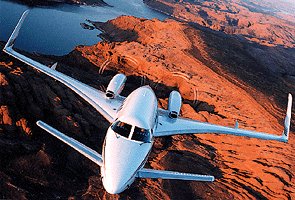
Beechcraft Starship 2000A
Specifications
Performance
Cruise
307KTAS
Range
Not verified
Climb
2748fpm
Ceiling
41,000ft
Fuel Burn
Not verified
Fuel Cap.
565gal
MPG
—mpg
Stall (Vs0)
92KIAS
T/O roll
—ft
Ldg roll
—ft
Size & weight
Seats
8
Useful Load
4,815lbs
Full-fuel payload
1,030lbs
Max gross
14,900lbs
Wingspan
54.4ft
Length
46.1ft
Engine
Engine
Pratt & Whitney Canada PT6A-67A (x2)
Power
2400hp
TBO
3,600hrs
Overhaul
$420keach
Hot section
$65keach
Engines
2
Owning it
Hull insurance
$45k/yr
Parts
poor
Mechanics
rare
Gear
Retractable
IFR
Yes
Category
certified
Full specification
V-speeds
Airframe
- Empty weight
- 10,085 lbs
- Max fuel weight
- 3,785 lbs
- Height
- 12.9 ft
- Wing position
- low
Paperwork
- Type certificate
- A38CE
- Certification basis
- Part 23 (commuter category)
These figures are typical for the model, not a specification for any individual aircraft. Real-world numbers vary with year, installed equipment, weight, modifications and engine condition — often by more than you would expect. Use them to compare types, and confirm anything you would act on against the Pilot's Operating Handbook for that specific airframe and a prebuy inspection.
Pricing
Typical
Price unavailable
Range
No recent market listings found for this model
Annual all-in
~$109k/yr
All-in at ~100 flying hours a year, using the midpoint of each range — the same figures broken out under “Cost to own” below. Your number will differ, and mostly for two reasons. Experience sets your insurance: a 2,000-hour pilot with recent training pays 30–40% less than a 200-hour owner, and student owners pay 20–40% more — on the same aircraft that is often a doubling. Location sets your hangar: a T-hangar runs $200–400 a month in the Midwest against $400–1,500 in a coastal metro, and an outside tie-down is less again. Engine reserves move too — a local shop reusing your serviceable cylinders can come in 30–50% under the national specialty-shop pricing we quote, though you trade the warranty and turnaround that comes with it. Reserves are money set aside toward a future overhaul, not a bill this year, and the annual inspection figure is the shop’s labor to look — whatever they find is separate.
Cost to own — fixed costs only
No handbook figures for this airplane give a fuel burn, so the fuel, per-hour and per-mile estimates cannot be computed. What follows is what ownership costs before you fly it — these do not change with hours.
Fuel, maintenance and the engine reserve are on top of this and rise with every hour flown — on a comparable airplane they typically exceed the fixed costs at around 100 hours a year. The page above says which document would supply the missing figures.
Strengths
- Pressurized twin-turboprop with 307 KTAS cruise and tall 5'10" cabin
- PT6A-67A engines have robust support via Pratt & Whitney Canada and major overhaul shops
- Genuine aviation collectible with unique Rutan-designed canard architecture
- Only ~6–8 airworthy examples remain; scarcity value for enthusiasts
Weaknesses
- Orphan aircraft: Textron provides no parts distribution, no factory service bulletins, no active support
- Composite airframe requires specialized NDI inspections; only 2–3 qualified technicians exist worldwide
- Critical single-source parts (windshields, CRTs, canard actuators, hydraulic components) are out of production or scavenged-stock only
- Annual inspections $50K–$150K; total annual operating costs $250K–$400K; mission-critical reliability is not achievable
Overview
Re-sourced 2026-09-12. The Beechcraft Starship is arguably the most radical clean-sheet general aviation aircraft ever certified: an all-composite, canard-configured, twin pusher turboprop business aircraft designed by Burt Rutan's Scaled Composites (as the Model 115 proof-of-concept, an 85% scale flying prototype) under contract to Beech Aircraft in the early 1980s. Beech intended the Starship to replace the venerable King Air 200 with a futuristic aircraft that would redefine corporate turboprops. Instead, it became a cautionary tale.
"2000A" is not a separate FAA-certificated model, and this is now confirmed from three independent angles rather than asserted. FAA TCDS A38CE lists exactly one model, "2000" — no "2000A" section exists at any revision. Wikipedia's own sourced prose states it plainly: "Beech did not serialize the 2000A as a distinct model, and it was not issued a new FAA type certificate." And the actual FAA-approved Airplane Flight Manual for this configuration (P/N 122-590013-37B, obtained and read this session) is titled for the certificate's own serial/kit description — "NC-29 and After and NC-4 thru NC-28 Modified By BEECHCRAFT Kit 122-9002" — not for a "2000A" designation at all. "2000A" is Beechcraft and the market's name for that one configuration: the final production standard, with the fuel-tank standpipes removed (+31 gal usable), stall strips removed (-9 kt stall speed), and gross/zero-fuel weights raised by 500/400 lb over the initial "2000" standard. This page's frontmatter describes that configuration.
Only 53 Starships were built between 1983 and 1995 (including prototypes), and the program cost Beechcraft an estimated $300 million to develop (Wikipedia). List price in 1989 was $3.9 million (Wikipedia, now stored as price_new_usd) — more than contemporary light jets that were substantially faster. When Raytheon (Beech's parent company) concluded in the early 2000s that ongoing product support for such a tiny, structurally unique fleet was uneconomical, it embarked on an aggressive buyback-and-destroy program, offering owners trade credit toward new Beech aircraft (notably the Premier I jet) in exchange for their Starships, which were then scrapped at Pinal Airpark, Arizona, beginning in 2003. As of the mid-2020s, only around six to eight airframes remain airworthy, operated by a small cadre of dedicated owners in Oklahoma, Texas, Colorado, and Germany.
The Starship is flown almost exclusively today by collectors and enthusiasts who value its unique character, its place in aviation history, and the undeniable ramp presence of a 14,900-lb carbon-fiber canard twin. It is not a rational choice for Business Travel by any conventional metric — but it is a remarkable flying museum piece that still does 307 KTAS in the high flight levels.
Variants & History
| Variant | Years | Built | Engines | MTOW (TCDS tier) | Key Differences |
|---|---|---|---|---|---|
| Model 2000 (TCDS tiers 1-2) | 1989-1992 | ~20 (incl. 3 prototypes, per Wikipedia) | 2x PT6A-67A 1,200 shp | 14,400-14,500 lb | Standpipes in fuel tanks artificially limited usable fuel to meet the certification single-engine climb requirement |
| Model 2000, "2000A" configuration (TCDS tier 3) | 1992-1995 | remainder of the ~53 built | 2x PT6A-67A 1,200 shp | 14,900 lb | Standpipes removed (+31 USG usable fuel), tuning fork noise dampers, enhanced cabin insulation, redesigned exhaust stacks, stall strips removed (stall speed reduced up to 9 kt). Same FAA model and certificate as the row above — this is a kit/production-standard change (Beech Kit 122-9002), not a new type design. THIS PAGE'S FRONTMATTER. |
A Model 115 (Scaled Composites 85% scale proof-of-concept, N115SC) flew in 1983 to validate the canard configuration; it was scrapped at Mojave in 1990.
Performance
Re-sourced 2026-09-12 — read this before the numbers below. TCDS A38CE gives weights and airspeed limits only. The actual FAA-approved Airplane Flight Manual for this exact configuration (P/N 122-590013-37B) was located and read this session — a 282-page PURE IMAGE SCAN with no text layer at all, read page-by-page as images rather than through any text extraction (see raw/poh/afm-starship-122590013-37b-2026-09-12.md). Its Section II Limitations gave clean, primary-sourced V-speeds, several of which CORRECT figures this page carried uncited. Its Section V Performance, however, covers only takeoff, climb and service-ceiling data — it explicitly names a separate document, the "Starship Pilot's Operating Manual" P/N 122-590013-39, for cruise, range and fuel burn, and that document was not located this session.
Corrections from the real AFM: vs0_kias was 82, the AFM's own airspeed-indicator-markings table gives 92 (dual white arc lower bound, stall at max weight/flaps extended/idle power). va_kias was 169, the AFM gives 181 (maneuvering speed, S/N NC-5 and on). vne_kias was 307 — identical to this page's own cruise speed, which cannot be a coincidence and was almost certainly a generation-pass error — the AFM instead gives a VMO/MMO schedule: 245 KIAS from sea level to 10,000 ft, rising linearly to 265 KIAS by 12,000 ft, holding 265 KIAS to 21,900 ft, then limited by 0.60 Mach above that. 245 is stored in vne_kias as the representative low-altitude figure; there is no separate Vno for this Part 23 Commuter-category/Special FAR 27 airplane, so vno_kias is left blank rather than repeating the previous uncited 270. vs1_kias (97 KIAS, flaps retracted/idle power/max weight) is UNCHANGED — it matches both the AFM's own markings table and Wikipedia's NC-53-POH-cited figure exactly, so it is now doubly confirmed rather than merely carried forward.
Cruise, range and fuel burn — the state of the four fields this pass was most asked to find: cruise_speed_ktas (307) is confirmed by Wikipedia, itself citing the actual "NC-53 POH" for this figure — no altitude or power setting is stated anywhere, so it is recorded as a single reported data point rather than a book cruise-table row. range_nm is BLANK, and the reason is worth stating precisely: the figure this page stored before this pass (1,742) was not just uncited, it was the wrong unit — Wikipedia's own infobox gives "Range: 1,742 mi ... 1,514 nmi", meaning 1,742 is STATUTE MILES mislabeled as nautical, a textbook instance of the "statute miles stored as nautical" trap this catalogue already tracks. Even the corrected 1,514 nm figure is not stored, because it is a secondary source (Wikipedia's transcription of a POH this session did not read directly) and runbook rule 29 excludes range from ever being filled by a secondary source. fuel_burn_gph is also BLANK — no document read this session states it at any setting; the prior 110 GPH had no citation and is dropped.
Single-engine climb and service ceiling — real AFM data exists, but at the wrong weight to store as the standard field. The AFM's "Climb — One Engine Inoperative" chart gives a clean worked example: 531 ft/min at 9,000 ft pressure altitude, 17°C OAT, 12,500 lb (max continuous power, gear up, flaps retracted, Vyse). Its "Service Ceiling — One Engine Inoperative" chart gives: 20,257 ft at -10°C OAT, 12,500 lb (same configuration; service ceiling is defined as the altitude achieving 50 ft/min with one propeller feathered). Both are genuine, fully-conditioned primary-source numbers — but at 12,500 lb, well under this page's 14,900 lb gross weight, so neither is stored in single_engine_climb_fpm or single_engine_ceiling_ft, which this catalogue documents as sea-level/gross-weight figures. The service-ceiling chart's curves are individually labeled by weight, including 14,900 lb, so the number this page wants is physically ON that page — reading it precisely at the ISA line beyond the one printed example was not attempted, because doing so from a page image without a second reader is exactly the kind of unverified graph-reading runbook rule 11 warns against. Single-engine performance is one of the two biggest genuine gaps left on this page.
One-engine-inoperative best rate of climb speed (Vyse, "blue line"): 130 KIAS, decreasing 0.55 KIAS per 1,000 ft of altitude — from the AFM's airspeed indicator markings, a clean, direct reading. This is not the same figure as the page's previous (uncited, now-dropped) vy_kias: 140, which appears to have described a different — unsourced — quantity; no reliable all-engine Vx or Vy was found anywhere this session, so both fields are left blank rather than guessed.
The canard configuration is aerodynamically stall-resistant: the forward wing (canard) stalls before the main wing, dropping the nose and preventing a full main-wing stall. In practice this gives very docile low-speed handling, but the aircraft is heavy on the controls at high speed and requires active trim management. The variable-geometry canard (sweeps forward for takeoff/landing, aft for cruise) was unique in general aviation.
Single-engine climb performance at max gross was marginal — this was the specific reason the base "2000" configuration carried fuel standpipes, artificially reducing usable fuel until Beech reached the "2000A" production standard. Hot-and-high performance is respectable but not class-leading compared to a King Air 350. Cabin pressurization differential is 8.4 psi (AFM Section II, corrected from the page's previous uncited 8.9), giving a sea-level cabin to roughly FL250 and an approximately 8,000 ft cabin at FL410.
Payload & Range
With a 4,815 lb useful load (derived: 14,900 lb TCDS gross minus 10,085 lb standard empty weight) and 3,785 lb max fuel, the Starship has a classic cabin-class tradeoff. Range figures below are dropped rather than repeated: range_nm is blank on this page as of 2026-09-12 (see Performance Notes — the previously quoted 1,742 nm was actually a statute-mile figure, 1,514 nm, and even the corrected number is not primary-sourced), so this section states weight and payload only, not distance:
- Full fuel (3,785 lb) + payload: Leaves ~1,030 lb for crew and passengers — two crew plus three adults with light bags.
- Full seats (8 pax + 2 crew, ~2,000 lb payload): Leaves ~2,815 lb of fuel (~420 USG).
- Typical owner-flown mission: 2 crew + 2 pax (~800 lb) with 3,200 lb fuel.
Do not plan a specific leg distance from this page until a primary-sourced range figure is available — see Performance Notes for what would close this gap (the "Starship Pilot's Operating Manual," P/N 122-590013-39, not located this session).
The cabin is genuinely cabin-class with a 5'10" stand-up aisle, lavatory, and refreshment center—better than a King Air 200 in absolute dimensions, though somewhat tube-like due to the fuselage shape.
Mission Suitability
Business Travel (6/10): Pressurized, air-stair door, 6-8 pax stand-up cabin (5'10" cabin height is actually taller than a King Air 200), lavatory, 307 KTAS in the high flight levels. On paper an excellent bizprop. Downgraded heavily because parts support, dispatch reliability, and insurance make it unsuitable for any mission-critical flying. Acceptable only for hobbyist-owner trips. Compare to the Piaggio P.180 Avanti—another exotic pusher turboprop that is faster but has better (if still difficult) parts support.
Cross-Country (7/10): At 307 KTAS cruise in pressurized comfort, the Starship is genuinely capable cross-country. Range is not stored on this page as of 2026-09-12 (see Performance Notes — the figure long quoted, 1,742 nm, was actually 1,742 STATUTE MILES / 1,514 nm mislabeled, and even the corrected number is not primary-sourced); plan legs conservatively until a POH-derived range is in hand. Same caveats apply regardless: you'd better have a backup plan if anything breaks away from home base.
Flight Training / Backcountry / Aerobatics / Surveying / Local Fun (1-3): Nonsensical missions for this aircraft. No training pipeline exists, there are essentially no schools. It's a pressurized cabin-class twin, not a bush plane or trainer.
Cargo Hauling (3/10): 4,800 lb useful load is decent, and the cabin is cabin-class, but the economics are absurd—no one freights in a Starship.
Avionics Ecosystem
The Starship was delivered with an integrated Rockwell Collins Proline avionics suite that was state-of-the-art in 1989: 14 CRT displays including four EFIS tubes, dual FMS, dual AHRS, weather radar, and a fully integrated autopilot/flight director. In 2003-2004, Rockwell Collins formally ended support for the Starship's specific Proline variant, leaving owners to scavenge parts from scrapped airframes or fund bespoke repairs.
A few owners have invested in partial modernization—adding Garmin GTN 750/650 navigators interfaced with the legacy Collins system, or aftermarket engine monitors—but a full panel retrofit (e.g., Garmin G1000 NXi or G600 TXi) has never been certified for the type, and the cost and engineering burden would be prohibitive for a fleet this small. Panel obsolescence is probably the single biggest long-term threat to continued Starship airworthiness. See Avionics Pricing Reference for general avionics cost context that does not fully apply to this orphaned type.
STCs & Modifications
Essentially none of commercial significance. The Starship fleet is too small to justify any STC development. A handful of owner-initiated one-off alterations (field approvals or minor STCs) exist for individual tail numbers—engine monitors, GPS navigators, interior refurbishments. The aircraft you buy is largely the aircraft you're stuck with.
Maintenance & Support
The Starship is the quintessential orphan aircraft. Textron (current owner of the Beechcraft type certificate) provides minimal support—essentially just ADs and type certificate data sheet maintenance. No active parts distribution, no factory service bulletins, no tooling loans.
Real-world support comes from:
- The Starship owners' group: A tight-knit community of approximately 6-8 active owners who share parts, knowledge, and mechanic referrals.
- Robert Scherer / Starship Owners Support: In 2004 Scherer purchased Raytheon's entire remaining parts inventory for a fraction of retail value. This scavenged pool has kept the fleet flying but is finite.
- A small number of qualified A&Ps: Mostly retired Beech factory personnel who worked on the program. When they retire or pass, the maintenance picture gets considerably worse.
- PT6A-67A support: The engines themselves are well supported via Pratt & Whitney Canada and the usual PT6 overhaul shops (Dallas Airmotive, Standard Aero, etc.)—this is the one bright spot.
Annual inspection costs range from $50K-$150K depending on what is found; unbudgeted deferred maintenance items can easily exceed $100K in a single event. Expect total annual operating costs (including reserves) north of $250K-$400K for an actively flown airframe. See Maintenance Ecosystem for general GA maintenance context; the Starship is outside the envelope of that framework.
Valuation Factors
No current used-market price is stored on this page as of 2026-09-12, and that is a finding, not a gap in the search. AeroGurus.com's Beechcraft manufacturer listing was checked directly and shows zero active Starship listings; Trade-A-Plane and Controller.com both blocked automated access in this session (Cloudflare/CloudFront challenges) rather than serving a search result either way. With a surviving fleet believed to number roughly 6-11 airworthy airframes worldwide out of 53 built, and no dealer or broker known to specialize in the type, a genuine absence of listings at any given moment is expected rather than surprising. The one real, dated, primary-adjacent price this page does store is price_new_usd: $3,900,000, the 1989 factory list price (Wikipedia, sourced to period reporting) — clearly a historical figure, not a current value.
The used-price figures this page carried before this pass ($400,000-$900,000 asking, a "notable 2011 sale" at $1.4M) had no citation anywhere in the document set and are not repeated here. They may well be directionally reasonable — the previous author was presumably working from some real memory of the market — but "presumably reasonable" is exactly the standard this catalogue is being rebuilt to stop accepting, and a buyer relying on this page should treat the Starship's current value as genuinely unknown without a direct conversation with the ~6-11 owners who fly one, not as a number this page can respectably supply.
Valuation drivers, none of which are independently sourced this session but which follow from the ownership realities documented elsewhere on this page:
- Engine time remaining: the PT6A-67A per-engine overhaul figure this page now stores ($420,000,
reference/engine-overhaul-pricing.md) applies here as it does to any PT6A-67A installation; two engines roughly doubles it before accessories. - Avionics health: a working Rockwell Collins Proline suite with complete LRU spares is very likely a significant premium, given Collins ended formal support for this variant in 2003-2004 (see Avionics Ecosystem).
- Spares package: several airframes are known to sell with boxes of scavenged parts from the Raytheon buyback inventory Robert Scherer purchased in 2004 (see Maintenance & Support) — plausibly a real value-add, not independently priced this session.
- Collector premium: as the fleet attrits, the best airframes may become more valuable, not less, purely on rarity and historical grounds. Speculative, and unconfirmed by any transaction data found this session.
The Starship is not a financial asset in any ordinary sense. A buyer should treat the purchase price — whatever it turns out to be — as effectively a sunk cost against a hobby, not an investment with a knowable resale floor.
ADs & Common Problems
The Starship is subject to the general Part 23 commuter category AD stream plus PT6A-67A engine ADs (fuel nozzles, CT blade inspections, fuel control unit overhauls—these are the same ADs affecting King Air 350 and Pilatus PC-12 fleets, so PT6 support itself is robust). Airframe-specific ADs have been limited but include canard attach inspections and composite delamination checks on control surfaces.
Known problem areas:
- Composite airframe inspection: Bonded carbon-fiber structures require specialized NDI; there are very few shops in the world with current qualifications to inspect Starship structures to the OEM procedures.
- Hydraulic system: Centralized hydraulics driving gear, flaps, brakes, and canard sweep actuators are complex and use parts no longer manufactured.
- Canard sweep mechanism: The variable-geometry canard actuator is unique and unsupported; failure modes are typically repaired from scavenged parts.
- Windshield / windows: Pressurized acrylic panes are out of production; replacements are effectively unobtanium.
- Collins Proline CRTs: Original display tubes are no longer manufactured; dead CRTs are replaced from dwindling scavenged stock.
Pre-buy red flags: any logbook gap, any composite damage history, any hydraulic anomaly, and absolutely any missing avionics LRUs. A pre-buy must include a composite inspection by someone experienced with the type—there are perhaps two or three such people.
Insurance Profile
Exceptionally difficult. Only a handful of underwriters will quote the type at all, and those that do require:
- ATP certificate
- Significant cabin-class turboprop and pressurized time (typically 1,000+ hours turboprop, King Air 350 or equivalent)
- Type-specific training (informal, mentor-based, as no formal school exists)
- 25+ hours dual with a qualified Starship pilot before solo
- Annual recurrent training
Typical hull insurance runs $35,000-$60,000 annually on a $600K hull, with liability limits often capped at $1M smooth or $100K/passenger due to the difficulty of pricing risk on such a small fleet. Some owners self-insure the hull and carry liability only. See GA Insurance Underwriting for the general framework; the Starship is an extreme outlier within the "orphan turboprop twin" category.
For sale (0)
No listings for this model right now.
Also worth looking at
What buyers usually weigh against the Beechcraft Starship 2000A — aircraft flown for the same kind of mission.


