Zenith Aircraft · 1984+
Zenith CH 601/650 / CH 701/750 STOL
Specifications
MOSAIC eligiblePerformance
Cruise
90KTAS
Range
400nm
Climb
1000fpm
Ceiling
14,000ft
Fuel Burn
4.5gph
Fuel Cap.
24gal
MPG
23.0mpg
Stall (Vs0)
28KIAS
T/O roll
200ft
Ldg roll
175ft
Size & weight
Seats
2
Useful Load
540lbs
Full-fuel payload
396lbs
Max gross
1,320lbs
Wingspan
27ft
Length
20.5ft
Engine
Engine
Rotax 912ULS
Power
100hp
TBO
2,000hrs
Overhaul
$13k
Owning it
Hull insurance
$1k/yr
Parts
good
Mechanics
common
Gear
Fixed
IFR
No
Category
experimental
Full specification
V-speeds
Airframe
- Empty weight
- 780 lbs
- Max fuel weight
- 144 lbs
- Height
- 7 ft
- Wing position
- high
- Auto fuel (mogas)
- Auto fuel specified by the engine maker — 91 premium
Obstacle performance
- Takeoff over 50 ft
- 500 ft
- Landing over 50 ft
- 450 ft
Paperwork
- Certification basis
- Experimental Amateur-Built / ASTM F2245 (S-LSA option)
These figures are typical for the model, not a specification for any individual aircraft. Real-world numbers vary with year, installed equipment, weight, modifications and engine condition — often by more than you would expect. Use them to compare types, and confirm anything you would act on against the Pilot's Operating Handbook for that specific airframe and a prebuy inspection.
Pricing
Typical
$65k
Range
$20k – $150k
Annual all-in
~$14k/yr
All-in at ~100 flying hours a year, using the midpoint of each range — the same figures broken out under “Cost to own” below. Your number will differ, and mostly for two reasons. Experience sets your insurance: a 2,000-hour pilot with recent training pays 30–40% less than a 200-hour owner, and student owners pay 20–40% more — on the same aircraft that is often a doubling. Location sets your hangar: a T-hangar runs $200–400 a month in the Midwest against $400–1,500 in a coastal metro, and an outside tie-down is less again. Engine reserves move too — a local shop reusing your serviceable cylinders can come in 30–50% under the national specialty-shop pricing we quote, though you trade the warranty and turnaround that comes with it. Reserves are money set aside toward a future overhaul, not a bill this year, and the annual inspection figure is the shop’s labor to look — whatever they find is separate.
Cost to own — estimate
Set your yearly hours and local fuel price. Fixed costs (insurance, hangar, annual inspection) don't change with hours; fuel, maintenance and the engine reserve do.
- Fuel (4.5 gph)
- $2,925
- Engine reserve
- $625
- Maintenance, parts & wear items ($12/hr)
- $1,200
- Insurance
- $900–$1,800
- Hangar
- $3,321–$8,303
- Annual inspection (labor only)
- $1,200
- Databases & subscriptions
- $400
- Total per year
- $13,512
- Per flight hour
- $135
- Miles flown / year (at cruise)
- 10,357 mi
- Cost per mile
- $1.30/mi
- Time in the air
- 3 hr 20 min
- Fuel burned
- 15 gal
- Out of pocket
- $158
Fuel, engine reserve and wear only. Insurance, hangar and the annual are already paid whether you make the trip or not, so they are not charged here.
Estimate, not a quote. Where a line shows a range, the total, per-hour and per-mile figures use its midpoint— insurance moves most with your experience and time in type, hangar with where you base the aircraft, so your own number could sit at either end. Annual inspection is the shop's labor to open and inspect — what they find is the maintenance line, which covers oil changes, plugs, tires, brakes, hoses, lights, a battery and vacuum pump amortised over their life, and the unscheduled squawks that are the largest and least predictable part of it. Reserves are sinking funds toward an overhaul, not a bill you pay this year — and note that a propeller is due on hours or calendar time, typically six years, so flying less does not put it off forever.
Strengths
- Extraordinary STOL capability (200 ft takeoff/landing rolls)
- Lowest operating costs in aviation ($35–55/hour all-in)
- Builder-friendly all-metal construction (400–600 build hours)
- Excellent factory support and parts availability
Weaknesses
- Slow cruise speed (90 KTAS) limits cross-country utility
- Low useful load (540 lbs standard) restricts payload
- Build quality varies significantly among homebuilts
- All-metal construction requires corrosion management in coastal/humid climates
Overview
Zenith Aircraft Company (Mexico, Missouri, founded by Chris Heintz) produces some of the most affordable and builder-friendly kit aircraft available. The product line splits into two families: the CH 601/650 Zodiac low-wing cruisers and the CH 701/750 STOL high-wing bush planes. Together, over 2,000 kits have been sold with approximately 1,000+ flying worldwide.
The CH 701 (1986) introduced full-span leading-edge slats and massive flaperons to the homebuilt market, producing stall speeds as low as 26-28 KIAS — among the lowest of any powered aircraft. The CH 750 STOL (2008) enlarged the design for LSA compliance (1,320 lbs gross) while maintaining extraordinary short-field performance. The CH 750 Super Duty (2013) further expanded the envelope to 1,900 lbs gross with engines up to 230HP.
Zenith kits are designed for first-time builders. All-metal construction using pop rivets and simple tooling means build times of 400-600 hours — among the fastest in kit aviation. Chris Heintz's philosophy: simple, rugged, and accessible.
The CH 650 low-wing cruiser is the speed-oriented counterpart — same construction philosophy but optimized for efficient cross-country rather than STOL.
Variants & History
CH 701/750 STOL Family (high-wing):
| Variant | Years | Engine | HP | Gross Weight (lbs) | Key Features |
|---|---|---|---|---|---|
| CH 701 STOL | 1986-present | Rotax 582/912 | 64-100 | 1,100 | Original; 27' span; leading-edge slats; 870+ built |
| CH 750 STOL | 2008-present | Rotax 912ULS | 100 | 1,320 | Enlarged CH 701; wider cabin; LSA compliant |
| CH 750 Cruzer | 2012-present | Rotax 912ULS/UL Power | 100-130 | 1,320 | Speed-optimized variant; no slats; cleaner lines |
| CH 750 Super Duty | 2013-present | IO-375/O-360 | 150-230 | 1,900 | Heavy-duty; larger engine; 800 lbs useful load |
CH 601/650 Zodiac Family (low-wing):
| Variant | Years | Engine | HP | Gross Weight (lbs) | Key Features |
|---|---|---|---|---|---|
| CH 601 Zodiac | 1984-2000s | Rotax 912/O-200 | 80-100 | 1,200 | Low-wing; 27' span; all-metal |
| CH 650 | 2005-present | Rotax 912ULS/UL Power | 100-125 | 1,320 | Improved Zodiac; LSA compliant; 138 MPH cruise |
The CH 750 STOL's leading-edge slats are its signature feature — they deploy automatically at high angles of attack, energizing the boundary layer and delaying stall to remarkably low speeds. Combined with full-span flaperons (combined flaps/ailerons), the STOL capability is extraordinary for an all-metal kit aircraft.
Performance
CH 750 STOL (Rotax 912ULS, 100HP): Cruises at 90 KTAS (104 MPH) on 4.5 GPH. The 24-gallon fuel tank provides approximately 400 nm range at cruise. Stall speed of 28 KIAS with slats deployed and flaperons down is extraordinary — barely above walking speed. Takeoff ground roll of 200 feet at gross weight; landing roll of 175 feet. Rate of climb at 1,000 FPM is adequate for the mission.
CH 701 STOL (Rotax 912, 80HP): Even slower and more STOL-capable. Cruise at 70 KTAS on 3.5 GPH. Stall as low as 26 KIAS. Takeoff and landing rolls under 150 feet. This is as close to helicopter-like field performance as a fixed-wing aircraft gets.
CH 750 Super Duty (IO-375, 205HP): Cruises at 91 KTAS (105 MPH) on 9 GPH. The higher gross weight (1,900 lbs) and 800 lbs useful load make it a genuine utility aircraft. Rate of climb at 1,350 FPM. The Super Duty sacrifices some of the ultra-STOL capability for payload, but takeoff rolls remain under 300 feet.
CH 650 (Rotax 912ULS, 100HP): The cruiser — 120 KTAS (138 MPH) on 4.5 GPH. The low-wing, clean design trades STOL for speed. 27-gallon fuel tank provides approximately 500 nm range.
Payload & Range
CH 750 STOL (Rotax 912ULS, 100HP, 24 gal fuel):
| Scenario | Fuel (gal) | Fuel Weight (lbs) | Payload (lbs) | Pax + Bags | Range (nm) |
|---|---|---|---|---|---|
| Full fuel, 2 pax | 24 | 144 | 396 | 2 × 180 + 36 bags | 400 |
| Full fuel, 2 large pax | 24 | 144 | 396 | 2 × 198 + 0 bags | 400 |
| Reduced fuel, 2 large pax | 18 | 108 | 432 | 2 × 200 + 32 bags | 280 |
CH 750 Super Duty (IO-375, 205HP, 30 gal fuel):
| Scenario | Fuel (gal) | Fuel Weight (lbs) | Payload (lbs) | Pax + Bags | Range (nm) |
|---|---|---|---|---|---|
| Full fuel, 2 pax | 30 | 180 | 620 | 2 × 200 + 220 cargo | 300 |
| Full fuel, solo + max cargo | 30 | 180 | 620 | 1 × 200 + 420 cargo | 300 |
The CH 750 STOL's 540 lbs useful load is tight for two larger adults — two 180-lb pilots with full fuel have only 36 lbs for bags. Two 200-lb adults need to reduce fuel. The Super Duty solves this with 800 lbs useful load, carrying two 200-lb adults with 220 lbs of cargo and full fuel for 300 nm. The Zenith trade-off is clear: extraordinary STOL capability and low cost in exchange for modest speed and payload.
Mission Suitability
- Flight Training (7): Excellent for teaching STOL techniques and basic piloting. The extreme low stall speed provides a wide margin for students. The CH 750's forgiving slow-flight characteristics make it ideal for learning. S-LSA versions available for commercial flight schools. Very low operating cost.
- Backcountry (8): Outstanding STOL capability — 200-foot takeoff and landing rolls put the CH 750 in elite backcountry territory. High wing, sturdy fixed gear, and simple construction handle rough strips well. Limited by useful load (540 lbs) compared to heavier bush planes, and 90 KTAS cruise means slow transit to remote areas.
- Business Travel (1): 90 KTAS, two seats. Not a business aircraft.
- Aerobatics (1): Not aerobatic. Utility category only.
- Cross-Country (2): 90 KTAS cruise and 400 nm range are limited for cross-country. Adequate for local/regional trips. The CH 650 at 120 KTAS is better for cross-country but still modest.
- Cargo Hauling (2): 540 lbs useful load in a light airframe. The Super Duty at 800 lbs useful load is more capable.
- Local Fun Flying (9): Outstanding. The CH 750 is an aerial playground — every short grass strip, sandbar, and field becomes a landing option. The ultra-low stall speed provides enormous safety margin. Affordable to build ($20,000-$40,000 for a basic kit) and operate ($35-$50/hour). One of the most accessible paths to aircraft ownership.
- Surveying (5): High wing provides good downward visibility. Low stall speed enables slow observation passes. Endurance at 4.5 GPH is reasonable. Decent light survey platform.
Avionics Ecosystem
- Budget VFR ($3,000-$6,000): Basic instruments, handheld GPS, single comm radio. Many Zenith builders keep panels minimal to save weight and cost.
- Standard panel ($8,000-$15,000): Dynon D10A or Garmin G5, GPS navigator, ADS-B transponder.
- Glass panel ($15,000-$25,000): Garmin G3X Touch or Dynon SkyView. Overkill for most CH 750 missions but available.

2009 Van's RV-7
RV-7 · Fast + Aerobatic · Dynon Glass · Great First RV
STCs & Modifications
Experimental amateur-built — no STCs required.
- Engine options: Rotax 912UL (80HP), Rotax 912ULS (100HP), Rotax 914 turbo (115HP), Jabiru 3300 (120HP), UL Power (100-130HP), Continental O-200 (100HP). For Super Duty: IO-375 (205HP), O-360 (180HP), Viking (130HP).
- Tundra tires: Bush wheels and oversize tires for backcountry operations.
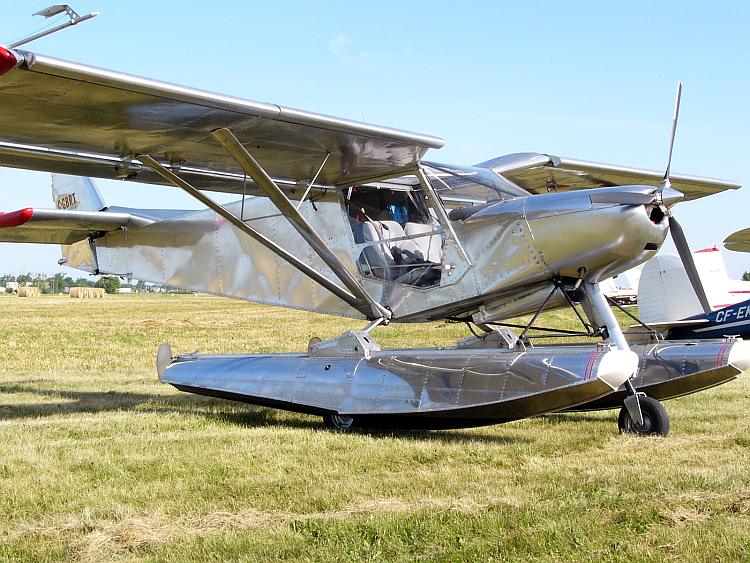
- Float installations: Amphibious and straight floats available. CH 750 on floats at 1,430 lbs gross.
- Extended range fuel tanks: Builder options for additional fuel capacity.
Maintenance & Support
- Condition inspection: $400-$800/year. Simple all-metal construction makes inspection straightforward.
- Rotax 912 overhaul: $12,500 at 2,000-hour TBO.
- Parts availability: Good. Zenith Aircraft in Mexico, Missouri maintains factory support. All-metal construction means raw aluminum is always available.
- Mechanic familiarity: Common. Simple construction accessible to most A&Ps.
- Annual all-in cost: $4,000-$7,000 at 100 hours/year. Among the lowest in aviation.
- Operating cost: $35-$55/hour all-in. Auto fuel compatible (Rotax). Arguably the cheapest powered aircraft to own and operate.
Valuation Factors
- CH 701 (1986-2008, 64-100HP): $15,000-$45,000. Older, smaller design. Build quality is everything.
- CH 750 STOL (2008-present, 100HP): $35,000-$100,000. Most popular model. Well-built with Rotax 912ULS $60,000-$100,000.
- CH 750 Cruzer (2012-present, 100-130HP): $40,000-$110,000. Speed variant.
- CH 750 Super Duty (2013-present, 150-230HP): $60,000-$150,000. Premium for larger engine and higher gross weight.
- CH 650 (2005-present, 100HP): $30,000-$80,000. Low-wing cruiser.
- New kit: $20,000-$35,000 for airframe kit. Complete with engine and instruments $50,000-$75,000.
Per Aircraft Valuation Methodology: Build quality is primary. Engine type and condition matter — Rotax 912ULS ($12,500 overhaul) vs Jabiru ($8,000) vs Lycoming ($22,000). Avionics are a minor value factor on most Zenith builds. Landing gear condition (rough strip wear) is important for STOL models. The Zenith's value proposition is affordability — buyers are typically price-sensitive.
ADs & Common Problems
No ADs (experimental category).
Common Problems:
- Leading-edge slat binding (CH 701/750 STOL): The automatic slats can stick or bind if not properly maintained. Regular lubrication and inspection of slat tracks required.
- Build quality variation: Pop-rivet construction is accessible for beginners but quality varies. Some early builder errors include incorrect rivet spacing and inadequate sealant.
- Fabric vs metal: The CH 701/750 is all-metal — no fabric to maintain. However, all-metal construction means dents and hangar rash are permanent without metalwork repair.
- Engine cooling: Same as other kit aircraft — baffling quality depends on the builder. Rotax engines with liquid cooling are less affected than air-cooled options.
- Landing gear: The fixed spring gear is robust but can develop fatigue cracks from rough field operations. Regular inspection at landing gear attach points.
- Corrosion: All-metal aluminum structure requires proper treatment in coastal or humid environments.
Insurance Profile
Per GA Insurance Underwriting:
- Hull + liability: $800-$1,500/year for typical hull values ($30K-$80K).
- Liability only: $300-$500/year.
- Low hull values keep insurance affordable. The Zenith's slow speeds and forgiving handling contribute to a good safety record.
For sale (0)
No listings for this model right now.
For sale elsewhere (17)
Current ads on Barnstormers, checked daily. Photos, full details and the seller are on the listing site.
Zenith CH 601/650 / CH 701/750 STOL
Listed on BarnstormersZenith CH 601/650 / CH 701/750 STOL
Listed on BarnstormersZenith CH 601/650 / CH 701/750 STOL
Listed on Barnstormers2012 Zenith CH 601/650 / CH 701/750 STOL
Listed on Barnstormers2009 Zenith CH 601/650 / CH 701/750 STOL
Listed on BarnstormersEngine monitor
View photos and full ad on Barnstormers ↗2002 Zenith CH 601/650 / CH 701/750 STOL
Listed on BarnstormersADS-B Out · Garmin GTX 327/320 · uAvionix skyBeacon/tailBeacon
View photos and full ad on Barnstormers ↗Zenith CH 601/650 / CH 701/750 STOL
Listed on BarnstormersZenith CH 601/650 / CH 701/750 STOL
Listed on BarnstormersGarmin GTR 200/225 / SL40 · Intercom · Vortex generators
View photos and full ad on Barnstormers ↗Zenith CH 601/650 / CH 701/750 STOL
Listed on BarnstormersADS-B In · ADS-B Out · Dynon SkyView
View photos and full ad on Barnstormers ↗Zenith CH 601/650 / CH 701/750 STOL
Listed on BarnstormersADS-B Out · uAvionix AV-30 · Garmin GTR 200/225 / SL40 · Bendix/King KT 76
View photos and full ad on Barnstormers ↗2021 Zenith CH 601/650 / CH 701/750 STOL
Listed on BarnstormersADS-B Out · Autopilot (unspecified) · Garmin G3X Touch · Garmin GTR 200/225 / SL40
View photos and full ad on Barnstormers ↗Zenith CH 601/650 / CH 701/750 STOL
Listed on BarnstormersDynon SkyView
View photos and full ad on Barnstormers ↗Zenith CH 601/650 / CH 701/750 STOL
Listed on BarnstormersAutopilot (unspecified) · Dynon SkyView
View photos and full ad on Barnstormers ↗Zenith CH 601/650 / CH 701/750 STOL
Listed on BarnstormersADS-B In · ADS-B Out · Dynon SkyView · Engine monitor
View photos and full ad on Barnstormers ↗2020 Zenith CH 601/650 / CH 701/750 STOL
Listed on BarnstormersEngine monitor
View photos and full ad on Barnstormers ↗Zenith CH 601/650 / CH 701/750 STOL
Listed on BarnstormersADS-B Out · Autopilot (unspecified) · Engine monitor
View photos and full ad on Barnstormers ↗Zenith CH 601/650 / CH 701/750 STOL
Listed on BarnstormersAlso worth looking at
What buyers usually weigh against the Zenith CH 601/650 / CH 701/750 STOL — aircraft flown for the same kind of mission.


