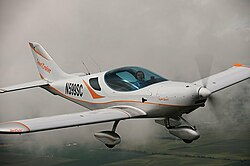
Remos · 2006–2023
Remos GX / GXiS

Specifications
MOSAIC eligiblePerformance
Cruise
102KTAS
Range
790nm
Climb
1000fpm
Ceiling
15,000ft
Fuel Burn
3.5gph
Fuel Cap.
22gal
MPG
33.5mpg
Stall (Vs0)
38KIAS
T/O roll
615ft
Ldg roll
764ft
Size & weight
Seats
2
Useful Load
570lbs
Full-fuel payload
438lbs
Max gross
1,320lbs
Wingspan
27.6ft
Length
20ft
Engine
Engine
Rotax 912ULS / 912iS Sport
Power
100hp
TBO
2,000hrs
Overhaul
$14k
Owning it
Hull insurance
$1k/yr
Parts
fair
Mechanics
specialist
Gear
Fixed
IFR
No
Category
light sport
Full specification
V-speeds
Airframe
- Empty weight
- 705 lbs
- Max fuel weight
- 132 lbs
- Height
- 7.5 ft
- Wing position
- high
- Auto fuel (mogas)
- Auto fuel specified by the engine maker — 91 premium
Obstacle performance
- Takeoff over 50 ft
- 1,053 ft
- Landing over 50 ft
- 1,050 ft
Paperwork
- Certification basis
- ASTM F2245 (S-LSA)
These figures are typical for the model, not a specification for any individual aircraft. Real-world numbers vary with year, installed equipment, weight, modifications and engine condition — often by more than you would expect. Use them to compare types, and confirm anything you would act on against the Pilot's Operating Handbook for that specific airframe and a prebuy inspection.
Pricing
Typical
$95k
Range
$55k – $175k
Annual all-in
~$13k/yr
All-in at ~100 flying hours a year, using the midpoint of each range — the same figures broken out under “Cost to own” below. Your number will differ, and mostly for two reasons. Experience sets your insurance: a 2,000-hour pilot with recent training pays 30–40% less than a 200-hour owner, and student owners pay 20–40% more — on the same aircraft that is often a doubling. Location sets your hangar: a T-hangar runs $200–400 a month in the Midwest against $400–1,500 in a coastal metro, and an outside tie-down is less again. Engine reserves move too — a local shop reusing your serviceable cylinders can come in 30–50% under the national specialty-shop pricing we quote, though you trade the warranty and turnaround that comes with it. Reserves are money set aside toward a future overhaul, not a bill this year, and the annual inspection figure is the shop’s labor to look — whatever they find is separate.
Cost to own — estimate
Set your yearly hours and local fuel price. Fixed costs (insurance, hangar, annual inspection) don't change with hours; fuel, maintenance and the engine reserve do.
- Fuel (3.5 gph)
- $2,275
- Engine reserve
- $700
- Maintenance, parts & wear items ($12/hr)
- $1,200
- Insurance
- $900–$2,400
- Hangar
- $3,312–$8,280
- Annual inspection (labor only)
- $1,200
- Databases & subscriptions
- $400
- Total per year
- $13,221
- Per flight hour
- $132
- Miles flown / year (at cruise)
- 11,738 mi
- Cost per mile
- $1.13/mi
- Time in the air
- 2 hr 56 min
- Fuel burned
- 10 gal
- Out of pocket
- $123
Fuel, engine reserve and wear only. Insurance, hangar and the annual are already paid whether you make the trip or not, so they are not charged here.
Estimate, not a quote. Where a line shows a range, the total, per-hour and per-mile figures use its midpoint— insurance moves most with your experience and time in type, hangar with where you base the aircraft, so your own number could sit at either end. Annual inspection is the shop's labor to open and inspect — what they find is the maintenance line, which covers oil changes, plugs, tires, brakes, hoses, lights, a battery and vacuum pump amortised over their life, and the unscheduled squawks that are the largest and least predictable part of it. Reserves are sinking funds toward an overhaul, not a bill you pay this year — and note that a propeller is due on hours or calendar time, typically six years, so flying less does not put it off forever.
Strengths
- Excellent fuel economy (3.5 GPH on GXiS) and low operating costs
- Benign stall characteristics and forgiving handling for training
- Folding-wing design enables single-hangar storage
- Ballistic parachute (BRS) standard equipment for safety margin
Weaknesses
- Remos production ceased; parts sourcing now requires Germany imports with 3–8 week lead times
- Limited mechanic network outside active LSA communities (Florida, California, Texas)
- Composite airframe vulnerable to UV damage and delamination; repairs require specialist knowledge
- Only 2 seats and ~570 lbs useful load severely limits mission flexibility
Overview
The Remos GX is a German high-wing, two-seat light sport aircraft built by Remos AG of Pasewalk, Mecklenburg-Western Pomerania. Its defining characteristic is an all-carbon-fiber monocoque airframe — fuselage, wing, and tail surfaces — combined with a practical folding-wing system that allows single-hangar storage alongside a full-size aircraft. The GX line descends from the 1997 G-3 Mirage, an ultralight/kit design from Germany's farm-based cottage industry, but the GX proper arrived in 2006 as a purpose-built U.S. S-LSA with a fully composite wing replacing the earlier fabric-covered surface.
Remos positioned the GX squarely against the flight training market, touting its useful load (650 lbs on the carbureted GX, 570 lbs on the heavier GXiS), easy ground handling — one person can push it on its nose gear — and a benign stall that mushes rather than snaps. Flight schools appreciated the tail-strike protection built into the empennage design and the well-harmonized, light control forces. By 2009 over 300 aircraft of all variants had been sold worldwide, roughly half in Europe.
The 2016 GXiS introduced the Rotax 912 iS Sport fuel-injected engine and the "SMARTstart" automated startup system, reducing the pre-start checklist from 14+ steps to a button push. The iS engine achieves approximately 10% lower fuel burn than the carbureted 912ULS, bringing real-world consumption to 3.5 GPH at cruise. An available DUC Hélices three-blade composite propeller gave the GXiS a quieter cabin and improved the initial climb feel.
Remos AG was acquired by Stemme AG in April 2017; the GX continued in production at Pasewalk under Stemme's ownership through approximately 2023, after which new assembly ceased and the workforce transitioned to glider component manufacturing. The global fleet is estimated at 330–400 aircraft. Legacy parts and authorized service support remain available through the Stemme/Remos network and Rotax dealers, though this support picture is less robust than for higher-volume LSAs. See Maintenance Ecosystem for context on Rotax-powered LSA support generally.
Variants & History
| Variant | Years | Engine | HP | MTOW (lbs) | Key Differences |
|---|---|---|---|---|---|
| G-3 Mirage | 1999–2005 | Rotax 912 / 912ULS | 80–100 | 1,234–1,320 | Fabric-covered wing, European ultralight origin; LSA-certified for US in 2006 |
| G-3/600 | 2004–2006 | Rotax 912ULS | 100 | 1,323 | Increased MTOW variant for European market |
| GX | 2006–2016 | Rotax 912ULS | 100 | 1,320 | All-carbon wing, folding wings, dorsal fin, monocoque fuselage; core U.S. S-LSA |
| GX Aviator | 2008–2016 | Rotax 912ULS | 100 | 1,320 | Glass-panel upgrade package (dual Dynon LCD); same airframe as GX |
| GXnXt / GXnXES | 2011–2016 | Rotax 912ULS | 100 | 1,320 | Integrated avionics cockpit, revised interior; U.S. designation GXnXES |
| GX eLite | 2010–2016 | Rotax 912ULS | 100 | ~992 | European microlight category (reduced MTOW); not U.S. registered |
| GXiS | 2016–2023 | Rotax 912 iS Sport | 100 | 1,320 | Fuel-injected engine, SMARTstart, DUC 3-blade prop, revised avionics, heavier empty weight |
Note: The GXiS empty weight (705 lbs) is heavier than the earlier GX (670 lbs) due to the iS engine, three-blade prop, and revised equipment. Useful load drops accordingly from ~650 lbs to ~570 lbs.
Performance
The GX/GXiS sits near the middle of the LSA cruise pack. The carbureted GX is typically capable of 110–113 KTAS at 5,500 RPM and 4.5–5.0 GPH; the GXiS with the 912 iS runs a more conservative 100–102 KTAS at 3.5 GPH thanks to the iS engine's lean-of-peak capability. Published range figures (790 nm for GXiS) assume optimal mixture and altitude and should be treated skeptically; with 22 gallons and 3.5 GPH, practical IFR-reserve range is closer to 480–520 nm with 45-minute reserve.
The 100 HP Rotax 912 is derated to meet the 1,320 lb LSA gross weight, and this combination produces vigorous climb for a two-seat aircraft. Book rate of climb is 1,000–1,280 FPM depending on variant and conditions. Real-world pilots report 800–1,000 FPM climb with two adults and partial fuel at sea level.
Stall characteristics are a GX strength. Both variants exhibit a gentle mush rather than a sharp break; the aircraft loses altitude during an incipient stall without aggression, making recovery straightforward. VS0 of 38 KIAS meets the LSA 45-knot stall speed limit with comfortable margin.
Density altitude affects the GX/GXiS similarly to any normally-aspirated 100 HP LSA. At 5,000 feet density altitude expect to lose 20–25% of sea-level climb rate. The 15,000 ft service ceiling is theoretical; practical cross-country altitudes top out around 10,500 ft before power deficiency becomes noticeable.
The folding-wing system uses a quick-disconnect mechanism requiring two people approximately 10 minutes to fold or unfold. It adds slight airframe complexity — the wing attachment points require inspection at condition inspection intervals.
Compared to the Flight Design CT / CTLS / F2, the Remos GX is slightly slower and carries less range fuel (22 gal vs. 34 gal for the CT), but the GX's higher useful load (650 lbs on the GX vs. ~520 lbs for the CTLS) is a meaningful advantage for two heavier pilots.
Payload & Range
GXiS reference figures: Empty weight 705 lbs, MTOW 1,320 lbs, useful load 570 lbs, fuel capacity 22 gal (132 lbs max fuel weight).
Scenario 1: Two Average Adults + Full Fuel
- Pilot + passenger: 340 lbs (2 × 170 lbs)
- Full fuel: 132 lbs (22 gal)
- Combined occupant + fuel: 472 lbs
- Baggage: 98 lbs remaining
- Verdict: Workable with modest baggage. Standard touring config.
Scenario 2: Two Heavier Adults (200 lbs each) + Full Fuel
- Pilot + passenger: 400 lbs
- Full fuel: 132 lbs
- Combined: 532 lbs vs. 570 lbs useful load
- Baggage: 38 lbs remaining
- Verdict: Tight. Baggage essentially eliminated. Heavy crew should plan fuel stops.
Scenario 3: Max Payload (Minimal Fuel)
- Two 200 lb adults + 100 lbs baggage: 500 lbs
- Remaining fuel allowance: 70 lbs (≈10 gal)
- Range at 3.5 GPH: ~165 nm with reserve
- Verdict: Short-hop only; useful for instructional flying without weight concerns.
Scenario 4: Solo Cross-Country (Full Fuel)
- Solo pilot 185 lbs + full fuel 132 lbs: 317 lbs occupant/fuel load
- Baggage: 253 lbs remaining (well above any practical need)
- Range: ~480–520 nm with 45-minute reserve
- Verdict: Excellent solo tourer. The GXiS is most range-capable with a single light pilot.
Key insight: The GXiS's 570 lb useful load is 80 lbs less than the earlier carbureted GX (650 lbs), a meaningful difference for two-adult operations. Flight schools transitioning from GX to GXiS aircraft need to brief the weight difference carefully. The GXiS's ~132 lb max fuel load (22 gal) means fuel and two average adults consume nearly the entire useful load, leaving minimal baggage allowance — a structural constraint of the LSA 1,320 lb MTOW limit. For dedicated cross-country touring with two pilots, the Flight Design CT / CTLS / F2 CTLS with its 34-gallon tank and similar useful load is a stronger choice.
Mission Suitability
| Mission | Score | Rationale |
|---|---|---|
| Flight Training | 8 | Benign stall, light controls, good rudder harmony, forgiving landing characteristics, and BRS parachute standard. Tail-strike protection designed into the empennage. SMARTstart reduces cockpit workload. Widely used at sport-pilot academies. Limitation: 570 lb useful load on GXiS leaves less margin for heavy instructor + student than the earlier GX's 650 lb load. |
| Backcountry / Bush Flying | 2 | Fixed-gear, no tundra tires, composite airframe vulnerable to gravel and rough-surface FOD. Nosewheel-steering brake integration is fragile for unimproved ops. Not designed for backcountry use. |
| Business Travel | 3 | 100 KTAS cruise is slow for meaningful point-to-point travel. Limited range without a stop. No IFR certification. Two seats only. Carbon fiber airframe discourages ramp exposure. Folding wings are a novelty, not a business asset. |
| aerobatics | 1 | +4g/-2g limit is legal for mild positive-G maneuvers only. Not aerobatic-certified. Rotax 912 requires oil/fuel management for extended unusual attitudes. Not appropriate for aerobatic use. |
| Cross-Country Flying | 6 | 100 KTAS with 3.5 GPH is an excellent fuel-economy package for weekend touring. 22-gallon tank limits legs to ~480 nm with reserve. No IFR capability keeps it VFR-only. BRS parachute provides psychological comfort over remote terrain. Good cross-country machine for patient VFR pilots. |
| Cargo Hauling | 1 | Two seats, minimal baggage compartment, 570 lb useful load minus two occupants leaves ~0–50 lbs for cargo. Not a cargo aircraft. |
| Local Fun Flying | 8 | Light and responsive in the pattern, visually rewarding cockpit with excellent downward visibility (doors removable), short takeoff roll, easy to land. Fuel burn of 3.5 GPH makes hourly operating costs very low. Door removal capability is unusual and entertaining. |
| surveying | 5 | High-wing configuration, large windows, excellent downward visibility, and door removal allow good camera access. 100 KTAS is a reasonable survey speed. No IFR, no turboprop power for climb, and 22-gallon range limits endurance. Adequate for localized survey ops. |
Avionics Ecosystem
The GX/GXiS went through three avionics generations:
GX Standard (2006–2010): Steam gauge cluster supplemented by handheld GPS (Garmin GPSMap 496 mounted on dashboard) and non-certified avionics. Early production used Garmin SL30 nav/com slaved to the handheld GPS, which raised questions about IFR legal status (not IFR-certified in any configuration).
GX Aviator / GXnXES (2008–2016): Dual Dynon LCD displays — a PFD with built-in AHRS/air data and an MFD with engine monitoring. Garmin transponder, audio panel. TruTrak Vizion autopilot (non-certified; altitude hold noted as approximate in turbulence). This became the standard U.S. training configuration.
GXiS (2016–2023): Dynon SkyView generation. Standard equipment includes:
- Dynon SkyView SE (7-inch) or SV-D1000T (10-inch touchscreen) EFIS/EMS
- PS Engineering PM3000 audio panel
- Garmin GTN 750 (optional — full WAAS GPS/NAV/COM/ILS) or Garmin aera 660/795
- Dynon autopilot integrated into SkyView (wing leveler + altitude hold + GPSS)
- Air Avionics TRX-1500 ADS-B In traffic receiver
- ADS-B Out via Mode-S transponder
- BRS ballistic parachute (standard equipment, not optional)
A well-equipped GXiS with the GTN 750, 10-inch SkyView, leather interior, and autopilot reached $210,000 new. Base GXiS started at $153,495–$156,800. See Avionics Pricing Reference for Dynon SkyView and Garmin GTN retrofit pricing context.

2011 CubCrafters Carbon Cub
Carbon Cub SS · STOL Legend · Tundra Tires
STCs & Modifications
As an S-LSA, the GX/GXiS is not modified via FAA STCs. Changes to an S-LSA must be approved by the manufacturer per ASTM standards. With Remos now operating as a subsidiary of Stemme Production GmbH and no new production ongoing, manufacturer-approved modifications are effectively limited to legacy service bulletins and previously approved configurations.
Notable factory options and service bulletin modifications:
- Three-blade DUC Hélices propeller: Factory option on GXiS; reduces cabin noise and improves climb "feel" versus the standard Sensenich two-blade. Approved replacement propeller for GX variants under manufacturer service documentation.
- Rotax 912 iS Sport retrofit: Remos did not offer an iS engine retrofit for earlier GX/Aviator/GXnXES airframes as a factory option; GXiS is a distinct model with revised engine mount and fuel system.
- Wing folding mechanism: Factory standard; no modification required. Annual inspection of wing attachment points per maintenance manual.
- BRS ballistic parachute: Standard equipment on all variants. BRS recommends repacking every 10 years or after deployment. Repack cost approximately $600–$900. System adds ~27 lbs to empty weight but is not removable without voiding S-LSA compliance.
- Door removal: Factory-approved for flight; both doors can be removed legally in VFR conditions under the S-LSA operating limitations.
Maintenance & Support
See Maintenance Ecosystem for the general Rotax 912 LSA maintenance context.
Condition Inspection (Annual Equivalent): LSA regulations require a condition inspection by an FAA-authorized LSA repairman or A&P mechanic annually. For the Remos GX/GXiS, typical inspection runs $600–$1,200 depending on squawks found. Wing attachment point inspection is a GX-specific labor item that adds 1–2 hours to the standard checklist.
Rotax 912 / 912 iS Maintenance: The Rotax 912 family has 100-hour oil change intervals (more frequent than most certified aircraft engines), 600-hour gearbox inspections, and a 2,000-hour recommended TBO. In practice, well-maintained 912s routinely go 3,000–4,000 hours between major events. The 912 iS requires a Rotax-trained technician for software-related diagnostics. Factory overhaul cost: $12,000–$17,500 (exchange); top overhaul: $5,000–$8,000. See Maintenance Ecosystem.
Parts Availability: Rated fair. Rotax engine parts are globally available through BRP-Rotax and authorized dealers with minimal lead time. Airframe-specific parts (wing fittings, control cables, nose gear assemblies, cockpit trim) require ordering from Stemme Production GmbH in Germany, with typical 3–8 week lead times for non-stock items. The BRS ballistic parachute system is supported domestically by BRS Aerospace.
Mechanic Familiarity: Specialist-level. Rotax 912 is well-understood by LSA shops, but Remos-specific composite repair and airframe work requires a mechanic familiar with the aircraft type. Remos factory training exists but the network of trained shops contracted during active production. In areas with active LSA communities (Florida, California, Texas) qualified mechanics are findable; in rural markets plan on shipping the aircraft or mechanic travel costs.
Annual Cost Estimate Breakdown (GXiS, 50–75 hours/year):
| Item | Annual Cost |
|---|---|
| Condition inspection | $900 |
| Oil changes (2–3x at $80 each) | $200 |
| Fuel (65 hours × 3.5 GPH × $6.50/gal) | $1,479 |
| Engine reserve ($3/hr × 65 hrs) | $195 |
| Avionics/misc squawks | $500 |
| Hangar | $3,600 |
| Insurance | $1,600 |
| BRS repack reserve ($800 / 10 years) | $80 |
| Total | ~$8,554 |
Valuation Factors
See Aircraft Valuation Methodology for the full framework. Remos-specific considerations:
Positive value drivers:
- GXiS model with Rotax 912 iS Sport commands a 15–20% premium over carbureted GX of same year
- Garmin GTN 750 installation adds $8,000–$12,000 to market value
- BRS parachute within repack currency (vs. out-of-compliance) adds $1,500–$2,500
- Low hours (<500 SMOH) on Rotax engine adds $5,000–$8,000
- Three-blade DUC prop adds modest noise-reduction premium
- Clean maintenance logs with verified SD/MC compliance critical for buyer confidence
Negative value drivers:
- Production ended ~2023; no new comparable aircraft available from Remos creates both depreciation floor (no new competition) and ceiling (parts/support uncertainty)
- Early GX (pre-2011) with carbureted engine and steam gauges: $55,000–$80,000
- GX Aviator / GXnXES (2011–2016): $75,000–$110,000 depending on avionics and hours
- GXiS (2016–2023): $110,000–$175,000; clean low-time examples top of range
- Carbon fiber cosmetic damage (gelcoat cracks, surface repairs) materially reduces value
- Avionics approaching end of support life (older Dynon D-100 generation) reduce value $5,000–$8,000
- Out-of-annual or lapsed condition inspection: significant discount, buyer beware
Market outlook: As a discontinued German LSA with specialized parts support, the Remos GX occupies a similar niche to the Cirrus SR20 of the LSA world — premium construction, premium price, but dependent on manufacturer support infrastructure. Values have held reasonably well post-production-cessation, particularly for the GXiS, given the Rotax 912 iS parts availability through BRP-Rotax dealers globally.
ADs & Common Problems
Airworthiness Directives: As an S-LSA, the Remos GX/GXiS is not subject to FAA Airworthiness Directives in the traditional sense. The manufacturer issues Safety Directives (SDs) and Mandatory Corrections (MCs) under ASTM F2245 LSA oversight. Owners should verify current SD/MC compliance through the Stemme/Remos service network, as documentation tracking can lag for orphaned fleets.
Known Pre-Buy Red Flags:
- Wing attachment points: The folding-wing quick-disconnect system creates wear at the spar attachment fittings. Inspect for fretting, corrosion, and proper torque at every condition inspection. Previous damage from improper folding is a disqualifying finding.
- Nose gear and brake integration: The GX uses a combined throttle/brake grip system that routes brake pressure through a push-pull mechanism. Worn cables or stiff linkages produce unpredictable braking behavior. Inspect carefully.
- Carbon fiber delamination: UV-exposed composite surfaces (particularly the wing undersurface and belly) can develop surface crazing or micro-delamination. Gelcoat repairs indicate prior damage; look for repaired areas that don't match the factory surface profile.
- Rotax 912ULS carburetor icing: Carbureted GX variants (pre-GXiS) are susceptible to carb ice at temperatures and humidity combinations common in the eastern U.S. Carb heat use discipline is critical; inspect for carburetor wear from improper icing events.
- Rotax 912 gearbox: Rotax recommends gearbox inspection at 600-hour intervals. Verify logbook compliance; unreplaced gearbox seals can result in prop shaft oil loss. A gearbox overhaul runs $2,000–$4,000.
- BRS parachute currency: Verify the BRS pack date and repack compliance. An out-of-compliance BRS parachute is a maintenance squawk and a safety concern.
- Avionics integration on early GX: Non-certified avionics in the early GX Aviator configuration (handheld GPS driving certified nav receivers) creates ambiguity about system reliability. Review the avionics installation documentation carefully.
- Ownership/support gap risk: With Remos production ceased and Stemme's primary focus on motorgliders, parts sourcing for airframe-specific components (nose gear assemblies, canopy latches, wing fittings) may require importing from Germany. Budget lead time accordingly.
NTSB Accident Pattern: The GX has a modest U.S. accident record consistent with its use as a sport/training aircraft. Common causal factors in accidents include: controlled flight into terrain (VFR into IMC), stall/spin on approach (low-hour sport pilots), and hard landings due to the relatively high wing and sink-rate characteristic when flapped. No structural failures attributable to composite construction have been identified in the NTSB database.
Insurance Profile
See GA Insurance Underwriting for the full LSA insurance framework. Remos GX specifics:
Insurance Category: LSA Standard (S-LSA, composite, fixed gear, two-seat)
Typical Annual Premiums (hull value $120,000–$160,000 for GXiS):
- Sport Pilot with 100–250 hours: $1,800–$2,800/year
- Private Pilot with 300+ hours, 25+ hours in make/model: $1,200–$1,800/year
- Training operation (renter/instruction): $2,500–$4,500/year
Hull rate: Approximately 1.0–1.5% of insured value annually for qualified pilots. Carbon fiber composite construction does not carry a surcharge with major LSA underwriters, but the specialized repair requirements (epoxy composites, factory-trained shops) may increase claim costs.
Underwriting notes:
- BRS parachute system is viewed positively by some underwriters; does not typically generate a premium discount but improves insurability for lower-hour pilots
- Remos is a discontinued brand; underwriters may apply additional scrutiny to high-hull-value policies given parts sourcing complexity
- Sport Pilot certificate holders face higher premiums and lower accepted minimums; a Private Pilot certificate with instrument rating improves rates despite the aircraft being VFR-only
- Folding-wing feature requires documentation of proper pre-flight wing-lock verification in insured's operating procedures for some underwriters
For sale (0)
No listings for this model right now.
Also worth looking at
What buyers usually weigh against the Remos GX / GXiS — aircraft flown for the same kind of mission.