Liberty Aerospace · 2004–2018
Liberty XL2
Specifications
Performance
Cruise
122KTAS
Range
500nm
Climb
682fpm
Ceiling
12,500ft
Fuel Burn
5.5gph
Fuel Cap.
28gal
MPG
25.5mpg
Stall (Vs0)
44KIAS
T/O roll
900ft
Ldg roll
650ft
Size & weight
Seats
2
Useful Load
590lbs
Full-fuel payload
422lbs
Max gross
1,750lbs
Wingspan
27.9ft
Length
20.5ft
Engine
Engine
Continental IOF-240-B
Power
125hp
TBO
2,000hrs
Overhaul
$28k
Owning it
Hull insurance
$2k/yr
Parts
poor
Mechanics
rare
Gear
Fixed
IFR
Yes
Category
certified
Full specification
V-speeds
Airframe
- Empty weight
- 1,160 lbs
- Max fuel weight
- 168 lbs
- Height
- 7.7 ft
- Wing position
- low
Obstacle performance
- Takeoff over 50 ft
- 1,625 ft
- Landing over 50 ft
- 1,400 ft
Paperwork
- Type certificate
- A00009AT
- Certification basis
- Part 23
These figures are typical for the model, not a specification for any individual aircraft. Real-world numbers vary with year, installed equipment, weight, modifications and engine condition — often by more than you would expect. Use them to compare types, and confirm anything you would act on against the Pilot's Operating Handbook for that specific airframe and a prebuy inspection.
Pricing
Typical
$125k
Range
$85k – $180k
Annual all-in
~$16k/yr
All-in at ~100 flying hours a year, using the midpoint of each range — the same figures broken out under “Cost to own” below. Your number will differ, and mostly for two reasons. Experience sets your insurance: a 2,000-hour pilot with recent training pays 30–40% less than a 200-hour owner, and student owners pay 20–40% more — on the same aircraft that is often a doubling. Location sets your hangar: a T-hangar runs $200–400 a month in the Midwest against $400–1,500 in a coastal metro, and an outside tie-down is less again. Engine reserves move too — a local shop reusing your serviceable cylinders can come in 30–50% under the national specialty-shop pricing we quote, though you trade the warranty and turnaround that comes with it. Reserves are money set aside toward a future overhaul, not a bill this year, and the annual inspection figure is the shop’s labor to look — whatever they find is separate.
Cost to own — estimate
Set your yearly hours and local fuel price. Fixed costs (insurance, hangar, annual inspection) don't change with hours; fuel, maintenance and the engine reserve do.
- Fuel (5.5 gph)
- $3,575
- Engine reserve
- $1,400
- Maintenance, parts & wear items ($12/hr)
- $1,200
- Insurance
- $1,150–$3,150
- Hangar
- $3,432–$8,579
- Annual inspection (labor only)
- $1,200
- Databases & subscriptions
- $400
- Total per year
- $15,930
- Per flight hour
- $159
- Miles flown / year (at cruise)
- 14,040 mi
- Cost per mile
- $1.13/mi
- Time in the air
- 2 hr 28 min
- Fuel burned
- 14 gal
- Out of pocket
- $152
Fuel, engine reserve and wear only. Insurance, hangar and the annual are already paid whether you make the trip or not, so they are not charged here.
Estimate, not a quote. Where a line shows a range, the total, per-hour and per-mile figures use its midpoint— insurance moves most with your experience and time in type, hangar with where you base the aircraft, so your own number could sit at either end. Annual inspection is the shop's labor to open and inspect — what they find is the maintenance line, which covers oil changes, plugs, tires, brakes, hoses, lights, a battery and vacuum pump amortised over their life, and the unscheduled squawks that are the largest and least predictable part of it. Reserves are sinking funds toward an overhaul, not a bill you pay this year — and note that a propeller is due on hours or calendar time, typically six years, so flying less does not put it off forever.
Strengths
- Exceptional fuel efficiency (~5 gph) with modern FADEC simplicity
- Clean composite construction, low-wing sporty handling
- Affordable entry point to certified single-engine flying (~$125k)
- IFR-capable airframes available with glass panels
Weaknesses
- Orphan airframe — parts availability thin, lead times long
- Tiny mechanic network; composite and FADEC work requires shop willing to learn type
- Two-seat / tight payload limits cross-country utility to short hops
- Gull-wing door design: wind noise, seal wear, pinch hazard at cruise
Overview
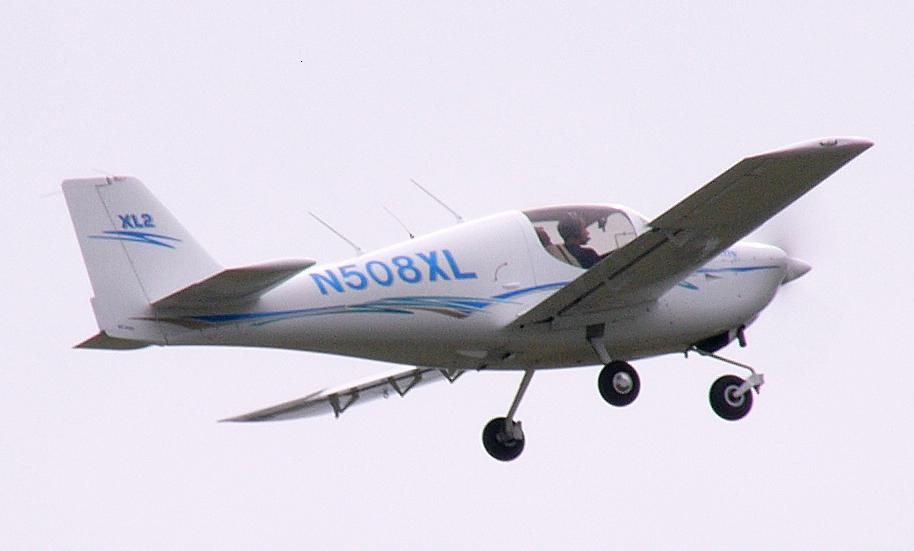
The Liberty XL2 is a two-seat, low-wing, fixed-gear certified trainer/tourer built by Liberty Aerospace in Melbourne, Florida. Conceived in the UK as the Europa XS kitplane and redeveloped into a Part 23 certified airplane, it first flew in 2001 and entered production in 2004. It is notable for being one of the few certified singles to pair a full composite fuselage (aluminum wings) with a FADEC-controlled Continental IOF-240-B burning about 5 gph. Production was small — roughly 135 airframes delivered through 2011 when Liberty Aerospace ceased operations. Discovery Aviation acquired the type certificate in 2014 and briefly resumed limited production in 2018 for a South Korean flight-school order, but the type has not returned to meaningful serial production. The XL2 is best understood as a low-cost, modern-panel trainer with distinctive gull-wing doors, a steel-tube chassis for cabin protection, and a FADEC engine that made it unusually simple to operate — single-lever power, no mixture, no carb heat. Its market reputation is a mix of admiration for the clean design and skepticism about orphan support, parts availability, and real-world utility for two adults plus bags.
Variants & History
| Variant | Years | Engine | HP | MTOW | Notes |
|---|---|---|---|---|---|
| XL2 (Liberty) | 2004–2011 | Continental IOF-240-B FADEC | 125 | 1,750 lb | Original certified production, ~135 built |
| Discovery XL-2 | 2018– | Continental IOF-240-B FADEC | 125 | 1,750 lb | Discovery Aviation limited restart; updated Garmin panels; very small numbers |
Only the one airframe configuration exists. Panel upgrades (Aspen, Garmin G500 TXi retrofits) distinguish most used-market examples far more than the formal variant line.
Performance
Book cruise is 125 KTAS but most owners report a real-world 118–122 KTAS at 75% power on about 5.5 gph — exceptional specific range for a certified single. The FADEC delivers consistent performance across altitudes without pilot mixture management, and the Continental IOF-240 is genuinely frugal. Rate of climb is modest (≈680 fpm at gross) and deteriorates quickly at high density altitude given the 125 hp and 12,500 ft service ceiling. The wood-composite MT prop on early airframes is a cruise-pitch compromise that trades climb for cruise. With a 590 lb useful load and 168 lb of fuel, the XL2 is a legitimate two-adult airplane only at reduced fuel; two 200-lb occupants leave room for 20 gal of fuel and essentially no baggage — see Payload-Range Dynamics below.
Payload & Range
With 590 lb useful load and 168 lb full fuel (28 gal usable), the XL2 is a real two-seat airplane but tight:
- Full fuel (28 gal / 168 lb) + 2×170 lb pilots = 508 lb of occupants + fuel. That leaves 82 lb for baggage and any additional occupant weight — workable for two lean pilots and light bags, with ~4.5 hours endurance and ~500 nm still-air range with reserves.
- Two 200 lb occupants + minimal (10 lb) baggage = 410 lb of cabin + 180 lb of fuel headroom = 30 gal structural, but capped at 28 gal usable. Effectively: two 200-pounders can fly full fuel with no baggage, about 3.5–4 hours of practical range.
- Two 220 lb occupants: About 150 lb of fuel remaining (25 gal usable), ~3 hours of endurance, ~330 nm range with reserves. Still a legitimate two-adult mission profile, unlike some LSAs.
- Baggage: The cabin has minimal dedicated baggage volume; gear typically rides behind the seats and is volume-limited before it is weight-limited.
The XL2's efficiency (≈5 gph) means weight is the binding constraint long before range is. It is a genuine trainer and day-VFR weekender, a marginal two-up cross-country airplane, and not a bags-and-family machine.

1980 Cessna 152
Honest Trainer · Mid-Time Engine · Fresh Annual
Mission Suitability
Flight Training (6/10): The FADEC simplifies student workload (no mixture, no carb heat), the airplane is docile, and the low-wing low-inertia handling is well suited to primary training. However, orphan-parts risk and a tiny fleet make flight schools hesitant compared to DA20, C152, or PA-28-161. The awkward gull-wing boarding is a meaningful negative for high-turnover school ops.
Local Fun (6/10): Clean, modern, sporty, cheap to fly. A genuinely pleasant weekend hamburger-run airplane for a pilot willing to accept orphan risk.
Cross-Country (4/10): 122 KTAS and 5 gph endurance is efficient, but 28 gal usable, 590 lb useful load, and tight baggage cap it at short hops with minimal luggage. IFR-capable airframes exist, but de-ice and known-ice are not options.
Business Travel (2/10): Two seats and minimal baggage rule out most business roles.
Backcountry / Cargo / Aerobatics / Surveying (1–2/10): Low wing, fixed gear not designed for rough fields; no cargo volume; not aerobatically rated; endurance and useful load too limited for survey work.
See Flight Training and Local Fun Flying for mission scoring detail.
Avionics Ecosystem
Liberty-era XL2s shipped with a mix of analog six-pack and early Avidyne Entegra or Aspen Evolution PFD configurations, paired with Garmin GNS 430/430W IFR navigators. Later Liberty airframes and Discovery restart aircraft shipped with Aspen Evolution PFDs, GTN 650/750 navigators, and GFC-series autopilots. Typical panel tiers today:
- Steam / basic IFR ($85–110k range): Six-pack + GNS 430W, basic autopilot or none.
- Glass IFR ($120–150k range): Aspen Evolution PFD + GTN 650 + GFC 500 or S-TEC 30.
- Upgraded Glass ($150–180k+): Dual Aspen or Garmin G3X-style retrofit, GTN 750Xi, ADS-B In/Out, modern autopilot.
Panel value typically exceeds the structural value in used XL2s — see Aircraft Valuation Methodology.
STCs & Modifications
STC activity on the XL2 is sparse given the tiny fleet. Notable items:
- MT composite propeller upgrade: Several airframes were re-propped for smoother operation and improved climb performance.
- Aspen Evolution / Garmin retrofit PFDs: Most pre-owned airframes have at least one glass retrofit.
- GFC 500 autopilot STC: Available via Garmin's broad approved-model list in recent years; adds significant resale value.
- ADS-B Out installs: Nearly universal on the in-service fleet.
There are no major performance STCs (no HP upgrade, no long-range tanks, no STOL kit).

1989 Aviat Husky
Husky A-1 · Tundra Tires · Backcountry Ready
Maintenance & Support
- Parts availability: poor. The airframe, canopy hardware, gull-wing door mechanisms, and composite panels are Liberty-unique. Discovery Aviation nominally supports the fleet but inventory is thin and lead times can be long.
- Mechanic familiarity: rare. The Continental IOF-240 is familiar to any shop that has worked on Diamond DA20-C1 Eclipses, so powerplant work is manageable. Airframe work — especially composite repairs and FADEC harness troubleshooting — is a different matter and typically requires a shop willing to work from Liberty's service manual.
- Annual inspections typically run $1,800–$3,500 for a clean airframe; more when composite or door hardware work is needed.
- FADEC maintenance: The ECU requires periodic software/hardware currency; data-downloads and SB compliance are a normal annual line item.
- Engine overhaul costs approximately $25–30k for the IOF-240-B at a field overhauler.
- Expensive items: Canopy replacement, composite fuselage repair after hangar rash, FADEC ECU replacement, and gull-wing door hinge assemblies top the list.
See Maintenance Ecosystem for general parts/labor context.
Valuation Factors
With ~135 airframes ever built and an intermittent manufacturer, the XL2 trades at a discount to what its specs suggest. 2024–2026 market band is roughly $85k (older, steam-panel, high-time) to $180k (late Discovery-era airframe with modern Garmin/Aspen panel and low engine time). Typical mid-market is about $125k.
Key valuation drivers:
- Avionics tier dominates the price range — a glass-panel IFR XL2 can command $40–60k over a steam-gauge equivalent.
- Engine time since overhaul: The IOF-240-B TBO is 2,000 hours; a run-out airframe suffers an ~$25–30k deduction.
- FADEC hardware condition: Aircraft with documented FADEC SB compliance and no intermittent fault history carry a meaningful premium.
- Documented orphan-support plan: Owners who have pre-stocked critical spares or have a relationship with Discovery Aviation have an easier resale.
See Aircraft Valuation Methodology for the formula framework.
ADs & Common Problems
- AD 2010-08-10: Exhaust muffler inspection AD — cracks found in the muffler during service could allow exhaust gas into the cabin heat system (CO risk). Repetitive inspections and muffler replacement requirements apply.
- FADEC ECU and harness issues: Early FADEC installations were sensitive to wiring harness condition, battery voltage, and EMI. FADEC software/ECU replacements were issued via service bulletins during the Liberty production era.
- Wood-composite cruise propeller retorquing: Early airframes shipped with a wood-composite prop that required frequent retorque checks; many owners converted to MT composite.
- Electric trim sensitivity: Trim motor runs too quickly for fine adjustment; a common owner complaint rather than an AD item.
- Gull-wing door seal wear: Wind noise and door-bulging at cruise speeds, plus pinched-finger risk from the swing-down geometry.
- Fuel tank location: Tank is integral to the fuselage under the seats; not an AD issue but a pre-buy inspection point (composite bonding, fuel smell, drain condition).
- Orphan-parts risk: Pre-buys should verify availability of airframe-unique parts (canopy, door mechanisms, composite panels) given the shuttered-and-restarted manufacturer history.
Insurance Profile
Insurance is in the low range for a two-seat fixed-gear certified single. Typical hull+liability annuals run $1,500–$2,200 for a private owner with a modern IFR panel, landing roughly in line with a DA20 or C152 despite the lower fleet count. Underwriting notes:
- Orphan type surcharge: A few underwriters apply a modest hull surcharge because repair parts may be hard to source after a claim.
- Low-time pilot acceptance: Good — the XL2 is viewed as a benign trainer, and insurers generally permit primary students in the aircraft.
- Agreed-value hull policies are recommended given the thin comps; see GA Insurance Underwriting.
For sale (0)
No listings for this model right now.
Also worth looking at
What buyers usually weigh against the Liberty XL2 — aircraft flown for the same kind of mission.