Grumman American · 1969–1978
Grumman AA-1 Yankee / Trainer / Lynx
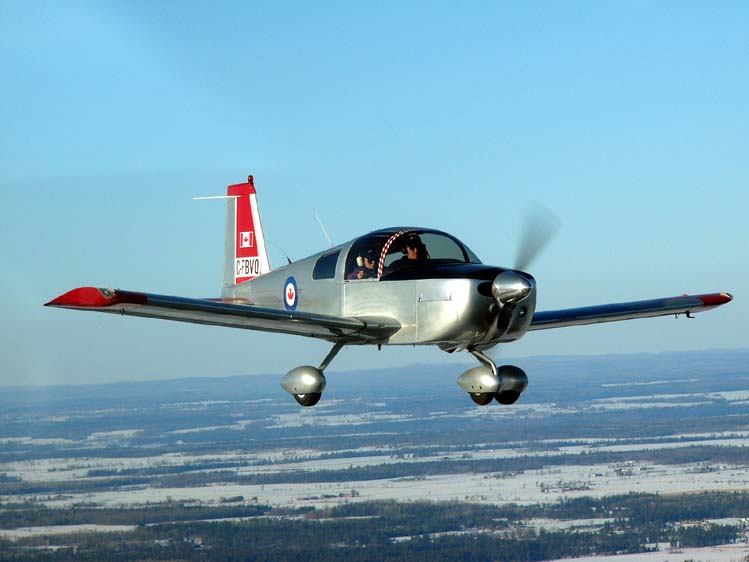
Specifications
MOSAIC eligiblePerformance
Cruise
117KTAS
Range
300nm
Climb
700fpm
Ceiling
11,500ft
Fuel Burn
6.5gph
Fuel Cap.
22gal
MPG
20.7mpg
Stall (Vs0)
53KIAS
T/O roll
890ft
Ldg roll
425ft
Size & weight
Seats
2
Useful Load
534lbs
Full-fuel payload
402lbs
Max gross
1,600lbs
Wingspan
24.5ft
Length
19.3ft
Engine
Engine
Lycoming O-235-L2C
Power
115hp
TBO
2,400hrs
Overhaul
$35k
Owning it
Hull insurance
$1k/yr
Parts
fair
Mechanics
specialist
Gear
Fixed
IFR
No
Category
certified
Full specification
V-speeds
Airframe
- Empty weight
- 1,066 lbs
- Max fuel weight
- 132 lbs
- Height
- 6.8 ft
- Wing position
- low
Obstacle performance
- Takeoff over 50 ft
- 1,590 ft
- Landing over 50 ft
- 1,125 ft
Paperwork
- Type certificate
- A11EA
- Certification basis
- Part 23
These figures are typical for the model, not a specification for any individual aircraft. Real-world numbers vary with year, installed equipment, weight, modifications and engine condition — often by more than you would expect. Use them to compare types, and confirm anything you would act on against the Pilot's Operating Handbook for that specific airframe and a prebuy inspection.
Pricing
Typical
$32k
Range
$20k – $55k
Annual all-in
~$15k/yr
All-in at ~100 flying hours a year, using the midpoint of each range — the same figures broken out under “Cost to own” below. Your number will differ, and mostly for two reasons. Experience sets your insurance: a 2,000-hour pilot with recent training pays 30–40% less than a 200-hour owner, and student owners pay 20–40% more — on the same aircraft that is often a doubling. Location sets your hangar: a T-hangar runs $200–400 a month in the Midwest against $400–1,500 in a coastal metro, and an outside tie-down is less again. Engine reserves move too — a local shop reusing your serviceable cylinders can come in 30–50% under the national specialty-shop pricing we quote, though you trade the warranty and turnaround that comes with it. Reserves are money set aside toward a future overhaul, not a bill this year, and the annual inspection figure is the shop’s labor to look — whatever they find is separate.
Cost to own — estimate
Set your yearly hours and local fuel price. Fixed costs (insurance, hangar, annual inspection) don't change with hours; fuel, maintenance and the engine reserve do.
- Fuel (6.5 gph)
- $4,225
- Engine reserve
- $1,458
- Maintenance, parts & wear items ($12/hr)
- $1,200
- Insurance
- $900–$1,800
- Hangar
- $2,837–$7,093
- Annual inspection (labor only)
- $1,200
- Databases & subscriptions
- $400
- Total per year
- $14,798
- Per flight hour
- $148
- Miles flown / year (at cruise)
- 13,464 mi
- Cost per mile
- $1.10/mi
- Time in the air
- 2 hr 34 min
- Fuel burned
- 17 gal
- Out of pocket
- $176
Fuel, engine reserve and wear only. Insurance, hangar and the annual are already paid whether you make the trip or not, so they are not charged here.
Estimate, not a quote. Where a line shows a range, the total, per-hour and per-mile figures use its midpoint— insurance moves most with your experience and time in type, hangar with where you base the aircraft, so your own number could sit at either end. Annual inspection is the shop's labor to open and inspect — what they find is the maintenance line, which covers oil changes, plugs, tires, brakes, hoses, lights, a battery and vacuum pump amortised over their life, and the unscheduled squawks that are the largest and least predictable part of it. Reserves are sinking funds toward an overhaul, not a bill you pay this year — and note that a propeller is due on hours or calendar time, typically six years, so flying less does not put it off forever.
Strengths
- Exceptionally affordable to buy ($20k–$55k) and operate ($5k–$9k annually)
- Responsive handling and sports-car feel with sliding canopy; excellent for recreational flying
- Economical O-235 engine with 2,400-hour TBO and low overhaul cost ($15k)
- Smooth, low-drag bonded airframe delivers 117 KTAS cruise on only 6.5 GPH
Weaknesses
- Bonded aluminum construction is unique; requires specialized mechanics and meticulous inspection
- Abrupt stall behavior with minimal pre-stall buffet; spins are unrecoverable beyond three turns—demands experienced pilots
- Fuel system lacks 'both' tank selector and has notoriously inaccurate gauges; disproportionate fuel-starvation accident rate
- Only two seats with modest range (300 nm); limited practical cross-country capability
Overview
The Grumman American AA-1 series is one of general aviation's most distinctive — and divisive — two-seat aircraft. Designed by Jim Bede and first produced by American Aviation in 1969, the AA-1 features an innovative bonded aluminum honeycomb construction that eliminates most rivets. The sliding bubble canopy, low wing, and castering nosewheel give it a sporty, fighter-like character that inspires fierce loyalty among its owners.
The AA-1 was produced under four different company names — American Aviation (1969-1972), Grumman American (1972-1977), and Gulfstream American (1977-1978). The type certificate is currently held by True Flight Holdings LLC. Total production was approximately 1,820 aircraft across all variants.
The AA-1's safety record is controversial. The aircraft has a higher-than-average fatal accident rate — largely attributed to the sharp stall characteristics and non-recoverable spin behavior that led to the FAA mandating "Spins Prohibited" placards (AD 73-13-07). However, the Grumman Owners and Pilots Association (AYA) members have compiled an excellent safety record, demonstrating that well-trained, knowledgeable pilots can operate the AA-1 safely.
The AA-1 is among the most affordable certified aircraft to buy and operate, making it attractive for budget-conscious pilots seeking a fun two-seat airplane.
Variants & History
| Variant | Years | Engine | HP | Gross Weight (lbs) | Key Changes |
|---|---|---|---|---|---|
| AA-1 Yankee (this page) | 1969-1971 | Lycoming O-235-C2C | 108 | 1,500 (Normal) / 1,430 (Utility) | Original; 459 built |
| AA-1A Trainer | 1971-1972 | Lycoming O-235-C2C | 108 | 1,500 (Normal) / 1,430 (Utility) | Training market; 470 built |
| AA-1B Trainer/TR-2 | 1973-1976 | Lycoming O-235-C2C | 108 | 1,560 (Utility only) | Increased gross weight; 680 built |
| AA-1C Lynx/T-Cat | 1977-1978 | Lycoming O-235-L2C | 115 | 1,600 (Utility only) | 115 hp, larger horizontal tail, Va 117 kt (utility), Vfe 100 kt; 211 built. TCDS A11EA Section IV. |
The AA-1B and AA-1C are Utility category only -- no Normal category rating, unlike the AA-1/AA-1A. The AA-1C was the most significant upgrade: the 115 hp O-235-L2C high-compression engine (100LL fuel, versus the earlier models' 80/87 minimum), a larger horizontal stabilizer for improved pitch stability, and the highest gross weight in the family. The "Lynx" was the private-owner marketing name; "T-Cat" was the flight-school version of the same certificated AA-1C.
Performance
The cruise/burn/range triple above is ONE ROW of the POH's own cruise table, not a nomogram reading: 4,500 ft pressure altitude, 2500 RPM, 75% power, 1,500 lb -- 112 KTAS on 6.2 GPH for 369 nm (129 mph / 425 mi in the POH's own units, converted by exact mph-to-knots arithmetic). The economy row at the same altitude, the nearest published setting to 65%, is 67% power: 106 KTAS on 5.5 GPH for 393 nm.
Vfe disagrees between the certificate and the POH's own airspeed markings, and this page records the disagreement rather than picking silently. TCDS A11EA states the AA-1's flaps-extended limit as 100 mph (87 kt) CAS. The same POH's instrument-markings table gives the white (flap) arc as 60-90 mph (78 kt) CAS -- a 10% difference. The certificate is the legal structural limit and is what this page stores; a buyer or mechanic checking a specific airplane's placards should expect to see the lower POH figure and should not treat the 13 mph gap as a typo without checking which revision their airplane's placards reflect.
Stall speeds are the forward-CG, power-off figures from the POH's stall table at 1,500 lb -- the conservative, heavier-forward-loading case. The aft-CG figures are 2-3 kt lower across the board (66/65 mph vs. 69/67 mph at zero bank). The page's stall speeds changed materially from the prior AA-1C-representative pass (53/58 to 58/60) because this is a genuinely different, lighter variant at a genuinely different weight -- not a correction to the same number, a different number for a different airplane, per runbook rule 2.
Rate of climb (710 fpm) and both takeoff/landing distances come from real POH tables, sea level, standard temperature, 1,500 lb gross -- the first time any of the three has carried a citation on this page.
Payload & Range
AA-1 Yankee (O-235-C2C, 108 hp, 22 gal usable, 1,500 lb Normal category gross):
| Scenario | Fuel (gal) | Fuel Weight (lbs) | Payload (lbs) | Range (nm, 75%/4,500 ft) |
|---|---|---|---|---|
| Full fuel, 2 pax | 22 | 132 | 361 | 369 |
| Full fuel, 2 large pax (200 lb ea) | 22 | 132 | 361 | 369 (tight -- 39 lb over at 400 lb pax) |
| Reduced fuel, 2 pax | 15 | 90 | 403 | ~250 (linear estimate at the same burn) |
The 493 lb useful load at 1,500 lb gross is tight for two larger adults with full fuel -- typical for a two-seat trainer of this era. The AA-1C's higher 1,600 lb gross and 115 hp give it meaningfully more margin; see the Variants table.

1980 Cessna 152
Honest Trainer · Mid-Time Engine · Fresh Annual
Mission Suitability
- Flight Training (6): The AA-1 was marketed as a trainer and hundreds served in flight schools. The stall/spin characteristics, non-recoverable spin past a few turns, and manual (no-"BOTH") fuel selector make it a demanding primary trainer by modern standards. The castering nosewheel requires differential braking, adding complexity for students. Best suited for experienced training operations with knowledgeable instructors.
- Backcountry (1): Not applicable -- low wing, bonded construction, limited performance margins.
- Business Travel (1): Two seats, minimal baggage capacity.
- Aerobatics (1): Not certified; spins prohibited.
- Cross-Country (3): 369 nm range at 75% power (393 nm at 67% econ) with 22 usable gallons. Adequate for 150-200 nm hops; the short legs require frequent fuel stops for longer trips.
- Cargo Hauling (1): 493 lbs useful load at 1,500 lb gross leaves little for cargo once two occupants and fuel are aboard.
- Local Fun Flying (8): This is where the AA-1 shines -- sliding canopy, responsive controls, sports-car handling, and a genuinely efficient cruise (112 kt on 6.2 gph) make it one of the most fun and affordable aircraft to fly recreationally.
- Surveying (2): Two seats only; low wing limits some downward visibility; short range.
Avionics Ecosystem
Most AA-1s carry basic VFR panels: standard six-pack, single nav/com, basic transponder. Budget upgrades ($3,000-$8,000): Garmin G5 or GI-275 attitude indicator, handheld or panel-mount GPS, ADS-B Out transponder. Full glass ($25,000-$35,000): Garmin G3X Touch is STC'd for the type -- a significant investment relative to the airframe's value but transforms the panel. IFR is technically possible but rarely justified given the aircraft's value and mission.
STCs & Modifications
Air Mods NW (Snohomish, WA): 150 hp Lycoming O-320 conversion transforms performance (+40-60 lb gross weight allowance); auxiliary fuel tanks (+10-20 gal) address the short-range limitation with a matching gross-weight increase; dorsal fin improves rudder authority in turbulence; landing gear fairings add roughly 10 mph cruise.
FletchAir (Houston, TX): O-320 conversion options (150-160 hp); speed fairings and cowling modifications; digital fuel monitors (addresses the type's notoriously imprecise fuel gauges).
The 150 hp O-320 conversion is the single most desirable modification -- it meaningfully improves climb, takeoff performance and cruise speed. Modified 150 hp AA-1s command a real premium over stock airplanes.

1989 Aviat Husky
Husky A-1 · Tundra Tires · Backcountry Ready
Maintenance & Support
- Annual inspection: $800-$2,000. Simple airframe, but the bonding inspection adds time.
- Engine overhaul: $35,000 for the O-235 family (2,400 hr TBO), per
reference/engine-overhaul-pricing.md-- one of the more affordable engines to overhaul. - Bonding inspection: critical at every annual; an experienced AA-1 mechanic knows where to look.
- Parts availability: fair. True Flight Holdings LLC holds the type certificate; AYA is the essential parts-sourcing resource.
- Mechanic familiarity: specialist. Bonded construction is unique in GA and not every A&P understands its inspection and repair procedures.
- AYA membership: strongly recommended -- insurance discounts, technical support, parts sourcing, safety training.
Valuation Factors
- AA-1 Yankee (this page, 1969-1971): roughly $20,000-$35,000. Original model; collector appeal offsets age.
- AA-1A Trainer (1971-1972): roughly $20,000-$30,000. Lowest-performance variant.
- AA-1B Trainer (1973-1976): roughly $22,000-$40,000. Most common variant -- check for defective bonding sealant on S/N 400-600.
- AA-1C Lynx (1977-1978): roughly $30,000-$55,000. Best variant; 115 hp, improved tail, higher gross.
- 150 hp O-320 conversion (any variant): adds real value, on the order of tens of thousands, over a stock airplane.
(These bands are carried forward from the prior research pass and were not independently re-verified against dated listings this session -- see validator_exempt and the confidence note.)
Per reference/valuation-methodology.md: bonding condition is the #1 value factor; engine time matters but O-235 overhauls are relatively affordable at the house $35,000 reference; the 150 hp conversion is the single highest value-add modification.
ADs & Common Problems
AD 73-13-07 ("Spins Prohibited" placard): the defining AD, issued after fatal spin accidents demonstrated unrecoverable spin behavior beyond a few turns. See Safety Record above.
Bonded-skin AD (peel rivets): required on control-surface bondlines to address delamination -- critical for airworthiness.
AD 2021-14-12: horizontal stabilizer bondline inspection for cracks, buckles, corrosion and delamination. Applies to all AA-1 through AA-5 models.
Rudder springs: recurring AD, replacement every 1,000 hours. Mixture cable: recurring AD, replacement every 500 hours.
Common problems: bonded-skin delamination is THE pre-buy red flag -- pre-1976 airplanes are most vulnerable, and AA-1B serial numbers 400-600 (built with defective bonding sealant) are particularly susceptible; check for "purple" sealant at wingtip/spar joints. The fuel system has no "BOTH" tank position (manual left/right selection only) and notoriously inaccurate gauges, a combination linked to a disproportionate share of fuel-mismanagement accidents. Nosewheel shimmy on the castering fork assembly needs meticulous maintenance. Engine cooling on pre-1977 airplanes (before the AA-1C's oil cooler) causes valve and cylinder problems; glazed cylinders are a common 800-1,000 hour top-overhaul finding.
Insurance Profile
Per reference/insurance-underwriting.md: hull insurance runs roughly $450-$800/year -- among the cheapest GA aircraft to insure given low hull values. Liability runs roughly $300-$500/year for $1M smooth. AYA recommends 10 hours of type-specific instruction; some insurers require it. The stall/spin history does not significantly move individual rates at these hull values -- a total-loss payout is modest either way.
For sale (0)
No listings for this model right now.
For sale elsewhere (2)
Current ads on Barnstormers, checked daily. Photos, full details and the seller are on the listing site.
Grumman AA-1 Yankee / Trainer / Lynx
Listed on Barnstormers1969 Grumman AA-1 Yankee / Trainer / Lynx
Listed on BarnstormersADS-B Out · Aspen Evolution · Fuel flow / totalizer · Garmin GPS 175
View photos and full ad on Barnstormers ↗Also worth looking at
What buyers usually weigh against the Grumman AA-1 Yankee / Trainer / Lynx — aircraft flown for the same kind of mission.


