BRM Aero · 2013+
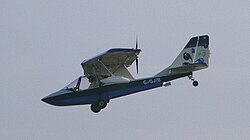
BRM Aero Bristell TDO
Specifications
MOSAIC eligiblePerformance
Cruise
Not verified
Range
Not verified
Climb
1400fpm
Ceiling
—ft
Fuel Burn
4.5gph
Fuel Cap.
32gal
MPG
—mpg
Stall (Vs0)
—KIAS
T/O roll
—ft
Ldg roll
—ft
Size & weight
Seats
2
Useful Load
472lbs
Full-fuel payload
282lbs
Max gross
1,323lbs
Wingspan
29.9ft
Length
21.2ft
Engine
Engine
Rotax 912 iS Sport
Power
100hp
TBO
2,000hrs
Overhaul
$15k
Owning it
Hull insurance
$7k/yr
Parts
fair
Mechanics
specialist
Gear
Fixed
IFR
No
Category
light sport
Full specification
Airframe
- Empty weight
- 851 lbs
- Max fuel weight
- 190 lbs
- Wing position
- low
- Auto fuel (mogas)
- Auto fuel specified by the engine maker — 91 premium
Paperwork
- Certification basis
- ASTM F3815-26a (MOSAIC light-sport airplane)
These figures are typical for the model, not a specification for any individual aircraft. Real-world numbers vary with year, installed equipment, weight, modifications and engine condition — often by more than you would expect. Use them to compare types, and confirm anything you would act on against the Pilot's Operating Handbook for that specific airframe and a prebuy inspection.
Pricing
Typical
Price unavailable
Range
No recent market listings found for this model
Annual all-in
~$17k/yr
All-in at ~100 flying hours a year, using the midpoint of each range — the same figures broken out under “Cost to own” below. Your number will differ, and mostly for two reasons. Experience sets your insurance: a 2,000-hour pilot with recent training pays 30–40% less than a 200-hour owner, and student owners pay 20–40% more — on the same aircraft that is often a doubling. Location sets your hangar: a T-hangar runs $200–400 a month in the Midwest against $400–1,500 in a coastal metro, and an outside tie-down is less again. Engine reserves move too — a local shop reusing your serviceable cylinders can come in 30–50% under the national specialty-shop pricing we quote, though you trade the warranty and turnaround that comes with it. Reserves are money set aside toward a future overhaul, not a bill this year, and the annual inspection figure is the shop’s labor to look — whatever they find is separate.
Cost to own — fixed costs only
No handbook figures for this airplane give a cruise speed, so the fuel, per-hour and per-mile estimates cannot be computed. What follows is what ownership costs before you fly it — these do not change with hours.
Fuel, maintenance and the engine reserve are on top of this and rise with every hour flown — on a comparable airplane they typically exceed the fixed costs at around 100 hours a year. The page above says which document would supply the missing figures.
Strengths
- Tailwheel stick-and-rudder flying with heavy-duty wing spars standard
- Rotax 912 iS Sport burns automotive fuel (MOGAS) at ~4.5 gph
- No known airworthiness directives; manufacturer safety bulletins apply instead
Weaknesses
- No US market, no dealer network, no published short-field performance data
- Tailwheel requires endorsement; not a primary trainer and insurance costs higher
- Low-wing limits rough-field tolerance vs. comparable bush aircraft; prop clearance concern
- Factory publishes only max speed and climb—no cruise, range, stall speed, or V-speeds
Overview
The TDO is the tailwheel member of BRM AERO's UL/LSA family, and the factory's pitch for it is refreshingly free of mission talk: "pure stick-and-rudder flying … at home on grass strips and backcountry fields", for "pilots who fly for the joy of it." It shares the larger airframe with the retractable-gear brm-aero-bristell-rg — a 9.13 m (29 ft 11 in) wing on a 6.45 m (21 ft 2 in) fuselage — rather than the smaller one under the fixed-gear brm-aero-bristell Classic, and it carries heavy-duty wing spars as standard.
Two of its four variants are now MOSAIC-eligible light-sport aircraft in the United States, per BRM AERO's own specification table: the TDO M 912iS and the TDO M 916iS. The other two are European ultralights. The factory's certification FAQ states the position plainly — in the USA "the light-sport (LSA) class is covered by the Classic and the M-line models" — so the M suffix is the thing an American buyer has to look for on the data plate.
This page is unusually short on numbers, and the reason is worth stating up front rather than burying it. BRM AERO publishes two performance figures for the TDO — maximum speed and rate of climb — and nothing else. There is no published stall speed, no V-speed set, no cruise, no range, no service ceiling and, most awkwardly for an airplane sold for grass strips, no takeoff or landing distance of any kind. No US importer lists the model, no handbook was reachable, and no press pilot report was found. Those fields are blank here with a written reason each, rather than estimated from the Classic.
That is a real limitation on how useful this page can be, and it is the honest state of what the manufacturer has published as of 2026-10-11.
Variants & History
BRM AERO lists four TDO configurations. The frontmatter above describes the TDO M 912iS — the entry MOSAIC-eligible variant a US buyer can register as light-sport. Every figure is the factory's own.
| Variant | Engine | Power | TBO | Useful load | Max speed (VH) | Rate of climb | US status |
|---|---|---|---|---|---|---|---|
| TDO 912 | Rotax 912 ULS | 100 hp | 2,000 hr | 617 lb | 130 KTAS | 1,100 fpm | Europe UL only |
| TDO 915iS | Rotax 915 iS | 141 hp | 1,200 hr | 529 lb | 155 KTAS | 1,300 fpm | Europe UL only |
| TDO M 912iS | Rotax 912 iS Sport | 100 hp | 2,000 hr | 472 lb | 125 KTAS | 1,400 fpm | MOSAIC LSA |
| TDO M 916iS | Rotax 916 iS | 160 hp | 2,000 hr | 474 lb | 155 KTAS | 1,950 fpm | MOSAIC LSA |
MTOW is 600 kg / 1,323 lb and fuel 120 L / 31.7 gal on all four, as are the 9.13 m span, 6.45 m length and 130 cm (51.2 in) cabin width.
The TDO dates from 2013. BRM AERO's own company timeline says "the taildragger Bristell TDO joins the line" in 2013, two years after the Classic and a year after the RG, and Plane & Pilot's March 2015 flight report independently agrees: "the TDO was introduced in 2013", with "half a dozen" sold worldwide by then and the first US example arriving in November 2014. That is the year the airframe entered the line, not a stated first-delivery date, and it dates the airframe rather than every engine above: the same timeline puts the Rotax 912 iS in the range only from 2015, so an early TDO is a carbureted 912 ULS airplane — Plane & Pilot's 2015 demonstrator was one.
The useful-load column does not behave, and a buyer should notice. It runs 617 → 529 → 472 → 474 lb, and the 617 lb figure on the 912 ULS is the highest useful load anywhere in the UL/LSA family — above even the fixed-gear Classic's 595 lb. The factory offers no explanation for a 145 lb spread across variants whose engines differ by far less than that in weight. Treat the 617 lb as the factory's number and not as cross-checked, and weigh the actual airplane: on a 1,323 lb airframe a 145 lb uncertainty is the difference between a two-adult airplane and a one-adult one.
The practical reading is that the US-eligible M variants are the heavy ones, at 472–474 lb useful. With a full 31.7-gallon tank of MOGAS (190 lb) that leaves 282 lb — two light adults and nothing else, or one adult and camping gear, which for a grass-strip airplane is probably the real mission anyway.
The 915 iS is the TBO outlier. It carries a 1,200-hour TBO against 2,000 for the other three Rotax options, which on a reserve-per-hour basis makes it the most expensive engine in the family to own despite sitting in the middle of the power range. It is also not US-eligible here. The 916 iS gives more power and the longer TBO, and is the M variant to want if the budget reaches.
Performance
VH is not a cruise speed, and on this page it is nearly all there is. The
155 KTAS quoted for the TDO 915iS and TDO M 916iS is maximum speed at full
throttle. A cross-country cruise for this airframe is not published by anyone,
and this page stores none — see validator_exempt for each field.
For scale on how large that haircut usually is: on the B23, where BRM AERO publishes both, the 916 iS shows 130 KTAS cruise against 150 KTAS VH, a 13% reduction. Applying that ratio here would suggest roughly 135 KTAS for a 916-powered TDO. That is arithmetic performed on a different airplane's ratio and is not a figure about this one — it is offered only so a reader does not mistake 155 KTAS for a trip-planning number.
The missing short-field numbers are the real gap. An airplane marketed for grass and backcountry fields lives or dies on its ground roll and its 50-foot obstacle distance, and the factory publishes neither. Nor does it publish a stall speed, which is what those distances ultimately derive from. Anyone seriously considering a TDO should ask BRM AERO or its dealer for the flight manual's performance section and should treat a demonstration on the actual surface they intend to operate from as part of the purchase, not a courtesy.
There is one indirect data point worth knowing and not over-reading: the US
importer quotes 500 fpm climb for the 100 hp Classic variants where the
factory quotes 1,100–1,150 fpm. That disagreement runs against the dealer's
commercial interest, which is unusual and makes it harder to dismiss. It does
not bear on the TDO's own 1,400 fpm figure directly, but it is a reason to treat
the factory's climb figures across this family as optimistic rather than
conservative, and to verify by demonstration. See
raw/market/bristell-aircraft-usa-importer-2026-10-11.md.
The fuel burn is an engine figure borrowed across airframes, deliberately. BRM AERO publishes no fuel consumption on the UL/LSA page. It does publish a per-engine table on the B23 page, as a machine-readable payload behind that page's cost calculator: the Rotax 912 iS Sport at 17 L/h (4.5 US gal/h), labelled "average consumption, typical flight profile", and corroborated by that page's own prose figure of 16.3 L/h (4.3 gal/h) at 75% power.
Fuel flow at a given percentage of rated power is a property of the engine rather than the airframe, which is why it transfers. The B23 is 750 kg against this airplane's 600 kg, so at equal percentage power the TDO flies faster on the same fuel — meaning 4.5 gph errs in the buyer's favor on cost per mile, not against. For the 916 iS the corresponding factory figure is 26 L/h (6.9 gph).
Payload & Range
Using the factory's weights for the US-eligible M 912iS and the engine-level fuel flow:
| Load aboard | Fuel available | Endurance at 4.5 gph | Notes |
|---|---|---|---|
| Two 170 lb adults, no bags | 132 lb / 22.0 gal | 4.9 hr | The common real case; tank not full |
| Two 170 lb adults, 30 lb bags | 102 lb / 17.0 gal | 3.8 hr | Comfortable day trip |
| One 200 lb pilot, camping gear 80 lb | 190 lb / 31.7 gal | 7.0 hr | Full fuel, 2 lb spare — the grass-strip mission |
| Full fuel, 31.7 gal | 190 lb | 7.0 hr | 282 lb left for people and bags |
Endurance is not range, and this page has no sourced cruise speed to convert one into the other. The table stops at hours deliberately.
Two notes. The 916 iS variants run roughly a third shorter on endurance (6.9 gph) while covering considerably more ground per hour. And if the TDO 912's 617 lb useful load is real, that variant is a different and much more capable airplane for loading — 427 lb left with full fuel — but it is not US light-sport eligible, and the 145 lb spread across the variant table is unexplained. Weigh the airplane.
Mission Suitability
Local flying is a 9, and that is the honest centre of this airplane. The factory sells it as flying for its own sake, and a 1,323 lb taildragger with dual sticks, a 51-inch cabin and a Rotax burning under 5 gph of car gas is a very good Saturday morning. No other score here matters as much.
Backcountry is a 6 rather than an 8, and the missing data is why. The ingredients are right — tailwheel, heavy-duty spars as standard, a factory pitching grass strips, and a photograph on the product page of a TDO on Alaskan wheels. What is absent is any published short-field performance, any stall speed, and any US example to go and look at. A 6 reflects a genuinely capable configuration whose capability nobody has published. It is also a low-wing airplane, which limits rough-field tolerance compared with the high-wing bush types it would otherwise compete with, and prop clearance on a low-wing taildragger deserves a hard look before committing to unimproved surfaces.
Training is a 4, which is better than the RG's 2 and worse than the Classic's 7. A tailwheel endorsement is a legitimate thing to train toward and this airframe would do it well. But it cannot be a primary trainer — a student cannot solo it without the endorsement — and insurers price student tailwheel time accordingly. A school wanting a Bristell for the flight line buys the Classic; a school wanting to offer tailwheel transition could reasonably buy this.
Cross-country is a 6. The airplane probably does it well — the M 916iS has the speed and the tank is generous — but with no published cruise or range this page cannot support a higher score, and a taildragger is more work on a long day in wind.

2011 CubCrafters Carbon Cub
Carbon Cub SS · STOL Legend · Tundra Tires
Maintenance & Support
Parts: fair. BRM AERO supports the type from Kunovice through a worldwide
dealer network, and the US importer states it holds "over $300,000 of Bristell
and Rotax parts in the USA." Rotax parts are widely available. The rating is
fair rather than good because airframe-specific TDO parts come from one
factory in the Czech Republic with no US aftermarket behind them — and because
no US dealer currently lists the model, which means an owner here would be
the one establishing the parts relationship rather than inheriting it.
Mechanics: specialist. The Rotax 912 iS is FADEC-managed, liquid-cooled and geared; it rewards a Rotax-trained mechanic and punishes a guess. Find the shop before buying. For a light-sport aircraft a repairman certificate with maintenance rating covers much routine work, but neither that course nor an A&P curriculum covers this airframe specifically.
Tailwheel-specific items a prebuy must cover, none of which apply to the Classic: tailwheel assembly and its steering linkage for wear and free play, tailspring condition and any history of hard landings, brake condition and symmetry (asymmetric braking is how taildraggers get bent), main gear leg alignment, and the logs read specifically for groundloop or prop-strike repair. A prop strike on a geared Rotax means a gearbox inspection, not just a propeller.
The 2,000-hour TBO is conditional on utilisation. Rotax publishes TBO in
hours and calendar years, and a privately-owned airplane flying 60 hours a
year will hit the calendar limit with most of its hours unused. The per-hour
reserve in the cost model assumes the engine reaches its hour limit; at low
utilisation the true reserve is higher. engine_overhaul_cost_usd is $14,500
from reference/engine-overhaul-pricing.md, per engine.
MOGAS is the operating-cost advantage. Rotax specifies automotive fuel for this engine in its own service instruction — no STC needed, the engine maker specifies the fuel as it specifies the oil — and E10 is approved. That saves real money per hour against 100LL and spares the engine lead fouling. Confirm the airplane's own operating limitations permit it, since Rotax assigns vapor-lock compliance to the airframe manufacturer.
Valuation Factors
There is no US market for this model to value. The US importer's line-up carries RG, B23 and Classic variants and no TDO; no new price, no used asking price and no listing was found on 2026-10-11. All four price fields are blank with a reason, and the finder will show the model without pricing rather than score it on a number nobody published.
That absence is itself the main valuation fact. A buyer wanting a TDO in the United States is likely looking at a direct factory order through a dealer, with the lead time, deposit structure and currency exposure that implies on a Czech-built airframe. The importer's own FAQ page carries the question "Will the $30,000 tariff apply to my order", which suggests import duty is a live cost on these airplanes and should be established in writing before any deposit. The answer to that FAQ was not captured and the amount is the question's framing rather than a confirmed figure.
For a price anchor in the right neighbourhood: the same importer quotes the Classic 912 ULS Cadet Trainer at $257,000 as of June 2026 and the RG at $385,000 starting. A TDO on the larger airframe would reasonably sit between those, but that is an inference and no source states it, so it is not in any price field.
Expect resale to be thin either way. Tailwheel light-sport is a narrow buyer pool, and a type with no US fleet has no comparables.
ADs & Common Problems
No airworthiness directives are known against this type, with the same asterisk that applies to every light-sport aircraft: a US LSA is not certificated under Part 23, so the FAA does not issue ADs against it. The equivalent mechanism is the manufacturer's own safety directives and service bulletins, and an S-LSA owner is required to comply with those to keep the airplane airworthy. That is stricter than it sounds, because the factory can mandate work with no FAA process in between.
BRM AERO publishes bulletins and a safety-reporting channel on its support site. Get the complete bulletin compliance record for the serial number at prebuy and check it against the factory's current list rather than the seller's summary.
With no US fleet, there is no owner community large enough to have surfaced this airframe's pattern faults. A US buyer would be among the first, and should price that in — both as risk and as a reason to stay close to the factory.
Rotax 912 iS items for the prebuy: FADEC software level and stored fault history pulled from the engine management unit, the calendar-driven rubber-replacement interval on gearbox and coolant hoses (routinely missed by low-utilisation owners), and gearbox friction-torque check history.
Insurance Profile
Tailwheel is the whole story here, and it is the one place a prospective owner
should get a real quote before getting attached to the airplane. The $6,500
hull figure is an extrapolation from the general light-sport band in
reference/insurance-costs.md; no Bristell TDO binder is on file and there is
no US fleet to have generated one.
Underwriters price tailwheel on loss history, and the loss history is about ground handling rather than flying: groundloops, wheel-barrowing, and nose-overs on braking. Expect requirements rather than just a premium — a tailwheel endorsement with a stated minimum of hours, dual in type, and often a named-pilot restriction on a low-time owner. A pilot bringing real tailwheel time will see a very different number from one who does not, and the gap is usually larger than any negotiation between carriers.
Set against that, two things work in the owner's favor: the hull value is modest by certified standards, and BRS is available on the airframe, which some carriers credit.
Quote it through an agency that writes light sport and tailwheel specifically.
For sale (0)
No listings for this model right now.
Also worth looking at
What buyers usually weigh against the BRM Aero Bristell TDO — aircraft flown for the same kind of mission.