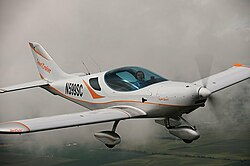
Bristell · 2026+
Bristell B23M
 i
iSpecifications
MOSAIC eligiblePerformance
Cruise
136KTAS
Range
340nm
Climb
1259fpm
Ceiling
18,000ft
Fuel Burn
7.8gph
Fuel Cap.
32gal
MPG
20.1mpg
Stall (Vs0)
43KIAS
T/O roll
900ft
Ldg roll
480ft
Size & weight
Seats
2
Useful Load
628lbs
Full-fuel payload
438lbs
Max gross
1,653lbs
Wingspan
27.9ft
Length
21.3ft
Engine
Engine
Rotax 915iS
Power
141hp
TBO
1,200hrs
Overhaul
$18k
Owning it
Hull insurance
$7k/yr
Parts
fair
Mechanics
specialist
Gear
Fixed
IFR
Yes
Category
light sport
Full specification
V-speeds
Airframe
- Empty weight
- 1,025 lbs
- Max fuel weight
- 190 lbs
- Height
- 7.5 ft
- Wing position
- low
- Auto fuel (mogas)
- Auto fuel specified by the engine maker — 91 premium
Obstacle performance
- Takeoff over 50 ft
- 1,500 ft
- Landing over 50 ft
- 1,283 ft
Paperwork
- Certification basis
- ASTM F3815-26a (MOSAIC light-sport category, S-LSA)
These figures are typical for the model, not a specification for any individual aircraft. Real-world numbers vary with year, installed equipment, weight, modifications and engine condition — often by more than you would expect. Use them to compare types, and confirm anything you would act on against the Pilot's Operating Handbook for that specific airframe and a prebuy inspection.
Pricing
Typical
$365k
Range
$295k – $425k
Annual all-in
~$22k/yr
All-in at ~100 flying hours a year, using the midpoint of each range — the same figures broken out under “Cost to own” below. Your number will differ, and mostly for two reasons. Experience sets your insurance: a 2,000-hour pilot with recent training pays 30–40% less than a 200-hour owner, and student owners pay 20–40% more — on the same aircraft that is often a doubling. Location sets your hangar: a T-hangar runs $200–400 a month in the Midwest against $400–1,500 in a coastal metro, and an outside tie-down is less again. Engine reserves move too — a local shop reusing your serviceable cylinders can come in 30–50% under the national specialty-shop pricing we quote, though you trade the warranty and turnaround that comes with it. Reserves are money set aside toward a future overhaul, not a bill this year, and the annual inspection figure is the shop’s labor to look — whatever they find is separate.
Cost to own — estimate
Set your yearly hours and local fuel price. Fixed costs (insurance, hangar, annual inspection) don't change with hours; fuel, maintenance and the engine reserve do.
- Fuel (7.8 gph)
- $5,070
- Engine reserve
- $1,458
- Maintenance, parts & wear items ($12/hr)
- $1,200
- Insurance
- $3,300–$9,150
- Hangar
- $3,566–$8,914
- Annual inspection (labor only)
- $1,200
- Databases & subscriptions
- $400
- Total per year
- $21,793
- Per flight hour
- $218
- Miles flown / year (at cruise)
- 15,651 mi
- Cost per mile
- $1.39/mi
- Time in the air
- 2 hr 12 min
- Fuel burned
- 17 gal
- Out of pocket
- $170
Fuel, engine reserve and wear only. Insurance, hangar and the annual are already paid whether you make the trip or not, so they are not charged here.
Estimate, not a quote. Where a line shows a range, the total, per-hour and per-mile figures use its midpoint— insurance moves most with your experience and time in type, hangar with where you base the aircraft, so your own number could sit at either end. Annual inspection is the shop's labor to open and inspect — what they find is the maintenance line, which covers oil changes, plugs, tires, brakes, hoses, lights, a battery and vacuum pump amortised over their life, and the unscheduled squawks that are the largest and least predictable part of it. Reserves are sinking funds toward an overhaul, not a bill you pay this year — and note that a propeller is due on hours or calendar time, typically six years, so flying less does not put it off forever.
Strengths
Weaknesses
Overview
The Bristell B23 is BRM Aero's (Kunovice, Czech Republic) newer, structurally distinct successor design to the original Bristell Classic (NG5) light-sport airframe — longer fuselage, larger rudder, reinforced landing gear, and a higher gross-weight structure built from the outset for a type-certificated future rather than the ASTM-only S-LSA category the Classic occupies. The B23 name now covers two separate certification tracks on a related airframe, and understanding the difference matters for buyers:
-
Bristell B23 (EASA CS-23 / FAA Part 23) — a fully type-certificated aircraft. BRM Aero received EASA CS-23 certification in 2020 and FAA Part 23 Type Certification on September 9, 2025, initially for the B23-912 (100 hp Rotax 912S3). This is a "real" certified airplane, not an LSA — it can be used for formal instrument and commercial flight training without the E-LSA workarounds the Classic requires, and BRM Aero is marketing it hard at flight schools with a claimed 35% lower operating cost than legacy trainers (Cessna 172/Piper Archer). Additional FAA-certified engine variants (912iS, 915iS, 916iS, IFR) were "in progress" as of late 2025.
-
Bristell B23M (MOSAIC) — the same basic airframe lineage marketed instead under the FAA's new MOSAIC light-sport rule (ASTM F3815-26a), which took effect July 24, 2026. MOSAIC removed the old 1,320 lb S-LSA weight cap entirely, which is what lets the B23M carry a 1,653 lb (750 kg) MTOW — the same higher-gross-weight airframe as the certified B23, but flown under the LSA/sport-pilot regulatory framework (ASTM consensus standard, manufacturer condition inspections) instead of a full FAA type certificate. This is the newer, lower-friction path for BRM Aero to get the higher-weight, higher-power B23 airframe into US hands quickly, and it is what a "2026 Bristell B23M" listing on the used/new market refers to.
This entry headlines the B23M configured with the Rotax 915iS (141 hp) — the best-documented real-world B23M configuration found in current listings and the mid-point of BRM Aero's three-engine B23M lineup (912iS/915iS/916iS). Buyers should confirm the exact engine and avionics fit on any specific aircraft; see Variants below.
The B23/B23M is brand new to the US market. FAA type-certified B23-912 deliveries began Q4 2025; B23M MOSAIC deliveries are only just beginning as of the July 24, 2026 rule effective date. There is essentially no used-aircraft track record, no established AD/service-difficulty history specific to this airframe, and no seasoned resale market — treat all valuation, insurance, and maintenance-cost figures below as early-market estimates, not the multi-year trend data available for the Classic or other established LSAs.
Variants & History
| Variant | Cert. Path | Engine | HP | MTOW (lbs) | Notes |
|---|---|---|---|---|---|
| B23-912 | FAA Part 23 / EASA CS-23 | Rotax 912S3 | 100 | 1,654 | First FAA-certified variant (TC dated Sept 9, 2025); 2,000 hr TBO; ~4.5 gph; targets flight schools |
| B23-912iS | EASA CS-23 (FAA in progress) | Rotax 912iS Sport | 100 | 1,653 | Fuel-injected version of the 912; ~106 KTAS cruise (75%) per manufacturer |
| B23-915iS | EASA CS-23 (FAA in progress) | Rotax 915iS | 141 | 1,653 | Turbocharged; 18,000 ft ceiling; 136 KTAS cruise (75%); 1,200 hr TBO |
| B23-915 IFR | EASA CS-23 IFR (Dec 2024) | Rotax 915iS | 141 | 1,653 | EASA IFR-certified variant with expanded avionics; FAA IFR path not yet confirmed |
| B23-916iS | EASA CS-23 (approved Dec 17, 2025) | Rotax 916iS | 160–162 | 1,653 | First CS-23 aircraft certified with the 916iS; 153 m takeoff roll claimed |
| B23M (MOSAIC) | ASTM F3815-26a, MOSAIC S-LSA | Rotax 912iS / 915iS / 916iS (buyer's choice) | 100–162 | 1,653 | US LSA-category path to the same higher-weight airframe; standard BRS parachute + hydraulic constant-speed prop; effective with the July 24, 2026 MOSAIC rule |
| 916M (pre-MOSAIC press name) | — | Rotax 916iS | 162 | ~1,653 | Name used by AOPA in a Jan 2025 pilot report of a pre-production MOSAIC-anticipating aircraft; effectively the 916iS B23M |
| B23 Energic | EASA (electric, separate program) | Dual electric motor (H55) | — | — | All-electric variant in development/early sales (~€400,000 in Europe); one-hour endurance; primarily a training aircraft, not a cross-country platform |
| Bristell Classic (NG5) | ASTM F2245-era S-LSA | Rotax 912 ULS / 912iS / 915iS / 916iS | 100–162 | 1,320 | The older, distinct LSA — see the separate brm-aero-bristell entry. Different fuselage/gear structure than the B23. |
Variant note: Do not confuse the B23/B23M with the Classic. They share a designer and family resemblance but are different type designs — the B23 has a longer fuselage, larger rudder, and reinforced landing gear built to carry the higher 1,653 lb MTOW, none of which the 1,320 lb Classic has. Within the B23M line, engine choice is the dominant differentiator: 912iS gives the lowest operating cost and longest documented range (~780 NM at 75% per BRM Aero's own table), 915iS is the documented mid-tier turbo option used for the headline spec set above, and 916iS is the highest-performance option (per AOPA's 916M pilot report: ~142 KTAS at 90% power, ~1,500 fpm initial climb, tested near $365,000).
Performance
Cruise numbers are engine- and altitude-dependent, and manufacturer figures vary by source. BRM Aero's own specification table lists the 915iS cruising at 136 KTAS at 75% power with a fairly short 340 NM range at that power setting; a real-world B23M-915iS sale listing quoted 291 km/h TAS (~157 kt) at FL140 as a maximum speed figure, which is plausible for a lighter-fuel, higher-altitude condition but is not the same measurement as the manufacturer's 75%-power cruise number. Treat the 136 KTAS / 340 NM pairing as the conservative, sourced baseline; expect meaningfully better range at economy power settings, though BRM Aero does not publish an economy-cruise range figure for the 915iS specifically (unlike the Classic, which does).
Turbo advantage: The 915iS holds rated power to roughly 18,000 ft service ceiling (vs. 14,000 ft for the naturally aspirated 912/912iS B23 variants), which is the same high-altitude value proposition as on the Classic 915iS — useful for western US density-altitude operations.
Takeoff/landing distances are configuration-sensitive. The 900 ft ground roll / 1,500 ft over-50-ft figures used here are sourced to a US importer's B23-915(iS)-labeled spec sheet; a separate European manufacturer spec table gives a wider 365–479 m (1,198–1,572 ft) takeoff and 146–391 m (479–1,283 ft) landing distance range without engine breakdown, and the higher-power 916iS variant is documented at a much shorter 153 m (502 ft) takeoff roll. Don't treat the numbers here as precise for every engine/weight combination — verify against the specific aircraft's POH.
Stall speeds: Sourced as VS1 (clean) 50 KCAS / VS0 (landing config) 43 KCAS from the manufacturer's European spec sheet, consistent with a separate US Part-23 press release citing VS1 ≈ 50 KCAS for the certified B23-912. MOSAIC's sport-pilot stall-speed ceiling is 59 KCAS clean / 61 KCAS with flaps, so the B23M comfortably clears that bar for sport pilot eligibility.
Best glide (67 KIAS) comes from a search-engine synthesis of the B23-915 Aircraft Flight Manual rather than a directly verified PDF read (the source PDF would not parse as text) — treat this one figure as lower-confidence pending direct POH confirmation. See SOURCES file.
Density altitude / weight: At 750 kg (1,653 lbs) MTOW with a documented ~465 kg (1,025 lb) empty weight for a well-equipped 915iS example, useful load runs ~628 lbs — a meaningful step up from the Classic's ~615 lbs useful load, despite the B23M's heavier turbo/BRS-equipped airframe, because the MOSAIC weight cap removal outpaces the added structure weight.
Payload & Range
Reference aircraft: B23M with Rotax 915iS, ~1,025 lb empty weight (documented sale-listing example), 31.7 gal (120 L) standard tanks, 1,653 lb MTOW.
| Scenario | Fuel (gal) | Fuel Weight (lbs) | People + Bags (lbs) | Total Payload (lbs) | Range (nm) | Notes |
|---|---|---|---|---|---|---|
| Full fuel, 2 pax economy | 31.7 | 190 | 438 | 628 | ~340+ | 2×170 lb + 98 lb bags; near max useful load at 75% power range figure |
| Full fuel, 2 light pax | 31.7 | 190 | 340 | 530 | ~340+ | 2×155 lb + 30 lb bags; comfortable margin below max useful load |
| Reduced fuel, full payload | 15 | 90 | 628 | 718 | — | Exceeds useful load at 628 lb payload cap; illustrative only — actual full-payload flight requires trimming fuel below 15 gal or trimming occupant/bag weight |
| 912iS (documented longer-range engine) | 31.7 | 190 | ~438 | ~628 | ~780 (mfr 75% figure) | The naturally aspirated 912iS variant is the documented long-range choice in BRM Aero's own spec table — meaningfully farther than the 915iS's 340 nm at the same 75% power setting |
Key takeaway: The B23M's 628 lb useful load is a real step up over the Classic's ~615 lbs despite carrying a standard BRS chute and constant-speed prop, because MOSAIC's removal of the old 1,320 lb weight cap outpaces the added structure weight. The 915iS trades range for altitude/climb performance versus the 912iS; buyers prioritizing cross-country range over turbo/high-altitude capability should specifically evaluate the 912iS configuration, which BRM Aero's own numbers show flying substantially farther at the same power setting. Manufacturer economy-cruise range figures for the 915iS specifically were not found in this research pass — treat the 340 nm figure as a 75%-power number, not the aircraft's maximum range.

2026 Bristell B23M
Amazing trainer airplane - $60/hr direct operating costs - Time Building
Mission Suitability
| Mission | Score | Rationale |
|---|---|---|
| Flight Training | 8 | BRM Aero is explicitly marketing the B23/B23M at flight schools with a claimed 35% lower operating cost vs. legacy trainers. Reinforced gear and higher gross weight suit training cycles better than the lighter Classic. Too new for a training-fleet track record yet. |
| Backcountry / Bush Flying | 2 | Low wing, fixed tricycle gear, no rough-field option. Not designed for unimproved strips. |
| Business Travel | 7 | 1,653 lb MTOW, 628 lb useful load, 136+ KTAS cruise, MOSAIC-enabled IFR equipping (private pilot w/ instrument rating can fly an IFR-equipped MOSAIC LSA IFR), and BRS chute make this a genuinely credible short-haul business platform — a meaningful step up from the Classic's LSA limitations. Still a 2-seater. |
| aerobatics | 1 | Not spin-approved or aerobatic-rated. Unsuitable. |
| Cross-Country Flying | 8 | 18,000 ft ceiling (915iS/916iS), strong cruise speed, and the widest-in-class 51 in cabin make this one of the more capable LSA/MOSAIC touring platforms available. Range at economy power is not yet independently documented — treat as very good, not confirmed exceptional. |
| Cargo Hauling | 2 | Two-seat aircraft with 121 lbs total luggage capacity (wing lockers + aft bay). No real cargo role. |
| Local Fun Flying | 7 | Responsive, well-reviewed handling (per AOPA's 916M report); BRS chute and glass panel add reassurance for newer pilots. |
| surveying | 5 | Low wing limits downward visibility; side-by-side seating limits sensor mounting options. Workable for basic observation, not purpose-built. |
Avionics Ecosystem
The B23/B23M ships with Garmin glass cockpit avionics as standard — BRM Aero markets this as the "Garmin AXIS" cockpit across the B23M line. Documented real-world configurations include:
Base / VFR:
- Dual Garmin G3X Touch 10.6-in displays (standard, not optional, on the B23M per manufacturer marketing)
- Garmin GMC 507 autopilot control panel
- ADS-B In/Out
Documented equipped example (B23M-915iS sale listing):
- Dual Garmin G3X Touch with synthetic vision
- Garmin GNC 255A NAV/COM
- Garmin GTX 345R ADS-B transponder with GPS
- GMC 507 autopilot
- L3 standby instruments
IFR-capable configurations:
- Optional Garmin GTN 650Xi/750Xi navigator for IFR procedures
- A separate EASA-certified "B23-915 IFR" variant exists with a more complete IFR-approved panel (DME, stormscope documented on the Part-23 line)
Key MOSAIC IFR note: Unlike the pre-MOSAIC Classic (where S-LSA aircraft could not legally be flown IFR under Part 91 regardless of equipment), MOSAIC allows light-sport category aircraft to be IFR-certificated and equipped, and a private pilot holding an instrument rating can fly an appropriately equipped MOSAIC LSA under IFR. Sport pilots themselves still cannot fly IFR under any circumstances (14 CFR Subpart J). This is a brand-new regulatory capability (rule effective July 24, 2026) with essentially no field precedent yet — confirm the specific aircraft's operating limitations and IFR-equipment documentation before assuming IFR privileges apply to a given tail number.
STCs & Modifications
As an ASTM-consensus-standard LSA, the B23M does not use the FAA STC system; modifications flow through BRM Aero's manufacturer-approved configuration and service-bulletin process, the same framework used for the Classic.
- Engine choice at order time: 912iS (100 hp, lowest cost/highest documented range) → 915iS (141 hp, turbo, 18,000 ft ceiling) → 916iS (160–162 hp, highest performance, shortest documented takeoff roll)
- Constant-speed propeller: The B23M ships standard with a hydraulically adjustable 3-blade constant-speed prop (needed to extract full power from the turbo Rotax options) — this is a factory standard feature, not a field modification, and is itself one of the new MOSAIC-enabled capabilities (constant-speed props require sport-pilot endorsement training under MOSAIC).
- BRS whole-aircraft parachute: Standard equipment on the B23M (unlike the Classic, where it was an option).
- IFR avionics upgrade: Garmin GTN 650Xi/750Xi navigator packages, where available, add IFR procedure capability; see Avionics Ecosystem above for the underlying MOSAIC-enabled legal framework.
No independent aftermarket STC ecosystem exists yet for this new airframe — everything currently flows through BRM Aero / its US dealer network (Sport Flying USA and newer dealers such as AltiSky).

2011 CubCrafters Carbon Cub
Carbon Cub SS · STOL Legend · Tundra Tires
Maintenance & Support
Maintenance framework: As a MOSAIC light-sport aircraft, the B23M follows manufacturer-specified condition inspections (annual) rather than FAA annual inspections, performed by an appropriately rated person (A&P, LSA repairman with inspection rating, or similar), consistent with the ASTM consensus-standard framework used across the LSA category.
Rotax engine maintenance:
- 912iS: 2,000-hour TBO, lowest fuel burn and maintenance cost of the three B23M engine options
- 915iS: 1,200-hour TBO (shorter interval than the naturally aspirated options); overhaul cost estimated at $15,000–$20,000, carried forward from documented Classic 915iS overhaul pricing since no B23M-specific figure was found — flagged as an estimate
- 916iS: 2,000-hour TBO; highest-power, newest engine option in the lineup with the least field history of any Rotax currently in Bristell service
Airframe support: BRM Aero's existing North American dealer network (Sport Flying USA as the established importer, plus newer dealers like AltiSky expanding B23M distribution) is expected to service the B23/B23M, but factory-trained B23-specific mechanic coverage in the US is not yet independently confirmed to be as broad as the Classic's existing support network — this is a brand-new airframe layered onto an existing importer relationship, not a fully proven-out support chain.
Annual ownership cost estimate: $9,000–$12,000/year is a reasonable estimate carried forward from the Classic's documented $6,000–$10,000/year figure, adjusted upward for the B23M's higher hull value, standard BRS repack/service cost, and turbo engine reserve accrual — this is an estimate, not sourced field data, since no B23M owner cost-of-ownership reporting yet exists.
Parts availability rated "fair" (one tier below the Classic's "good") specifically because the B23/B23M is a new, structurally distinct airframe from the Classic — Classic-specific parts stocking at Sport Flying USA does not automatically extend to B23 airframe components, and the type's short track record means the full parts pipeline from BRM Aero (Czech Republic) has not been stress-tested by a real US fleet yet.
Valuation Factors
This is a genuinely new market with almost no depreciation/resale data. The figures below are early-market snapshots, not multi-year trend analysis.
- New pricing: BRM Aero does not publish a fixed US list price — pricing is quote-based and varies by engine, avionics tier, and dealer. A market-aggregator source (avpay.aero, Q3 2025) cites a typical US asking-price range of $295,000–$425,000 for late-model B23-family aircraft. Separately, AOPA's pilot report on a tested 916M (916iS-powered, MOSAIC-anticipating) configuration cited an actual quoted price of $365,000 — used here as the "typical" figure since it is a specific, sourced real transaction-adjacent quote rather than a generic range midpoint.
- Engine tier drives price: Expect the 912iS-powered B23M to price toward the low end of the range, and a fully equipped 916iS example toward or above the high end, mirroring the pattern already well-documented on the Classic.
- No used market yet: With deliveries only beginning in 2025 (certified B23) and 2026 (B23M MOSAIC), there are essentially no multi-year-old used examples to benchmark depreciation against. Treat any "used Bristell B23" listing found today as a low-hour, recent-model aircraft, not a depreciated used aircraft in the traditional sense.
- BRS parachute and constant-speed prop are now standard, not options, on the B23M — unlike the Classic, where BRS was a ~$12,000–$15,000 value-add option. This removes a valuation variable that mattered on the older airframe.
ADs & Common Problems
No FAA Airworthiness Directives are known to apply to the B23/B23M as of this writing — consistent with its status as a brand-new type (FAA TC issued September 2025; MOSAIC LSA deliveries only beginning July 2026). Under the ASTM/MOSAIC framework, mandatory safety compliance flows through BRM Aero service bulletins rather than FAA ADs; under the Part-23-certified B23 track, standard FAA AD monitoring applies but none has been issued yet for this young type.
No established pre-buy red-flag list exists for this airframe — it is too new for a service-difficulty track record. The following are reasonable extrapolations from the shared Rotax powerplant and BRM Aero's manufacturing lineage, not B23-specific documented issues:
- Rotax engine mount / rubber isolator aging: Standard Rotax maintenance requirement (5-year rubber replacement per Rotax service instructions) applies regardless of airframe.
- Fuel system ethanol compatibility: Same Rotax-wide caution as the Classic — verify mogas use has been limited to Rotax-approved ethanol-compatible fuel if the aircraft's fuel system history includes auto-fuel operation.
- CG/stall-related AOI documentation issue (Classic-specific, likely NOT applicable to B23): Australia's CASA flagged a 2020 weight-and-balance datum error in Classic (NG5) Aircraft Operating Instructions. The B23 is a later, structurally distinct, separately type-certificated design with its own FAA/EASA-approved weight and balance documentation, so this specific issue should not carry over — but it has not been independently confirmed either way for the B23, and buyers of any Bristell-family aircraft should simply verify current AOI/POH documentation matches the airframe as delivered.
- New-type unknowns: As with any aircraft in its first two delivery years, expect early production running changes and service bulletins that a more mature type would already have worked through. This is a genuine, disclosed uncertainty rather than a specific fault.
Insurance Profile
No established underwriting history exists for this airframe — it is too new for insurers to have meaningful loss-experience data. The figures below are estimates extrapolated from the Classic's LSA insurance category and the B23M's higher hull value, not sourced quotes.
- Estimated hull insurance: At a typical hull value of ~$300,000–$400,000, expect annual hull premiums in the rough range of $5,500–$8,500/year for an experienced pilot, using LSA-category rate norms (roughly 1.5–2.5% of hull value, skewed toward the higher end given the complete absence of loss-history data for a new type). This is an ESTIMATE, not a sourced quote — confirm directly with an aviation underwriter.
- New-type underwriting friction is likely: Underwriters typically apply a premium (or decline coverage outright) for aircraft with no loss-history track record; expect this to ease over the next few years as the type accumulates flight hours and claims data.
- MOSAIC IFR-equipped configurations may carry different underwriting treatment than the VFR-only Classic did, since MOSAIC is a brand-new regulatory category for insurers as well as pilots.
- Flight-school use: BRM Aero is explicitly targeting flight schools with the B23/B23M; expect commercial-use/training surcharges similar to those applied to the Classic in flight-school service, though again with no established rate history yet.
For sale (1)
Also worth looking at
What buyers usually weigh against the Bristell B23M — aircraft flown for the same kind of mission.